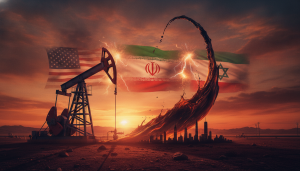
Oil Market Roiled as Iran Diplomacy Nears Critical Juncture
Global oil benchmarks experienced a significant downturn on Wednesday, as investor focus sharply shifted to intensifying diplomatic efforts concerning Iran. The market’s immediate reaction underscores the profound impact that geopolitical developments, particularly those involving major crude producers, exert on energy prices and investor sentiment. This volatility demands a careful evaluation of the emerging risks and opportunities for those navigating the oil and gas landscape.
West Texas Intermediate (WTI) futures, the U.S. crude benchmark, saw a notable decline of over 4%, settling at $99.08 per barrel. Simultaneously, the international standard, Brent crude futures, mirrored this bearish trend, shedding 5% of its value to trade at $105.64 per barrel. These pronounced drops reflect an immediate repricing of crude assets, driven by the prospect of a potential resolution to long-standing tensions that have kept a significant volume of Iranian oil off global markets.
Diplomatic Overtures Signal Potential Supply Shift
The catalyst for Wednesday’s market reaction stemmed directly from President Donald Trump’s assertion that negotiations with Iran had entered their “final stages.” This declaration injects a new layer of uncertainty and speculation into an already complex energy market. The prospect of a diplomatic breakthrough, specifically regarding Iran’s nuclear program and the subsequent lifting of sanctions, holds monumental implications for global crude supply dynamics. Investors are now keenly assessing the likelihood and timeline for Iranian crude to potentially re-enter the international market, a move that could fundamentally alter the supply-demand balance.
This latest diplomatic push follows President Trump’s earlier decision to de-escalate military tensions. Earlier in the week, he disclosed the cancellation of planned military strikes against Iran, opting instead to prioritize diplomatic avenues. Significantly, this pivot towards de-escalation was reportedly made at the specific request of Gulf Arab allies, highlighting the intricate regional power plays and their influence on international energy policy. These allies, acutely aware of the potential for broader regional instability, appear to be favoring a path that seeks a peaceful resolution, even as it introduces complexities for oil producers.
Iran’s Untapped Potential: A Game-Changer for Global Supply
Should negotiations indeed culminate in a comprehensive agreement, the reintegration of Iranian crude oil into the global supply chain represents a pivotal moment for energy markets. Iran boasts vast proven oil reserves and possesses the infrastructure to rapidly ramp up production. Analysts widely estimate that Iran could swiftly bring millions of barrels per day (bpd) back to market within months of sanctions relief, potentially adding significant volume to an already sensitive global supply picture. This potential surge in supply, juxtaposed against existing production levels from OPEC+ nations and non-OPEC producers, presents a critical challenge for market stability and pricing.
The prospect of additional Iranian oil creates immediate downward pressure on prices, as reflected in Wednesday’s trading. For investors, understanding Iran’s actual production capacity and its strategy for market re-entry will be paramount. Any deal would likely dismantle restrictions on crude exports, allowing Iranian oil to flow freely to traditional and new buyers, especially in Asia. This shift could disrupt established supply routes and impact profitability margins for other producers, particularly those currently benefiting from constrained supply.
Navigating the Geopolitical Currents: Investor Considerations
The requests from Gulf Arab allies for continued diplomacy underscore the delicate balance of regional interests. While these nations often benefit from higher oil prices, sustained conflict in the Strait of Hormuz – a critical chokepoint for global oil shipments – poses severe economic and security risks. A diplomatic solution with Iran, even if it entails lower oil prices due to increased supply, might be perceived as a lesser evil when weighed against the specter of military confrontation and its potentially catastrophic impact on global trade and regional stability.
For oil and gas investors, these developments necessitate a re-evaluation of current portfolio allocations. Companies heavily exposed to upstream production might face headwinds from sustained lower prices, impacting exploration budgets and project viability. Conversely, refining and petrochemical sectors could see improved margins due to cheaper crude feedstock. Integrated majors, with diversified operations, might demonstrate greater resilience, but even they will feel the ripple effects of significant market shifts.
Furthermore, the ongoing strategy of OPEC+ will be a crucial variable. How will the cartel react to a potential influx of Iranian crude? Will existing production quotas be adjusted to accommodate Iran’s return, or will the group maintain its current stance, potentially risking a market oversupply? These questions remain unanswered and will be closely monitored by energy market participants.
Outlook: Volatility Endures Amidst Uncertain Diplomacy
While President Trump’s statements have initiated a fresh wave of market speculation, investors must remain cognizant of the inherent uncertainties surrounding complex international negotiations. “Final stages” can often be protracted, and the path to a conclusive deal is fraught with potential obstacles and reversals. Any misstep, or a failure to reach a mutually agreeable resolution, could quickly reverse market sentiment and send prices surging once again, especially if the alternative becomes renewed geopolitical tensions.
Investors are advised to track official pronouncements from all parties involved, monitor technical indicators for WTI and Brent, and assess the broader geopolitical landscape. The coming weeks will be critical in determining whether the current diplomatic optimism translates into a tangible agreement that reshapes global oil flows, or if the market will once again grapple with the specter of unresolved conflict. The recent price movements serve as a potent reminder that in the realm of oil and gas investing, geopolitical headlines often dictate market direction with immediate and significant force.