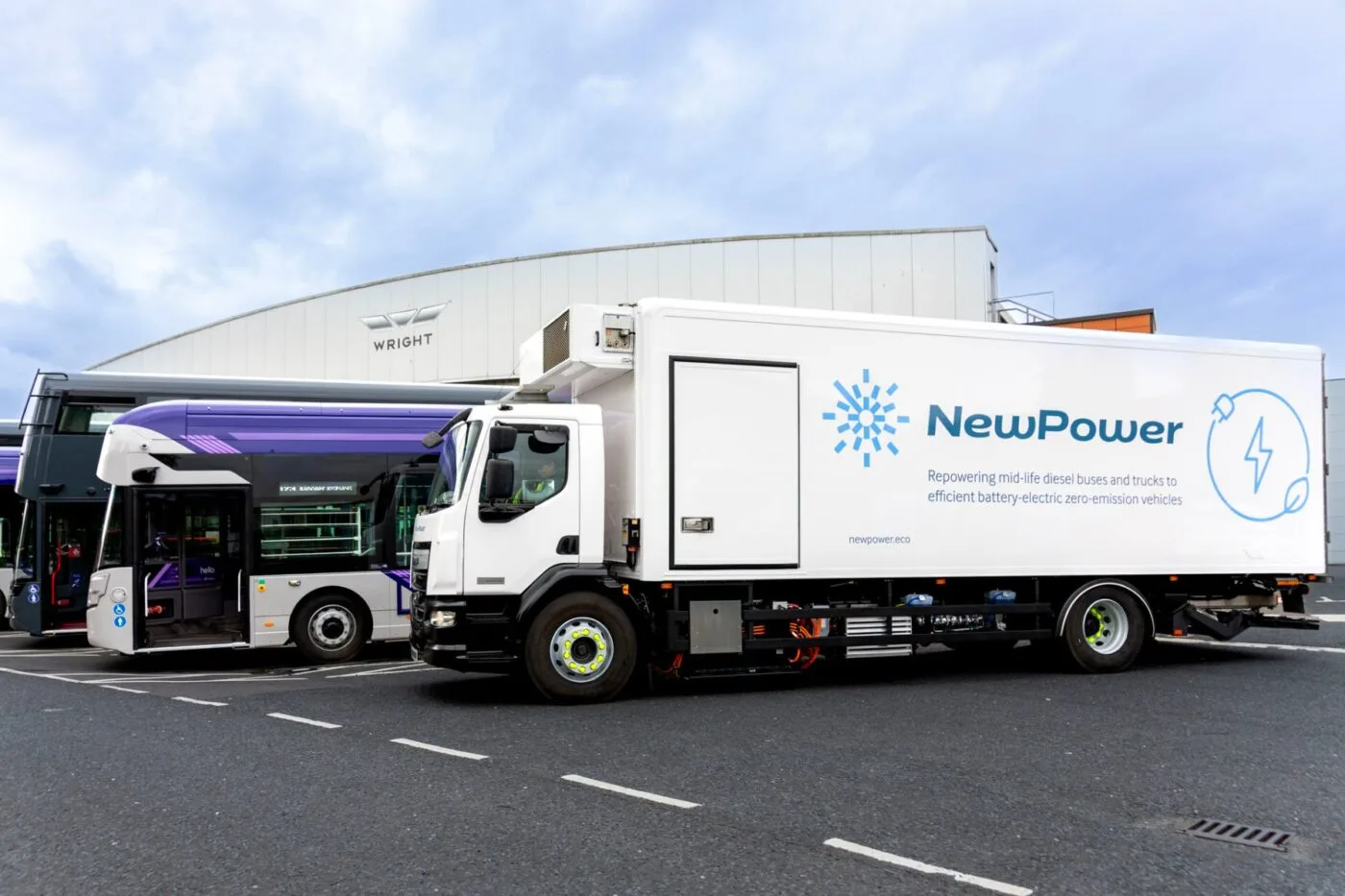
The global energy landscape is undergoing a profound transformation, driven by an accelerating push towards decarbonization across all sectors. While the oil and gas industry remains central to current energy supply, smart investors are increasingly scrutinizing opportunities within the transition. A key area of focus is fleet electrification, where commercial vehicles, traditionally reliant on diesel, are moving towards zero-emission alternatives. Wrightbus, a prominent player in sustainable transport solutions, is making significant strides in this domain with its innovative repowering technology, now expanding from buses to trucks. This strategy offers a compelling, cost-effective pathway to electrification, presenting a unique investment angle in a market often focused on entirely new EV acquisitions.
Repowering: A Cost-Effective Catalyst for Fleet Electrification
Wrightbus’s NewPower division, established in June of last year, initially focused on converting diesel buses to electric. This proven model has now successfully expanded to heavy-duty trucks, exemplified by the conversion of a 19-tonne twin-axle DAF. This strategic move addresses a critical bottleneck in the wider adoption of electric vehicles (EVs) in the commercial sector: cost. Acquiring new electric trucks often entails substantial capital expenditure, a barrier for many fleet operators. Repowering, by contrast, offers a significantly more economical alternative, extending the life of existing assets while drastically reducing emissions.
The technical ingenuity behind this approach is notable. For buses, NewPower swaps out the diesel engine for a Voith Electric Drive System (VEDS), integrates NMC battery packs, and a Grayson HVAC system, completing the process in approximately three weeks at its Bicester factory. The truck conversion, fitted with a 282kWh battery, boasts a range of 290km and takes around four weeks. Crucially, Wrightbus highlights a “more than 90% commonality of parts” between its bus and truck BEV powertrains, demonstrating operational efficiency and scalability. With less than one percent of the truck sector currently operating as zero-emission vehicles, compared to 75% for new bus sales in the UK year-to-date, this expansion positions Wrightbus to ignite a substantial, underserved market segment.
Navigating Volatile Crude Markets: A Tailorwind for Electrification?
The current volatility in global crude markets underscores the financial imperative for commercial fleets to reduce their reliance on fossil fuels. As of today, Brent crude trades at $90.38 per barrel, marking a significant 9.07% decline within the day, with its range fluctuating between $86.08 and $98.97. Similarly, WTI crude is priced at $82.59, down 9.41% in the same period, moving between $78.97 and $90.34. This intraday swing, coupled with a broader 14-day trend showing Brent dropping from $112.78 to $91.87 – an 18.5% decrease – highlights the unpredictable nature of energy costs for fleet operators. Even gasoline prices have seen a dip to $2.93, a 5.18% decrease today. While short-term dips might offer temporary relief, the long-term instability of oil prices remains a substantial risk for businesses with high fuel consumption.
This inherent market uncertainty makes the proposition of electric repowering even more attractive. By converting to electric, fleet operators can largely insulate themselves from crude price fluctuations, locking in more predictable electricity costs and benefiting from reduced maintenance due to simpler electric powertrains. For investors, this translates into a more stable revenue stream for companies providing such conversion services, as demand is driven not just by environmental mandates but also by strong economic incentives in a volatile energy environment.
Addressing Investor Concerns: Decarbonization and Future Oil Prices
Our proprietary reader intent data reveals that investors are keenly focused on the future trajectory of the energy market, with persistent questions about the direction of oil prices and the pace of the energy transition. Queries like “what do you predict the price of oil per barrel will be by end of 2026?” and “How well do you think Repsol will end in April 2026?” demonstrate a clear interest in both short-term performance and long-term market shifts. This sentiment underscores the relevance of solutions like Wrightbus’s repowering technology.
Investors recognize that while oil and gas will remain crucial for decades, the strategic pivot towards decarbonization is irreversible. Companies that offer practical, scalable, and cost-effective solutions for this transition are poised for significant growth. Repowering existing diesel fleets with electric powertrains aligns perfectly with this investor demand, offering a tangible pathway for businesses to reduce their carbon footprint and operating costs without entirely scrapping their asset base. This approach provides a pragmatic answer to the broader investment question of how to participate profitably in the energy transition.
Strategic Positioning Ahead of Key Energy Events
The coming weeks are packed with events that could significantly influence global energy markets, further shaping the investment landscape for both traditional and new energy solutions. The OPEC+ Joint Ministerial Monitoring Committee (JMMC) and Full Ministerial Meetings are scheduled for April 18th and 19th, respectively. These meetings are critical for assessing global oil supply policies and will undoubtedly impact crude price expectations. Following these, the API Weekly Crude Inventory reports on April 21st and 28th, and the EIA Weekly Petroleum Status Reports on April 22nd and 29th, will provide crucial insights into short-term supply and demand dynamics in the U.S. Finally, the Baker Hughes Rig Count on April 24th and May 1st will offer a pulse on upstream activity.
While these events will dictate immediate market movements for crude, the strategic importance of fleet electrification, exemplified by Wrightbus’s repowering, remains undiminished. Regardless of OPEC+ decisions or inventory surprises, the regulatory push for emissions reductions and the operational benefits of stable fuel costs will continue to drive demand for EV conversions. Companies like Wrightbus, with a growing global footprint including service centers in Ballymena, Coventry, Bicester, Brühl in Germany, and Selangor in Malaysia, are well-positioned to capitalize on this long-term trend. The company forecasts creating over 160 new jobs over the next two years, reinforcing its role in the zero-emission transport sector.
Leadership Transition and Future Growth Trajectory
Adding to its strategic evolution, Wrightbus is also undergoing a leadership transition. Current CEO Jean-Marc Gales, who has been instrumental since 2023 in setting high industry standards, will assume the role of Deputy Chairman from December 1st. This move will allow him to focus on the company’s strategic global development, a clear signal of Wrightbus’s ambition to expand its reach and influence in the international sustainable transport market. While a successor for the CEO position is yet to be announced, this strategic realignment, welcomed by owner Jo Bamford, indicates a commitment to continuous improvement and aggressive growth. For investors, a clear strategic vision and experienced leadership are crucial indicators of a company’s potential to navigate complex market shifts and deliver long-term value in the rapidly evolving energy transition space.


