Woodside Charting a Course Amidst Climate Crosscurrents: An Investor’s View
Global energy powerhouse Woodside Energy recently navigated a turbulent annual general meeting, successfully securing shareholder endorsement for its executive compensation frameworks and key board appointments. This outcome signals a robust undercurrent of investor confidence in the company’s long-term strategic vision, which continues to prioritize oil and gas expansion, even as it confronts escalating demands for climate action in a rapidly evolving energy landscape. Despite a concerted effort from a coalition of prominent investment funds and governance advocates, Woodside’s leadership effectively garnered the necessary support, reinforcing its current trajectory through the global energy transition.
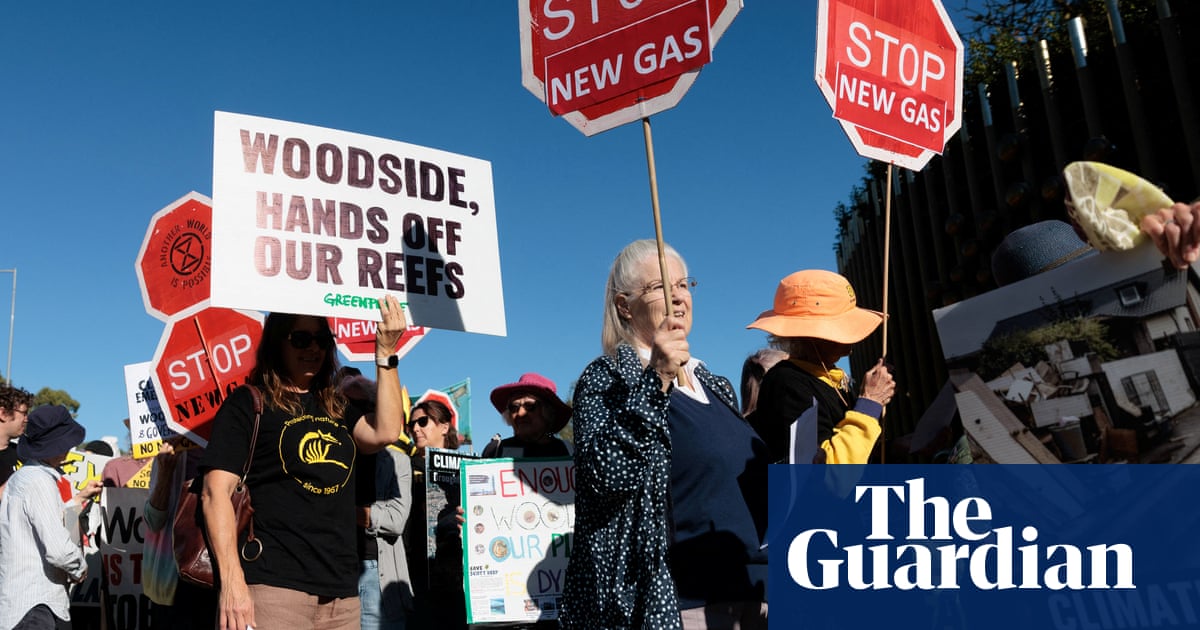
The Perth-based producer experienced intense scrutiny from a diverse spectrum of stakeholders. This included influential fund managers and corporate governance organizations, all keenly challenging the efficacy and ambition of Woodside’s climate framework. A primary point of contention centered on the re-election of director Ann Pickard, a seasoned former Shell executive who presides over the committee responsible for climate risk oversight. Furthermore, a significant push emerged to reject Woodside’s remuneration report, reflecting a broader investor apprehension regarding the alignment of executive incentives with tangible climate performance. Nevertheless, preliminary voting confirmed Ms. Pickard’s re-election with a comfortable majority, and the proposed executive pay structures also received shareholder approval, albeit with a discernible number of protest votes against both resolutions.
Sharpened Focus on Climate Ambition and Decarbonization Pathways
At the heart of investor unease lies Woodside’s perceived over-reliance on carbon offsets to achieve its emissions reduction targets. Many critics argue this approach falls short of genuine decarbonization, viewing it as an insufficient strategy in the face of the urgent need for systemic change. These stakeholders contend that the company’s current methodology is inadequately aligned with the ambitious goals set forth by the Paris Agreement. Crucially, a growing point of contention for investors increasingly focused on comprehensive lifecycle emissions is Woodside’s perceived failure to adequately account for “Scope 3” emissions – the indirect emissions generated by customers utilizing the company’s energy products. This omission represents a significant gap in what some consider a holistic climate strategy.
Leading the charge against Woodside’s current climate strategy was superannuation fund Hesta, which publicly declared its decision to vote against several pivotal resolutions, including the re-election of Ann Pickard. Hesta cited specific concerns regarding Woodside’s lack of a formally adopted, company-wide net-zero target, underscoring what it perceives as a critical deficiency in the company’s long-term climate commitment. A spokesperson from Hesta articulated the sentiment, stating that Woodside’s current efforts “do not adequately position the company for success in the global shift towards a low-carbon future,” emphasizing the necessity for more substantive actions to address investor anxieties. This divergence highlights a critical gap between the expectations of some institutional investors for robust climate action and Woodside’s current strategic positioning.
Balancing Growth Imperatives with Transition Risks
Adding to the chorus of investor apprehension, the Australasian Centre for Corporate Responsibility (ACCR) further amplified concerns. Alex Hillman, lead analyst at ACCR, characterized Woodside’s capital allocation strategy as predominantly directed towards “high-cost fossil fuel projects.” Hillman’s assessment suggests that Woodside’s aggressive growth ambitions in conventional energy assets could potentially expose investors to heightened transition risks, particularly if global efforts to decarbonize accelerate. Critics from the ACCR contend that the company’s aggressive expansion in fossil fuels appears to anticipate a future where global climate targets remain unmet, potentially exposing investors to significant long-term value erosion should the energy transition unfold more rapidly than Woodside’s current strategy assumes.
In response to the mounting investor scrutiny, Woodside’s Chief Executive Officer, Meg O’Neill, firmly defended the company’s strategic direction. Post-AGM, O’Neill affirmed a “strong alignment on our strategy” among the majority of shareholders, emphasizing the company’s commitment to “working constructively with all shareholders” to navigate the complexities of the energy transition. O’Neill underscored the critical importance of energy security in the current geopolitical climate and highlighted the indispensable role of natural gas as a transitional fuel in the global shift towards lower-carbon energy sources. She reiterated Woodside’s unwavering commitment to delivering “sustainable shareholder returns” while contributing to global energy reliability.
Strategic Project Pipeline and Financial Resilience
Woodside’s growth narrative is underpinned by a robust pipeline of significant projects, notably including the Scarborough LNG project in Western Australia and the Trion deepwater oil field in the Gulf of Mexico. These ventures represent substantial capital commitments and are central to the company’s future production and revenue streams. The Trion project, in particular, signifies a bold move into deepwater production, with a projected capital expenditure of $7.2 billion. Once operational, Trion is expected to contribute a substantial 100,000 barrels of oil equivalent per day to Woodside’s production portfolio, with first oil anticipated in 2028. These projects are testament to Woodside’s confidence in the enduring demand for hydrocarbons, even amidst the global energy transition discussions.
From a financial perspective, Woodside reported a full-year profit of $1.66 billion for 2023. While this represented a 74% decrease from the previous year’s record results, largely influenced by normalization of commodity prices from their 2022 peaks, the company demonstrated resilience by maintaining its dividend payout. Shareholders received a dividend of 91 cents per share, underscoring management’s commitment to returning value despite a recalibration of its financial metrics. Looking ahead, Woodside management expressed confidence in its future free cash flow generation, anticipating continued strong demand for both liquefied natural gas (LNG) and crude oil. With Brent crude consistently trading above $90 per barrel, the macro environment remains supportive of robust earnings for upstream producers like Woodside, providing a strong foundation for its ongoing investment thesis.