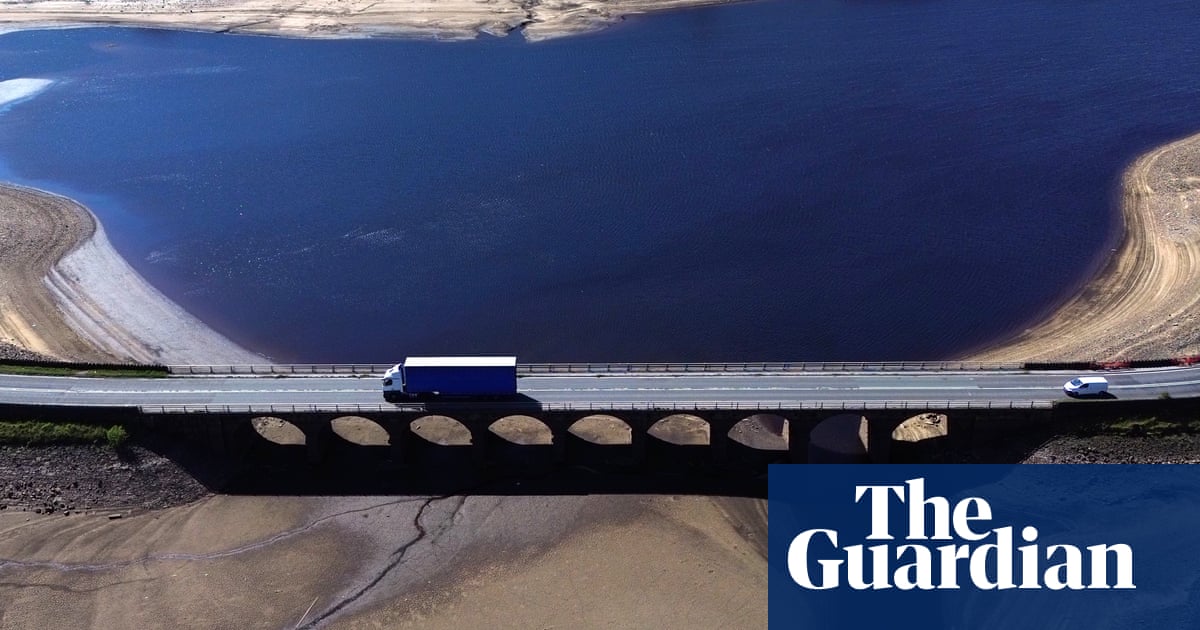
The United Kingdom’s ambitious net-zero targets, particularly its commitment to a clean power system by 2030, face a critical and often overlooked hurdle: water scarcity. As a senior investment analyst, it’s our duty to highlight these foundational risks that can derail even the most well-intentioned energy transition projects. Recent analysis indicates that the planned scale of carbon capture and hydrogen production, crucial pillars of the UK’s decarbonization strategy, could place immense strain on the nation’s water supplies, potentially pushing key industrial regions into significant deficits. This presents a complex and evolving risk factor that investors in the UK’s energy transition infrastructure must integrate into their valuation models and long-term strategic outlook.
The Underside of Decarbonization: Water Demand Soars
The drive towards a cleaner energy future is inherently water-intensive, a detail frequently overshadowed by headlines on renewable energy generation itself. Research assessing the five largest industrial clusters in England—Humberside, north-west England, the Tees Valley, the Solent, and the Black Country—reveals a stark reality. Decarbonization efforts, spearheaded by carbon capture and hydrogen production, are projected to add up to 860 million litres per day of water demand by 2050. This isn’t a distant problem; deficits could emerge as early as 2030 in certain regions. For instance, the Humberside industrial cluster’s plans could push Anglian Water into a 130 million litres per day deficit by 2050, while projects around the north-west cluster could see United Utilities facing a 70 million litres per day shortfall by 2030. These figures, while debated by some water companies as being at the upper end of projections, undeniably signal a significant challenge. For investors eyeing participation in the UK’s energy transition, the underlying infrastructure, including water supply, is a non-negotiable component of project viability and long-term profitability. Ignoring this could lead to stranded assets or significantly higher operational costs than initially projected.
Market Dynamics and Investor Scrutiny Amidst Broader Volatility
While the immediate focus of many investors remains on the daily fluctuations of global commodity markets, the structural challenges facing the UK’s net-zero agenda warrant equal, if not greater, attention for long-term portfolio positioning. As of today, Brent Crude trades at $90.25, reflecting a significant downturn in recent weeks, having fallen from $118.35 on March 31st to $94.86 just yesterday, representing a nearly 20% drop. WTI Crude also sits at $86.87. This broader market volatility, driven by macroeconomic concerns and supply-demand shifts, primes investors to seek out fundamental risks that could impact future returns. We’ve seen an uptick in questions from our readership, with many asking “what do you predict the price of oil per barrel will be by end of 2026?” and “How well do you think Repsol will end in April 2026.” These questions highlight a prevailing focus on short-to-medium term commodity price movements and company performance. However, savvy investors understand that the viability of energy companies diversifying into CCUS and hydrogen, particularly in regions like the UK, will increasingly depend on their ability to navigate these less obvious, yet critical, resource constraints. A company’s exposure to water-stressed regions or its investment in water-efficient technologies could become a key differentiator in future valuations, impacting how major players like Repsol, with their own energy transition strategies, are assessed.
Regulatory Gridlock and Investment Impediments
The escalating tensions between the UK government, water utility companies, and regulators like Ofwat are creating an unhelpful environment for critical infrastructure development. Water companies, like Anglian Water, argue that current regulatory frameworks, specifically Ofwat’s constraints on capital expenditure, are hindering their ability to invest in future water supplies. This is exacerbated by the assertion that business demand for water, particularly from large-scale industrial projects like carbon capture and hydrogen facilities, is often excluded from strategic planning. Such omissions prevent water companies from making the necessary proactive investments, thereby weakening the system’s resilience to climate change and, crucially, limiting its capacity to support the very economic growth and decarbonization projects the government champions. From an investment perspective, this regulatory uncertainty and underinvestment translate directly into heightened project risk. Delays in obtaining water permits, increased costs for securing water rights, or even the outright curtailment of water-intensive projects could significantly impact the internal rate of return (IRR) for energy transition investments in the UK. Investors must factor in the current state of regulatory paralysis and the potential for protracted negotiations over infrastructure funding when evaluating opportunities in this space.
Forward Outlook: Policy Pivots and Strategic Adaptation
Looking ahead, the interplay between energy policy, water management, and investment will intensify. While our proprietary calendar highlights crucial upcoming events like the OPEC+ JMMC Meeting tomorrow and the EIA Weekly Petroleum Status Reports, which provide immediate market pulse checks, the long-term structural issues demand a different lens. The EIA Short-Term Energy Outlook on May 2nd will offer a macro perspective, but it’s the domestic policy responses to the Environment Agency’s drought warnings that will truly shape the landscape for UK energy transition investments. Investors should closely monitor government announcements and the next round of water company business plans for signs of policy shifts. Will there be accelerated approval for water infrastructure projects? Will new incentives emerge for water-efficient industrial processes? The urgency of addressing these water deficits could lead to innovative solutions, potentially creating new investment opportunities in water treatment, desalination, or advanced cooling technologies. Conversely, a failure to act decisively could force a re-evaluation of the geographical distribution of future carbon capture and hydrogen hubs, potentially shifting investment away from water-stressed regions. The ability of the UK to reconcile its net-zero ambitions with its finite water resources will be a defining challenge, and a critical determinant of investor confidence in its energy transition pathway.