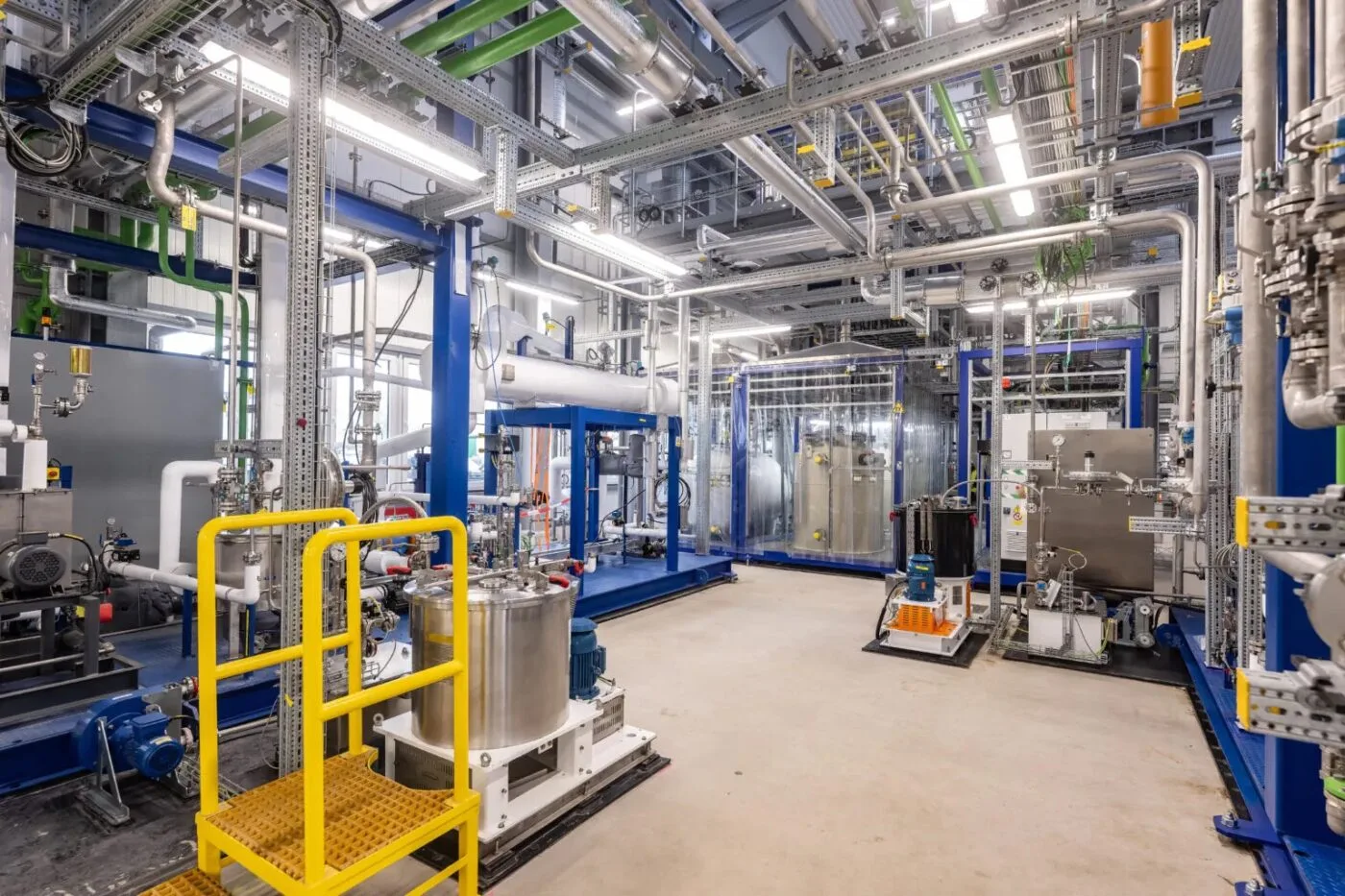
The European energy landscape is undergoing a profound transformation, and a recent development from Vulcan Energy underscores the strategic shift towards sustainable, localized critical mineral supply chains. The German-Australian company has secured a crucial building permit for its commercial Central Lithium Plant (CLP) in Frankfurt-Höchst, a significant milestone in its ambitious plan to produce up to 24,000 tonnes of battery-grade lithium hydroxide annually. This capacity, sufficient for approximately 500,000 electric vehicle batteries per year, represents not just a corporate achievement, but a pivotal step in de-risking Europe’s burgeoning EV sector from foreign supply dependencies. For investors navigating a volatile global energy market, Vulcan’s progress offers a compelling case for diversification into the future of clean energy materials.
De-Risking Europe’s EV Future with Domestic Lithium
Vulcan Energy’s permit for its Frankfurt-Höchst plant is more than just regulatory approval; it is a tangible advancement towards establishing a secure and sustainable lithium supply chain within Europe. The company’s innovative approach involves extracting lithium chloride from geothermal brine in Landau, then processing it into lithium hydroxide monohydrate at the Höchst facility. This vertically integrated strategy leverages Europe’s largest geothermal and lithium resources in the Upper Rhine Valley, positioning Vulcan as a critical enabler for the continent’s automotive and battery industries. Long-term contracts with industry giants like LG Energy Solution, Umicore, and Stellantis, which have been specifically amended to reflect this progress, provide substantial revenue visibility and validate the demand for Vulcan’s product. With an estimated total investment of €690 million for both the upstream and downstream plants, supported by €103.6 million in funding from the German federal and state governments, the project’s strategic national importance is undeniable. This level of government backing not only de-risks the investment but also signals a strong commitment to energy independence and the green transition.
Lithium as a Hedge Amidst Crude Market Turbulence
While the long-term trajectory for critical minerals like lithium appears robust, the traditional energy markets continue to exhibit significant volatility, presenting a stark contrast for investors. As of today, Brent Crude is trading at $90.38 per barrel, marking a sharp decline of 9.07% in intraday trading, with WTI Crude similarly falling to $82.59, down 9.41%. This immediate downturn extends a broader trend, with Brent having shed $20.91, or 18.5%, since late March, from $112.78 on March 30th to $91.87 just yesterday. The price of gasoline has also followed suit, currently standing at $2.93, a drop of 5.18% today. This pronounced instability in the oil and gas sector highlights the inherent risks associated with commodity price fluctuations driven by geopolitical events, supply-demand imbalances, and macroeconomic shifts. In this environment, investments in essential materials for the energy transition, such as Vulcan’s lithium, offer a compelling diversification strategy. The stable, long-term demand growth for electric vehicles and battery storage provides a fundamental underpinning for lithium prices, potentially insulating portfolios from the dramatic swings seen in fossil fuel markets and offering a more predictable return profile.
Forward Outlook: Beyond Permits to Production and Policy
The permit for the Central Lithium Plant is a crucial step, yet the precise timeline for commercial operation remains unspecified. Investors will be keenly watching for further announcements regarding construction progress and commissioning dates. Vulcan’s ongoing operation of 1:50 scale test facilities, including the Lithium Extraction Optimisation Plant (LEOP) in Landau and the Central Lithium Electrolysis Optimisation Plant (CLEOP) in Höchst, where lithium chloride was successfully filtered and processed into battery-grade lithium hydroxide in late 2024, mitigates some operational risks by refining processes ahead of commercial scale-up. Looking ahead, while the traditional oil and gas markets will be closely monitoring the OPEC+ Joint Ministerial Monitoring Committee (JMMC) meeting today, April 18th, followed by the full Ministerial Meeting tomorrow, April 19th – events that our readers are actively seeking insight on, particularly concerning production quotas and their impact on crude prices into 2026 – the critical minerals sector operates on different drivers. Weekly data points, such as the API and EIA crude inventory reports due on April 21st and 22nd, and again on April 28th and 29th, will provide short-term market reactions for crude. However, the long-term structural shifts underpinning projects like Vulcan’s are less susceptible to these weekly fluctuations. Instead, progress on commissioning, off-take agreement execution, and potential capacity expansion beyond the initial 24,000 tonnes per year will be the key performance indicators for lithium investors.
Addressing Investor Concerns: The Long Game in Critical Minerals
Our proprietary reader intent data reveals a strong focus among investors on the future trajectory of oil prices and the impact of OPEC+ decisions. Many are asking “what do you predict the price of oil per barrel will be by end of 2026?” and “What are OPEC+ current production quotas?” These questions underscore a pervasive concern about volatility and future returns in traditional energy. Vulcan Energy’s progress in securing a domestic European lithium supply offers a counter-narrative, presenting a long-term investment opportunity that thrives on the structural growth of the EV market rather than the cyclical swings of crude. The firm’s long-term contracts with major automotive and battery manufacturers provide a stable demand foundation, mitigating market entry risks. Moreover, the stated potential for future capacity expansion offers a clear growth runway. For those seeking to diversify their portfolios away from the inherent uncertainties of fossil fuel markets, and specifically Repsol’s potential performance, investing in companies like Vulcan, which are at the forefront of the clean energy transition, represents a strategic pivot. It aligns capital with the undeniable global push towards decarbonization, offering exposure to a sector driven by technological innovation, environmental mandates, and growing consumer adoption, rather than the geopolitical machinations that frequently dictate oil prices.


