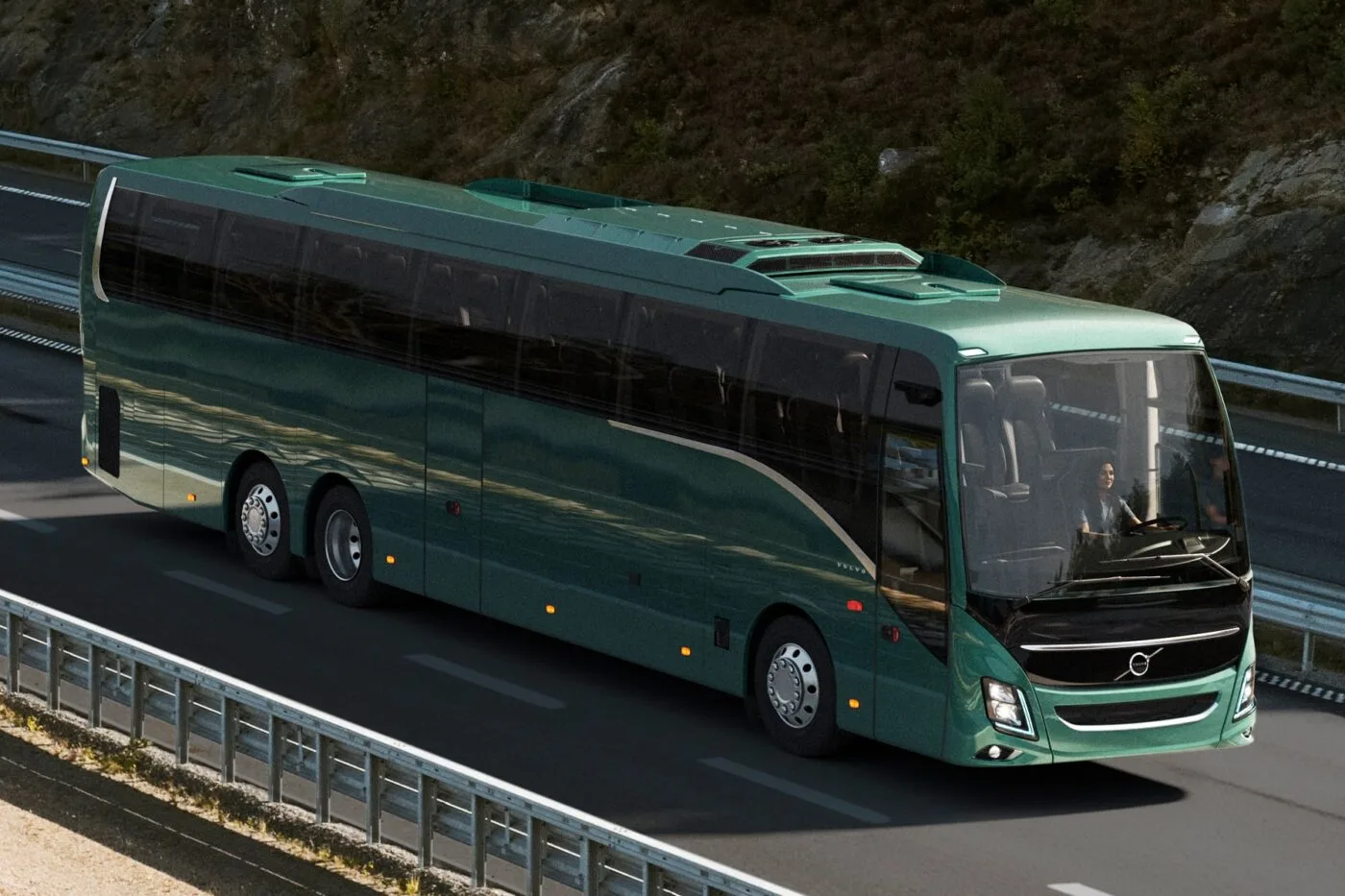
Volvo’s Electric Coach: A New Front in the Battle for Diesel Demand
The energy transition continues to reshape the global oil landscape, and a recent development from Volvo Buses underscores the accelerating threat to traditional fossil fuel demand. Volvo’s unveiling of a new coach chassis, built on its robust BZR electric bus platform, signals a significant leap in electric vehicle (EV) capabilities for interregional and long-haul transport. With an impressive battery capacity of up to 720 kWh, enabling ranges of up to 700 kilometers, this innovation directly targets a segment historically dominated by diesel. For oil and gas investors, this isn’t just a story about electric buses; it’s a clear signal of creeping demand erosion in a critical sector, demanding a re-evaluation of long-term diesel consumption forecasts amidst an already volatile market backdrop.
The Long Haul’s Electric Shift: Volvo’s New Challenger
Volvo’s latest electric coach chassis represents a formidable step in electrifying heavy-duty transport. Leveraging its 600-volt BZR Electric platform, this new architecture significantly expands battery capacity from the previous 540 kWh to a robust 720 kWh. This is achieved by accommodating eight 90-kWh battery packs, a notable increase from the prior six. The result is a declared range of up to 700 kilometers in the SORT 3 test cycle, a figure Volvo describes as “industry-leading” for such applications. This extended range directly addresses one of the primary barriers to EV adoption in the coach segment: the necessity for frequent charging stops on longer journeys. With support for 4×2 or 6×2 axle configurations, lengths from 9.5 to 14.9 meters, and gross vehicle weights up to 27.2 tonnes, these coaches offer operational versatility. Charging flexibility is also key, with options for up to 250 kW DC via cable or an impressive 450 kW DC via OppCharge, ensuring quicker turnarounds. This technological advancement means that long interregional routes, once exclusively the domain of diesel engines, are now increasingly viable for electric alternatives, with first units already reserved for Nordic and Benelux customers.
Market Headwinds and the EV Undercurrent
The introduction of advanced electric coaches arrives at a particularly challenging moment for global crude markets. As of today, Brent Crude trades at $90.38, reflecting a significant 9.07% decline, while WTI Crude mirrors this downturn, standing at $82.59, down 9.41%. This daily volatility compounds an already testing period, as evidenced by the 14-day Brent trend, which saw prices shed over $20, falling from $112.78 on March 30th to $91.87 just yesterday. Such sharp contractions highlight the precarious balance of supply and demand, and the market’s sensitivity to macroeconomic signals. While immediate price movements are influenced by a myriad of factors, the structural shift towards electrification in heavy transport, exemplified by Volvo’s new offering, adds a persistent layer of long-term demand erosion. This undercurrent of evolving demand profiles means that even as crude prices fluctuate in the short term, the fundamental demand base for diesel is slowly but surely being chipped away, a reality that cannot be ignored by astute energy investors.
OPEC+’s Tightrope Walk Amidst Evolving Demand
In this dynamic environment, investors are naturally asking critical questions, such as what the price of oil per barrel will be by the end of 2026. This long-term outlook is increasingly influenced by both immediate supply management and the accelerating pace of the energy transition. In the immediate term, the market’s attention is squarely fixed on the upcoming OPEC+ Joint Ministerial Monitoring Committee (JMMC) meeting on April 18th, followed by the Full Ministerial meeting on April 19th. These gatherings are pivotal for establishing production quotas and calibrating global supply in response to current market conditions. Our proprietary intent data shows significant investor interest in OPEC+’s current production quotas, underscoring the importance of these decisions. However, even as OPEC+ strategizes to stabilize prices in the near term, the rise of powerful electric alternatives like Volvo’s 700-km range coaches presents a growing challenge to their long-term demand forecasts. The need for less diesel consumption for transport, alongside other electrification trends, forces OPEC+ to not only react to present market dynamics but also proactively consider a future with progressively diminished oil demand, making their task of maintaining market equilibrium increasingly complex.
Investment Implications and Strategic Positioning
For investors in the oil and gas sector, Volvo’s electric coach is not merely an engineering feat; it’s a tangible signpost pointing towards a fundamental reshaping of the diesel demand landscape. Companies heavily reliant on refining margins for diesel, particularly those exposed to European markets where these coaches are first being deployed, need to closely monitor adoption rates. While the transition won’t happen overnight, the continuous improvement in battery technology and range capabilities suggests a steadily growing competitive pressure. Upstream producers, too, must factor in the long-term erosion of demand when making capital allocation decisions for new projects, especially given the significant capital expenditure and long lead times involved. Diversification into lower-carbon energy solutions or strategic investments in carbon capture technologies could become increasingly important for maintaining relevance and profitability. This development underscores the dual challenge facing the industry: navigating immediate market volatility while simultaneously adapting to a structural shift in global energy consumption patterns. Investors must look beyond the daily price swings and consider how these technological advancements will influence the viability and valuation of traditional oil and gas assets in the coming decade.