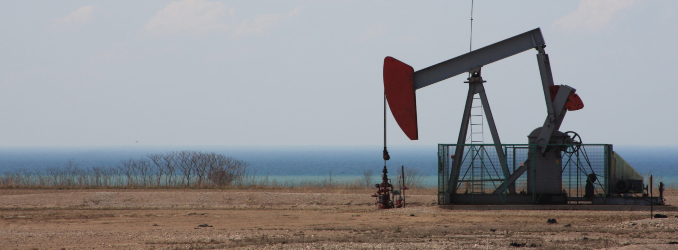
Vermilion Energy has announced a significant strategic move, finalizing an agreement to divest its oil and gas holdings across Saskatchewan and Manitoba. This transaction, valued at a robust $302 million USD (equivalent to $415 million CAD) in cash proceeds, underscores the company’s ongoing commitment to financial discipline and portfolio optimization within the dynamic energy sector.
Strategic Divestment Fuels Deleveraging Initiatives
The Calgary-based independent exploration and production firm has explicitly stated that the net proceeds from this sale will be primarily directed towards an accelerated debt repayment program. This initiative is designed to bolster Vermilion’s balance sheet, a critical objective for many upstream operators navigating volatile commodity price environments. For investors, this signals a clear prioritization of financial health and stability, aiming to reduce financial risk and enhance long-term resilience.
The assets being divested currently contribute approximately 10,500 barrels of oil equivalent per day (boed) to Vermilion’s overall production profile. Notably, a substantial 86% of this output comprises high-value oil and natural gas liquids. At prevailing strip commodity prices, these assets are projected to generate approximately $110 million in annual net operating income. The decision to part with these income-generating assets highlights Vermilion’s strategic focus on optimizing its capital structure and concentrating on higher-return opportunities elsewhere in its global portfolio.
Evolving Production and Capital Outlook for 2025
Assuming the transaction successfully closes by mid-Q3 2025, Vermilion has provided an updated production outlook for the full year. The company anticipates its average 2025 production to range between 120,000 and 125,000 boed. This revised forecast incorporates the impact of the divested volumes, reflecting a calibrated approach to managing its asset base.
Concurrently, Vermilion has adjusted its capital expenditure plans for 2025. Total capital outlays are now projected to be in the range of $680 million to $710 million. This represents a reduction of approximately $50 million directly attributable to the sale of the Saskatchewan and Manitoba assets. This strategic reduction in capital spending, alongside the debt repayment, reinforces the company’s commitment to efficient capital allocation and enhancing investor returns, especially during periods of market uncertainty.
Management has explicitly communicated its intention to continually assess capital investment levels, particularly in response to “increased volatility” within the energy markets. This proactive stance means capital deployment will be adjusted as necessary, with a clear directive to prioritize free cash flow generation over mere production growth throughout 2025 and 2026. For investors, this emphasis on free cash flow is often seen as a key indicator of financial strength and the potential for future shareholder distributions, whether through dividends, share buybacks, or further debt reduction.
Strategic Portfolio High-Grading: A Three-Year Vision
This latest divestiture represents a significant milestone in a broader strategic initiative launched by Vermilion three years ago. The overarching goal has been to “high-grade” the company’s asset portfolio. This involves a deliberate shift away from mature or less strategic assets towards those characterized by long-duration potential, scalability, and deep inventories of high-return capital opportunities. This strategic evolution aims to ensure Vermilion’s asset base is optimized for sustained profitability and growth in the long run.
The shift towards long-duration, scalable assets provides several advantages for an E&P company and its investors. Such assets typically offer greater predictability in production profiles, lower decline rates, and a more extensive runway for future development. This reduces the need for constant, high-risk exploration and allows for more efficient capital deployment over an extended period, translating into more stable and predictable cash flows. For investors seeking stability and growth in their oil and gas investments, this strategic pivot is highly relevant.
Investor Implications: Deleveraging and Value Creation
The decision to sell non-core assets to strengthen the balance sheet is a widely accepted and often applauded strategy in the oil and gas industry, particularly for companies seeking to de-risk their financial profile. A stronger balance sheet provides greater flexibility, reduces interest expenses, and can improve credit ratings, potentially lowering the cost of future capital. In a cyclical industry like energy, maintaining financial flexibility is paramount.
By actively managing its portfolio and prioritizing free cash flow, Vermilion is positioning itself to generate sustainable value for shareholders. The reduction in debt not only lowers financial risk but also frees up future cash flows that can be allocated to attractive growth projects, increased shareholder returns, or opportunistic acquisitions when market conditions are favorable. This strategic clarity on capital allocation is often a key differentiator for investors evaluating E&P companies.
The company’s commitment to adapting capital investment levels based on market volatility further demonstrates a disciplined approach to managing its business. In an environment where global energy markets are subject to geopolitical shifts, supply-demand imbalances, and evolving energy policies, this flexibility is crucial. Investors will be closely watching how Vermilion executes this strategy, particularly its ability to balance free cash flow generation with the ongoing need for prudent capital reinvestment to maintain its production base and pursue growth.
In conclusion, Vermilion Energy’s divestment of its Saskatchewan and Manitoba assets for $415 million CAD is more than just an asset sale; it is a clear affirmation of its financial strategy to deleverage and optimize its portfolio. This move is designed to enhance financial resilience, improve capital efficiency, and ultimately position the company for more sustainable value creation for its shareholders in the competitive global energy market.