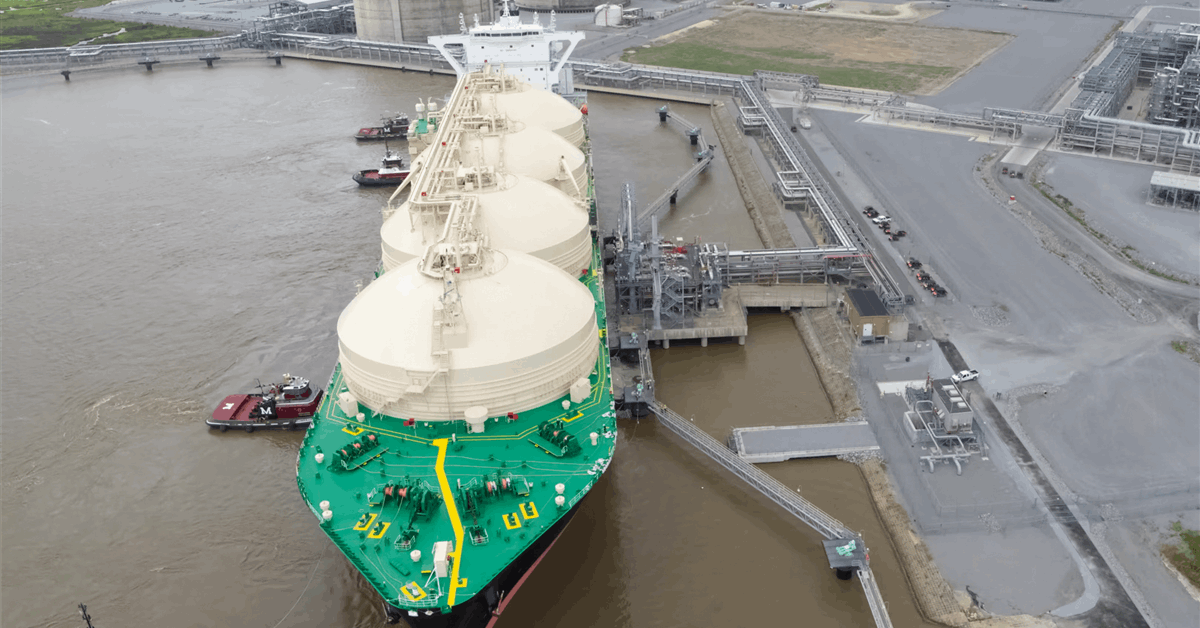
The Department of Energy’s recent amended permit for Venture Global’s Calcasieu Pass LNG facility marks a significant step in the ongoing expansion of U.S. liquefied natural gas export capabilities. This approval, increasing the operational plant’s non-Free Trade Agreement (non-FTA) export authorization by up to 12 million metric tons per annum (MMtpa), is not merely an administrative update; it signals a strategic reinforcement of America’s role in global energy security. For investors, this development underscores the continued regulatory support for large-scale energy infrastructure, particularly as the world grapples with fluctuating energy prices and geopolitical uncertainties. Our analysis delves into the immediate implications of this expansion, its fit within the current market landscape, and what it suggests for Venture Global’s future growth trajectory, especially concerning its highly anticipated CP2 LNG project.
Calcasieu Pass Expansion: A Blueprint for Efficiency
The core of the DOE’s decision for Calcasieu Pass centers on a “refined analysis of the project’s design” rather than the construction of new facilities. This is a crucial detail for investors, indicating that the increased export volume—pushing the facility’s total non-additive capacity from an initial 620 Bcf per year to 640.666 Bcf per year—is achieved through optimized existing infrastructure. This approach minimizes additional capital expenditure and accelerates the path to increased output, a clear positive for project economics and shareholder value. The DOE’s move to grant the non-FTA portion of this increase, following the FTA approval in April 2022, and its concurrent issuance of a categorical exclusion from environmental assessments under NEPA, signals a streamlined regulatory environment. This “return to regular order on LNG exports,” as noted by the DOE, suggests a more predictable approval process for future projects, a welcome development for an industry often characterized by lengthy permitting timelines. The Calcasieu Pass facility, strategically located on the Calcasieu Ship Channel with deepwater access and proximity to gas supplies, is now authorized to export LNG until 2050, providing long-term visibility for its contribution to global energy markets.
Navigating Market Volatility with Long-Term LNG Strategy
This expansion comes at a pivotal moment for global energy markets, characterized by significant volatility in crude oil prices. As of today, Brent crude trades at $90.38 per barrel, reflecting a notable daily decline of 9.07%. This follows a substantial 18.5% drop over the past 14 days, from $112.78 on March 30th to $91.87 yesterday. Such price swings, coupled with a 9.41% drop in WTI crude to $82.59 and gasoline prices down 5.18% to $2.93, highlight the dynamic and often unpredictable nature of the energy sector. Against this backdrop, the steady, long-term demand for natural gas, particularly in the form of LNG, presents a compelling investment thesis. While investors are keenly asking about what the price of oil per barrel will be by the end of 2026, the consistent growth in US LNG export capacity, now totaling 52.81 Bcf/d from the lower-48 states for non-FTA markets, provides a crucial counter-narrative of supply stability and diversification. This strategic build-out of LNG infrastructure helps to insulate global energy consumers from regional supply shocks, enhancing overall energy security despite ongoing crude market fluctuations.
The Regulatory Path Forward: Glimpses of CP2 LNG’s Potential
The DOE’s approval for Calcasieu Pass is not an isolated event; it offers a potent preview of the regulatory landscape for future U.S. LNG projects, most notably Venture Global’s CP2 LNG. With the DOE explicitly stating that CP2 is now “ready for a final [non-FTA] order now that FERC has concluded its review,” investors have a clear signal regarding the next major growth catalyst for Venture Global. CP2 LNG, which has already secured FTA authorization for an impressive 1.45 trillion cubic feet a year of natural gas (approximately 28 MMtpa of LNG), stands to significantly expand America’s export footprint once its non-FTA permit is finalized. Venture Global’s proactive move to begin site work at CP2 in June, following final clearance from the Federal Energy Regulatory Commission, demonstrates confidence in the forthcoming non-FTA approval. For investors evaluating the long-term potential of US LNG, this structured progression from regulatory approval to site development, as seen with Calcasieu Pass and now CP2, outlines a clear, albeit complex, pathway to unlocking substantial value in the global energy trade.
Strategic Positioning Ahead of Key Energy Events
The timing of this LNG export expansion is particularly relevant as the energy sector braces for a series of critical upcoming events. This weekend brings the OPEC+ Joint Ministerial Monitoring Committee (JMMC) meeting on April 18th, followed by the full OPEC+ Ministerial Meeting on April 19th. Investors are highly focused on “OPEC+ current production quotas” and any signals regarding future supply strategy. The increased stability and diversification offered by a growing US LNG export capacity can influence these global supply discussions. Furthermore, the market will closely monitor the API Weekly Crude Inventory report on April 21st and the EIA Weekly Petroleum Status Report on April 22nd for short-term supply-demand insights. While these reports offer immediate market snapshots, the Calcasieu Pass expansion and the anticipated final approval for CP2 represent a long-term structural shift in global energy supply. This strategic positioning reinforces the U.S. as a critical player in meeting global energy demand, providing a stable energy source that transcends the short-term market fluctuations reflected in weekly inventory data and even the outcomes of OPEC+ deliberations.


