Venezuela, a nation historically synonymous with vast oil reserves, is now strategically pivoting its resource economy towards an unlikely commodity: coal. Faced with unrelenting international sanctions that continue to cripple its petroleum industry, Caracas is aggressively re-energizing its coal sector, seeking an alternative revenue stream that remains largely exempt from punitive measures. This move represents a calculated, albeit environmentally controversial, effort to shore up state coffers and jumpstart exports amidst a challenging global energy landscape. For investors, this shift highlights the complex interplay of geopolitics, resource management, and the enduring quest for economic stability in volatile regions.
Venezuela’s Coal Resurgence: A Sanction-Free Lifeline
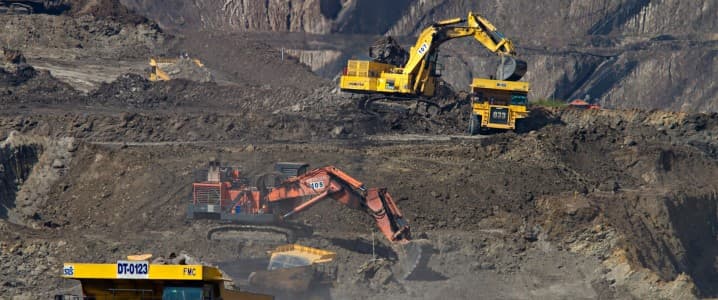
The strategic imperative behind Venezuela’s renewed focus on coal is clear: escape the stranglehold of oil sanctions. Towards the end of 2024, a significant milestone was reached with the restart of coal production at two key mines in northwestern Venezuela, Paso Diablo and Mina Norte. These operations, dormant for years, are now managed by the Carboturven joint venture, a partnership between Venezuela’s state-owned Carbozulia and the Turkish firm Glenmore Dis Ticaret Ve Madencilik A.S. This initiative has quickly yielded substantial results, with first-quarter 2025 production reaching approximately 3 million tons. This impressive output trajectory positions Venezuela to exceed 8 million tons of annual coal production, a level not seen in two decades, last achieved in the early 2000s. The ambitious target of boosting coal exports to 10 million tons per year underscores the government’s commitment to leveraging this non-sanctioned commodity to generate much-needed state revenues, which have been severely depleted by restrictions on its oil industry.
Navigating Volatile Oil Markets and Investor Questions
Venezuela’s intensified push into coal comes at a particularly interesting juncture for the global oil market, adding another layer of complexity for energy investors. As of today, Brent Crude trades at $90.38, reflecting a significant 9.07% decline within a day’s range of $86.08 to $98.97. Similarly, WTI Crude stands at $82.59, down 9.41%, trading between $78.97 and $90.34. This sharp downturn is not an isolated event; the 14-day Brent trend reveals a substantial drop from $112.78 on March 30, 2026, to the current $90.38 on April 17, 2026 – a reduction of $22.4, or nearly 20%. Such volatility directly influences investor sentiment, as evidenced by common questions our readers are asking, such as “what do you predict the price of oil per barrel will be by end of 2026?” and inquiries about “OPEC+ current production quotas.” This environment of price uncertainty makes Venezuela’s pursuit of a stable, sanction-free revenue stream like coal even more critical, as it attempts to insulate its economy from the broader oil market’s fluctuations and the enduring impact of sanctions on its primary export.
Upcoming Events and Geopolitical Implications
The timing of Venezuela’s coal resurgence also aligns with several critical upcoming energy events that could further shape the global supply and demand landscape. Investors will be closely watching the OPEC+ Joint Ministerial Monitoring Committee (JMMC) Meeting on April 19, 2026, followed by the full OPEC+ Ministerial Meeting on April 20, 2026. Decisions emerging from these gatherings regarding production quotas will have a direct bearing on global crude prices. Should OPEC+ opt to maintain or even increase supply amidst current price declines, the pressure on sanctioned producers like Venezuela to diversify their revenue streams will intensify. While Venezuela’s coal production may not directly impact global oil supply, its strategic importance to Caracas grows exponentially if oil prices remain subdued. This geopolitical maneuvering, however, comes with a severe environmental cost. Reports indicate that the restarted mines are operating with a stark disregard for environmental safeguards, releasing hazardous substances like cyanide, mercury, lead, and cadmium into the Guasare River. This raises significant Environmental, Social, and Governance (ESG) concerns, which are increasingly scrutinized by international investors and could complicate future partnerships or financing for such projects.
Investment Outlook and Strategic Diversification
For investors monitoring the energy sector, Venezuela’s pivot to coal presents a fascinating case study in strategic diversification born of necessity. While the long-term viability of coal in a global economy transitioning towards cleaner energy sources is debatable, for Venezuela, it represents an immediate and pragmatic solution to its economic woes. The current drive to export higher energy content coal aims to maximize revenue, providing a vital injection of foreign currency that its oil sector can no longer reliably deliver. This dual-track approach – maintaining its long-term potential in oil while aggressively developing sanction-free alternatives – speaks volumes about the country’s struggle for economic autonomy. The significant decline in global crude prices observed recently only reinforces the logic behind Caracas’s intensified coal strategy. Investors must weigh the immediate revenue opportunities against the mounting environmental liabilities and the potential for future international pressure over ecological degradation. Ultimately, Venezuela’s coal gambit underscores the profound impact of sanctions and geopolitical pressures on national resource strategies, forcing nations to make difficult choices in a complex and ever-evolving global energy market.


