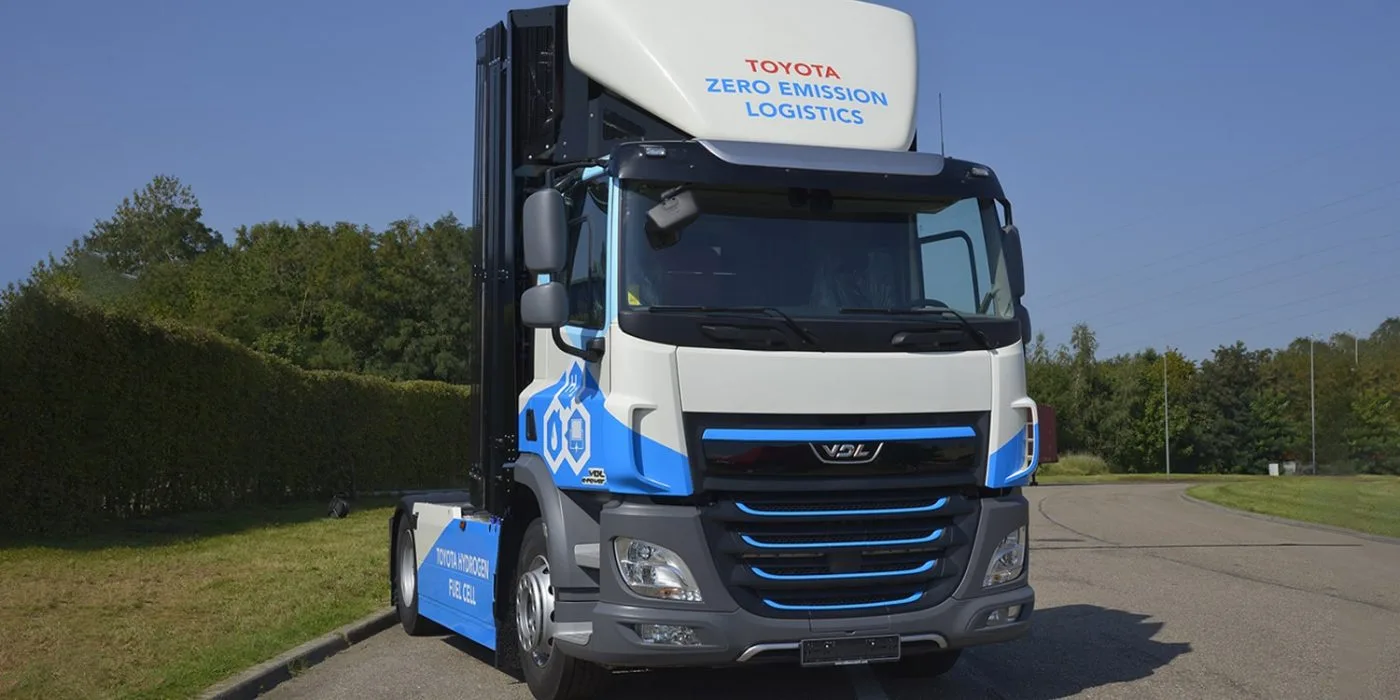
The push for decarbonization in the heavy-duty logistics sector is gaining significant traction, with automotive giant Toyota and VDL Group expanding their collaborative efforts in hydrogen fuel cell trucks. Following an initial successful demonstration, four additional 40-tonne fuel cell trucks are now undergoing rigorous testing in daily logistics operations across international routes. This initiative represents a tangible step towards a hydrogen-powered future for freight transport, a development that warrants close scrutiny from investors navigating the evolving energy landscape. While the immediate impact on global oil demand may seem negligible, these trials signal a longer-term structural shift that could reshape the energy mix for heavy transport, challenging the entrenched dominance of diesel.
Hydrogen’s Ascent in Logistics Against a Volatile Oil Backdrop
The expanded deployment of hydrogen fuel cell trucks by Toyota and VDL is a crucial milestone in validating the technology’s viability for demanding logistics operations. These 40-tonne vehicles are now traversing key European corridors, connecting Toyota’s Parts Centre Europe with logistics partners Vos Transport Group, CEVA, Groupe CAT, and Yusen. Routes span between strategic hubs like Diest (Belgium), Lille (France), Cologne (Germany), and the Dutch cities of Rotterdam and Weesp, all supported by existing hydrogen refuelling infrastructure and backup solutions. Toyota’s ambitious goal of achieving carbon neutrality in its logistics by 2040 underscores the strategic importance of this initiative, aiming not just for internal decarbonization but also to stimulate the broader hydrogen economy, aligning with the EU’s Alternative Fuel Infrastructure Regulation (AFIR).
This long-term vision for hydrogen unfolds against a dynamic backdrop in the traditional energy markets. As of today, Brent crude trades at $93.22 per barrel, reflecting an 8.8% decline over the past 14 days from its earlier position of $102.22. While short-term price fluctuations are driven by conventional supply-demand fundamentals, the sustained development of alternative fuels like hydrogen for heavy transport introduces a long-term demand erosion risk for crude oil derivatives, particularly diesel. For energy investors, monitoring these technological advancements provides crucial foresight, enabling a more nuanced understanding of future demand scenarios beyond immediate market volatility. The initial performance data, suggesting a comparable experience to diesel vehicles with a range of up to 400 kilometers under real conditions, highlights the potential for hydrogen to become a serious contender in this segment.
Navigating the Technical Realities and Investor Focus
The technical specifications, while still partially under wraps, reveal Toyota’s second-generation fuel cell modules at the heart of these VDL trucks. These modules, available in 60 kW or 80 kW configurations and designed for a 400-750 volt range, likely require a dual setup to meet the power demands of a heavy-duty lorry. While specific details regarding the electric drive, buffer battery, or hydrogen tank capacity remain undisclosed, the visible cylindrical tanks stacked behind the cab are consistent with current industry practices. The five-year field trial period is critical, designed to deepen understanding of fuel cell truck operation on public roads and refine both vehicle technology and operational processes. This extensive testing phase underscores the nascent stage of commercial deployment, even as significant progress is being made.
Our proprietary reader intent data reveals that while developments in alternative fuels are on the radar, the immediate focus of many investors remains firmly anchored in the traditional energy complex. Questions such as “How are Chinese tea-pot refineries running this quarter?” and “What’s driving Asian LNG spot prices this week?” illustrate a keen interest in current fossil fuel demand drivers and regional market dynamics. This divergence highlights a key challenge for hydrogen adoption: while the environmental imperative is clear, the economic and infrastructural hurdles are substantial, meaning traditional oil and gas market forces will continue to dominate short-to-medium term investment decisions. For investors building a base-case Brent price forecast for the next quarter, these hydrogen trials are more of a long-term strategic factor rather than an immediate price mover, emphasizing the dual perspective required in energy market analysis.
Upcoming Catalysts and Long-Term Portfolio Implications
Looking ahead, the energy market calendar is packed with events that will shape the immediate future of oil and gas prices, offering critical data points for investors. The upcoming OPEC+ Joint Ministerial Monitoring Committee (JMMC) meeting on April 18th, followed by the Full Ministerial Meeting on April 20th, will be pivotal in determining crude supply strategies. These decisions, coupled with the weekly API and EIA crude inventory reports on April 21st/22nd and April 28th/29th, will provide critical insights into short-term supply-demand balances and are likely to heavily influence the consensus 2026 Brent forecast that many investors are seeking. Furthermore, the Baker Hughes Rig Count reports on April 17th and April 24th will offer a pulse check on upstream activity.
While these traditional events will undoubtedly drive near-term market sentiment and price action, the growing momentum behind hydrogen initiatives like the Toyota-VDL collaboration represents a slow but steady structural shift. For long-term portfolio positioning, investors must consider the gradual erosion of diesel demand in specific sectors as hydrogen infrastructure matures and costs decline. This necessitates a dual analytical framework: closely monitoring the immediate supply-demand dynamics communicated by OPEC+ and inventory data, while simultaneously tracking the progress of disruptive technologies that will shape the energy landscape over the coming decades. The increasing investment in fuel cell technology for heavy-duty applications suggests that hydrogen, once a niche concept, is steadily moving towards becoming a viable alternative, warranting its inclusion in a comprehensive energy investment thesis.