The global energy landscape is undergoing a profound transformation, driven not only by market fundamentals but increasingly by evolving international legal and policy frameworks. A recent development, spearheaded by the small Pacific island nation of Vanuatu, signals a significant, yet perhaps underappreciated, shift in the policy risk profile for the oil and gas sector. Vanuatu’s initiative to translate a landmark International Court of Justice (ICJ) advisory opinion into concrete political action presents a novel challenge to the fossil fuel industry’s operating environment, pushing for legally binding obligations on states to protect the climate. This move bypasses traditional, often gridlocked, climate negotiations, introducing a new dimension of accountability that investors must now seriously consider alongside conventional market analysis.
The New Legal Frontline: ICJ Opinion and State Accountability
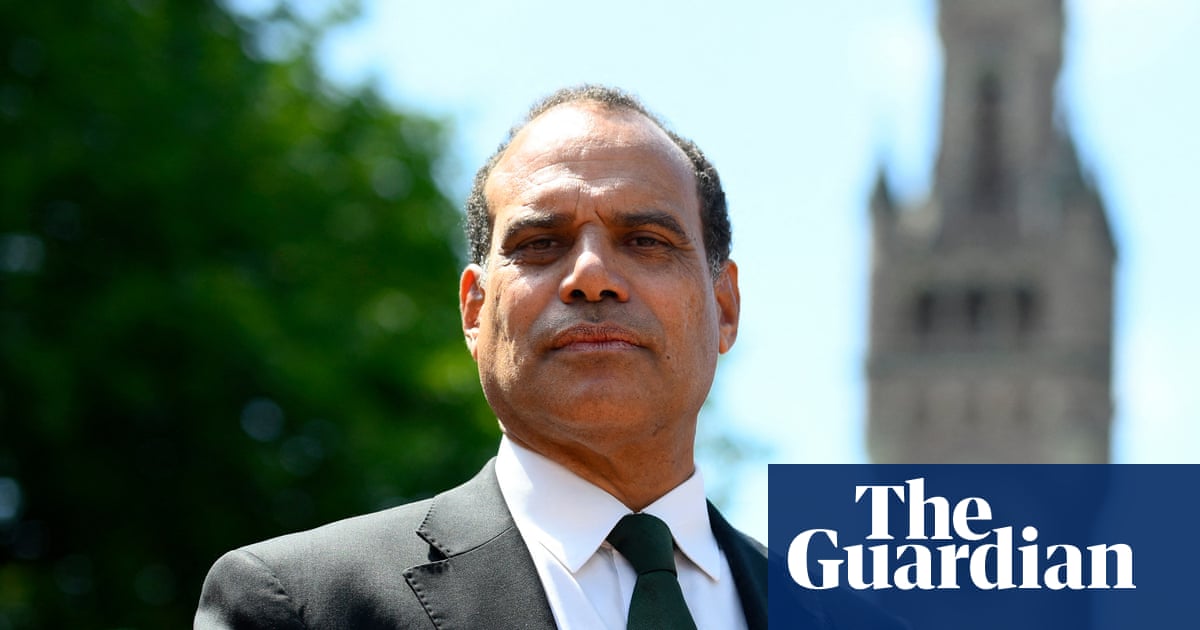
Vanuatu’s diplomatic efforts have successfully secured a unanimous advisory opinion from the International Court of Justice, clarifying that states bear a legal duty under international law to protect the climate and prevent further environmental harm. This isn’t just another non-binding declaration; the ICJ’s pronouncement goes further than the Paris Agreement, establishing that any breach of this duty could expose states to claims for reparations, including compensation. The court explicitly found the 1.5C global heating limit to be a legally binding, non-negotiable threshold, obliging all nations to implement evidence-based measures to drastically cut greenhouse gas emissions. For oil and gas investors, this translates into an elevated risk of direct and indirect legal challenges. While the ICJ opinion directly applies to states, its implications cascade down to the companies operating within those jurisdictions. Governments facing potential legal action for climate inaction are likely to intensify regulatory pressure on fossil fuel producers, potentially leading to stricter environmental standards, increased levies, or even limitations on production expansion. This emerging legal architecture, as Vanuatu’s Minister of Climate Change, Ralph Regenvanu, articulates, aims to influence the process from outside traditional UN climate talks, forcing compliance with international obligations and creating a more formidable barrier to unchecked fossil fuel expansion.
Market Volatility Meets Long-Term Policy Headwinds
While the long-term policy horizon darkens for fossil fuels, the immediate market picture presents its own set of challenges. As of today, Brent Crude trades at $90.38 per barrel, experiencing a significant -9.07% drop within the day’s range of $86.08-$98.97. Similarly, WTI Crude is at $82.59, down -9.41% within its daily range of $78.97-$90.34. This steep decline continues a broader trend, with Brent having shed $20.91, or 18.5%, over the past 14 days, falling from $112.78 on March 30th to $91.87 just yesterday. Gasoline prices have also seen a notable decline, currently at $2.93, down -5.18%. This recent market volatility, driven by a complex interplay of demand concerns and supply expectations, often dominates investor attention. However, it’s crucial for sophisticated investors to look beyond the daily price swings. The Vanuatu-led ICJ initiative represents a fundamental, systemic risk that transcends short-term supply/demand dynamics. While today’s market may be reacting to immediate pressures, the underlying policy and legal environment for oil and gas is demonstrably shifting, creating a widening gap between tactical trading and strategic long-term investing in the sector.
Addressing Investor Concerns: Beyond the Barrel Price Forecast
Our proprietary reader intent data reveals a keen investor focus on both immediate company performance and long-term price predictions. Questions like “How well do you think Repsol will end in April 2026?” and “What do you predict the price of oil per barrel will be by end of 2026?” highlight a desire for clarity amidst uncertainty. While traditional forecasts often hinge on supply, demand, and geopolitical factors, the ICJ’s advisory opinion introduces a powerful new variable: escalating legal and reputational risk. Companies perceived as contributing to climate inaction could face increased scrutiny, regulatory hurdles, and even direct legal challenges. The prospect of states being held liable for reparations under international law creates an incentive for governments to either curtail fossil fuel activities or implement stricter environmental regulations, impacting profitability and operational freedom for energy firms. Therefore, when evaluating a company like Repsol, or projecting the barrel price for late 2026, investors must now factor in this heightened “climate liability risk.” This isn’t merely about carbon taxes; it’s about the fundamental legal framework within which the industry operates, potentially leading to stranded assets, increased compliance costs, and challenges to securing financing for new projects.
Navigating Near-Term Catalysts Amidst Strategic Policy Shifts
In the immediate future, market participants will be closely watching several key events that typically drive short-term price action. This weekend, the OPEC+ Joint Ministerial Monitoring Committee (JMMC) meets on April 18th, followed by the Full Ministerial Meeting on April 19th. These meetings will dictate production quotas and provide crucial insights into supply management strategies. Later next week, we have the API Weekly Crude Inventory report on April 21st and the EIA Weekly Petroleum Status Report on April 22nd, offering critical data on U.S. stock levels. The Baker Hughes Rig Count on April 24th will round out the week, providing an indicator of future production activity. These events are undeniably important for tactical positioning. However, investors must integrate them into a broader strategic outlook that accounts for the evolving policy landscape. The Vanuatu-led initiative, building on the ICJ’s advisory opinion, represents a structural shift, not a cyclical one. While OPEC+ decisions and inventory data will continue to influence daily trading, the long-term trajectory of the oil and gas industry will increasingly be shaped by these fundamental changes in international climate law. Smart capital will look beyond the next OPEC+ announcement and begin assessing how companies are positioned to navigate a world where climate duties are legally enforceable, and the 1.5C limit is not merely an aspiration but an obligation.