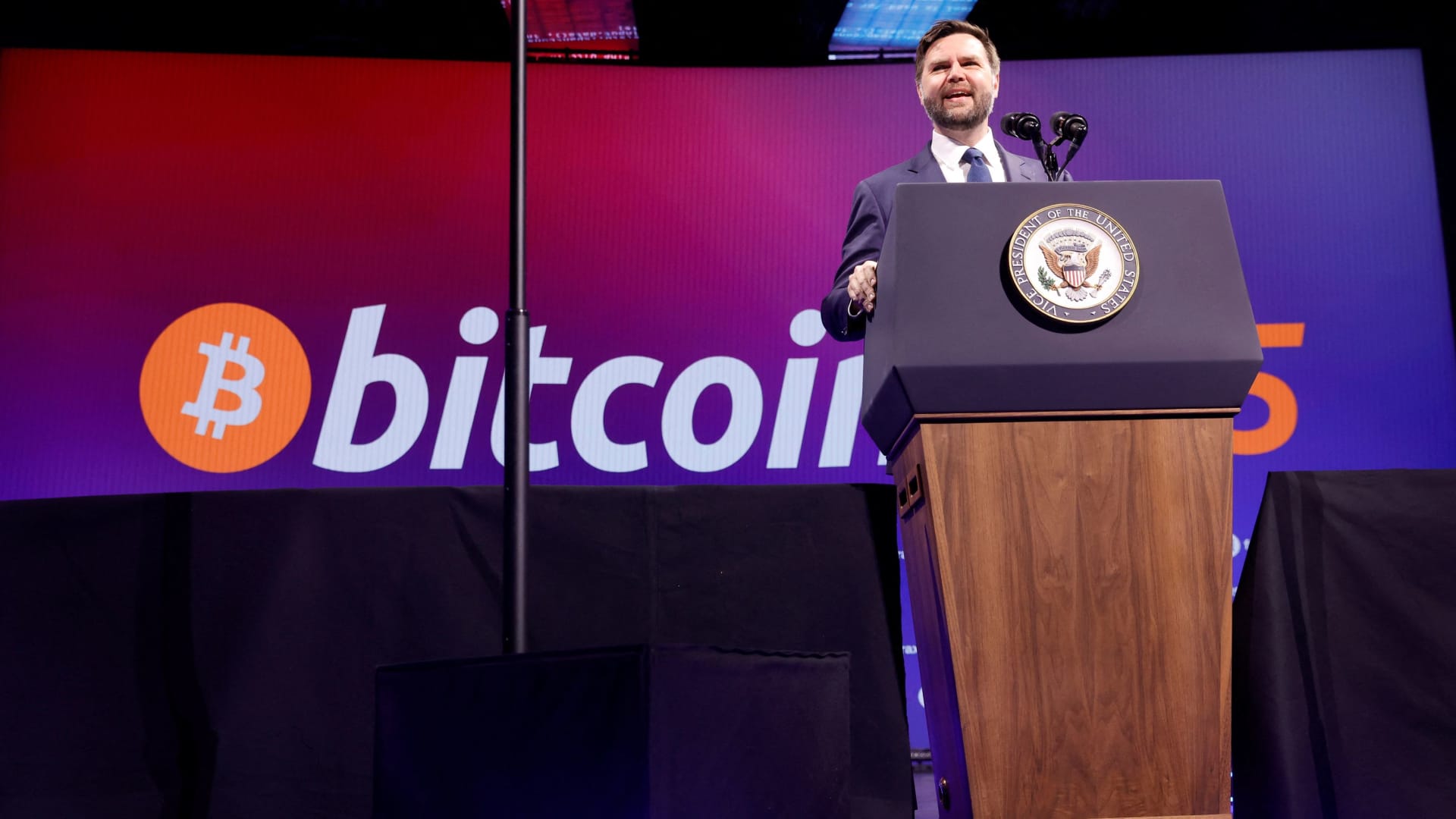
LAS VEGAS – In a significant address delivered at the Bitcoin 2025 conference this Wednesday, Vice President JD Vance articulated a clear and assertive stance from the Trump administration regarding the role of stablecoins in the American financial landscape. Speaking before an estimated 35,000 attendees, Vance conveyed a message designed to reassure digital asset investors while signaling a pronounced shift in federal policy.
Far from perceiving stablecoins as a threat to the enduring strength of the U.S. dollar, the administration views these digital currencies as a powerful accelerant for national economic prowess. “We do not believe stablecoins jeopardize the integrity of the U.S. dollar. Quite the contrary,” Vance declared during his keynote. “We consider them a force multiplier for our economic strength.” This perspective underscores a strategic embrace of digital financial innovation, aiming to leverage the burgeoning stablecoin market to reinforce American financial dominance globally.
Administration Signals Pro-Crypto Future
This pro-crypto posture follows a presidential campaign significantly bolstered by funding from the digital asset industry, and comes less than a year after then-candidate Donald Trump addressed Bitcoin 2024 in Nashville. The consistent messaging from the Trump-Vance ticket establishes a clear, supportive framework for cryptocurrency development and integration into the mainstream economy. For investors in the energy sector, understanding the broader capital market shifts driven by such policies is crucial, as regulatory clarity and the flow of global capital can indirectly influence investment decisions and commodity pricing.
Stablecoins, designed to maintain a pegged value, typically to the U.S. dollar, currently represent a critical area of focus for policymakers. The Republican-led initiative to pass the GENIUS Act aims to establish a comprehensive regulatory framework for these digital assets. This proposed legislation recently cleared a pivotal procedural vote in the Senate, garnering bipartisan support from 15 Democratic senators. However, its path through the House of Representatives remains uncertain, where alternative stablecoin regulation proposals are also under consideration, highlighting the complex legislative journey ahead for digital asset policy.
Unlocking Trillions: The Economic Case for Regulation
David Sacks, a senior advisor to President Trump on crypto and artificial intelligence, recently emphasized the pressing need for regulatory action. Sacks highlighted a market currently awash with over $200 billion in unregulated stablecoins. He posits that a robust legal framework for these assets could unleash an enormous wave of demand for U.S. Treasuries, potentially amounting to trillions of dollars “practically overnight.” This prospective inflow of capital into government securities could have profound implications for interest rates, bond markets, and overall macroeconomic stability, factors closely watched by investors across all sectors, including oil and gas.
The mechanism is straightforward: many stablecoins are backed by reserves, often held in low-risk assets like U.S. Treasury bills. Formalizing their regulatory status could encourage greater institutional adoption and expand their use, thereby increasing the demand for these backing assets. This scenario presents a dual benefit: it strengthens the perceived stability and utility of the U.S. dollar in the digital realm while simultaneously bolstering the market for U.S. government debt, reducing borrowing costs and enhancing fiscal flexibility.
Navigating Conflicts and Policy Shifts
The legislative push for stablecoin regulation has not been without its complexities and controversies. Previously, Democrats expressed reservations about the GENIUS Act, citing potential conflicts of interest stemming from President Trump’s personal ventures into cryptocurrency, which include his own meme coin and a stablecoin developed by his family’s crypto business. While Vice President Vance did not directly address these specific concerns at the conference, he light-heartedly dismissed any notion that his positive remarks were intended to personally benefit his own digital asset holdings, stating he wasn’t merely “juicing my own meme coins.” Instead, he underscored the broader economic value inherent in legitimizing dollar-pegged stablecoins.
Vance explicitly linked the economic prosperity of the U.S. and the strength of its currency to the successful enactment of the GENIUS Act. “Dollar-pegged stablecoins, particularly once GENIUS is enacted, is only going to help the American economy,” Vance asserted. “And it’s only going to help the American dollar.” This administration’s vision sees stablecoins not as a fringe financial instrument, but as a fundamental component for enhancing the global reach and utility of the U.S. dollar in an increasingly digital world.
Regulatory Rollbacks and Leadership Changes
Beyond advocating for stablecoin legislation, Vice President Vance also highlighted other significant initiatives from the administration. These include the establishment of a strategic bitcoin reserve, a move that signals a deeper integration of major cryptocurrencies into national financial strategy, and ongoing efforts to roll back existing regulations deemed burdensome or counterproductive to innovation. These regulatory adjustments are keenly observed by investors across all industries, as they can indicate broader shifts in the government’s approach to market intervention and economic freedom.
During his address, Vance also disclosed his personal investment in the digital asset space, stating he owns “a fair amount of bitcoin today.” This personal endorsement, combined with his sharp critique of former SEC Chairman Gary Gensler, marks a clear departure from previous regulatory postures. Vance openly criticized Gensler, who has become a frequent target for lawmakers and crypto industry leaders, declaring, “We fired Gary Gensler — and we’re going to fire everyone like him.” This statement underscores the administration’s commitment to ushering in a new era of digital asset regulation, one that prioritizes innovation and growth over perceived heavy-handed enforcement.
Further signaling this regulatory pivot, the Department of Labor, prior to Vance’s keynote, rescinded a 2022 regulation. While specifics were not detailed, such actions collectively reinforce the administration’s commitment to fostering a more accommodating environment for digital assets and innovation. For investors monitoring global capital flows and the regulatory landscape, these developments are crucial, as they shape the future of finance and potentially impact the stability and growth prospects of traditional sectors like oil and gas by influencing broader market confidence and investment allocation.