The global energy landscape is in constant flux, presenting both challenges and compelling new opportunities for investors. While traditional oil and gas remains a cornerstone of the world’s energy mix, the sector is increasingly characterized by price volatility driven by geopolitical tensions, supply-demand imbalances, and a global pivot towards sustainable technologies. Against this backdrop, savvy investors are keenly exploring diversification strategies that leverage existing industry expertise while tapping into emerging, high-growth sectors. A significant development in Utah signals precisely such an opportunity: the discovery of a vast critical minerals deposit, offering a strategic pivot point for energy investors seeking long-term stability and growth in the evolving North American resource economy.
The Strategic Imperative: Diversifying Beyond Volatile Crude
For investors deeply entrenched in the oil and gas sector, the past few weeks have underscored the persistent volatility inherent in crude markets. As of today, Brent crude trades at $91.87 per barrel, reflecting a notable 7.57% decline on the day. This recent dip follows a broader downward trend, with Brent prices having fallen by a significant 18.5% from $112.78 on March 30th to their current level on April 17th. WTI crude has mirrored this trajectory, currently standing at $84 per barrel, down 7.86% today. Such rapid fluctuations naturally lead to investor apprehension, as evidenced by common questions our readers are posing, like “what do you predict the price of oil per barrel will be by end of 2026?” and inquiries about specific company performance. This pervasive uncertainty highlights the urgent need for diversification, not merely as a hedge, but as a proactive strategy to capture growth in complementary energy and resource markets. Investing in critical minerals, particularly a robust domestic source, presents a powerful antidote to this volatility, offering a long-term play insulated from the immediate whims of crude supply and demand dynamics.
Utah’s Critical Minerals Bonanza: A Game Changer for Domestic Supply
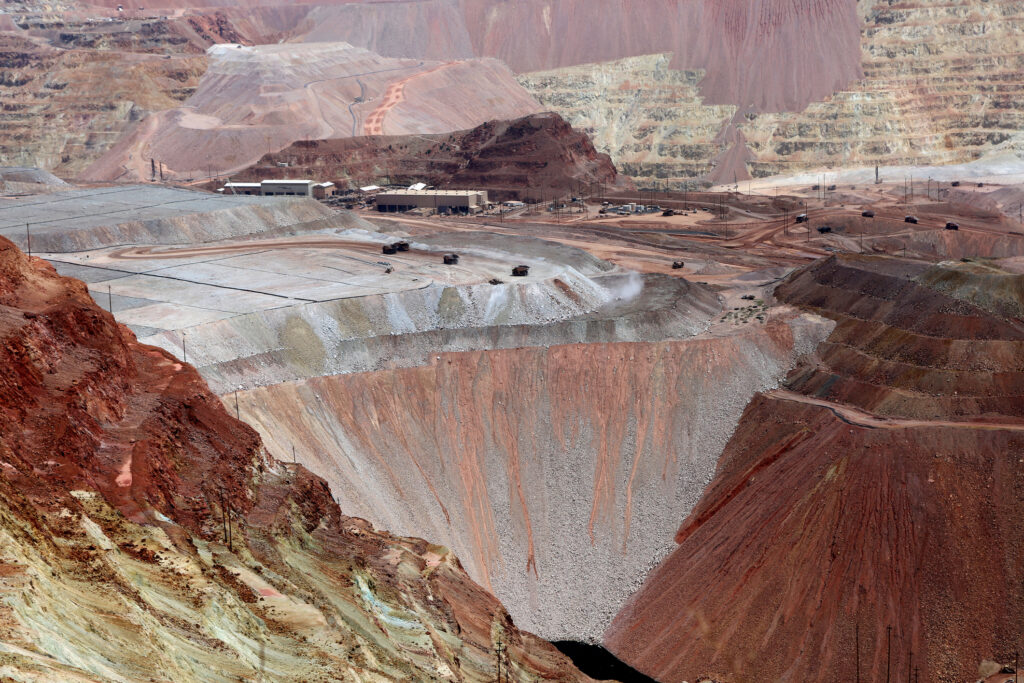
A recent discovery in Provo, Utah, promises to be a pivotal development for North American resource independence. A local company has unearthed what is being described as potentially “one of North America’s most significant” critical mineral deposits. Assays from the Silicon Ridge project confirm the presence of an impressive 16 critical minerals within a unique halloysite-hosted ion-adsorption clay (IAC) system. This includes highly sought-after elements such as germanium, gallium, lithium, rubidium, scandium, cesium, tungsten, vanadium, and niobium, alongside a full spectrum of heavy rare earth elements. The significance of an IAC system cannot be overstated; it’s the geological formation that currently supplies over 70% of the world’s heavy rare earth elements, and a substantial 35-40% of China’s total rare earth production. Crucially, these systems are known for their easier and cleaner mineral extraction process compared to conventional hard-rock mining, reducing both capital expenditure and environmental footprint. Initial exploratory results indicate a compelling concentration of approximately 2,700 parts per million (ppm), or 0.27%, which compares favorably to typical Chinese IAC deposits that range from 500 to 2,000 ppm. With mining permits already in place and a 74,000-square-foot processing facility ready for rapid development, this project represents a truly “shovel-ready” domestic source for critical minerals essential to modern technology and defense.
Unpacking the Investor Opportunity: Growth, Stability, and Future Demand
For sophisticated investors, the Utah critical minerals discovery offers a rare convergence of immediate readiness and immense future potential. The current confirmation of high-grade critical minerals across only 11% of the total resource area, at a depth of no more than 100 feet, strongly suggests significant expansion potential. This speaks directly to investor interest in long-term asset growth and value appreciation. The demand for critical minerals is on an exponential trajectory, fueled by the global energy transition, the proliferation of electric vehicles, advanced electronics, renewable energy technologies, and national defense applications. Gallium and germanium, for example, are vital for advanced semiconductors and optoelectronics, while rare earth elements are indispensable for powerful magnets in EVs and wind turbines. Investing in a project with confirmed high-grade deposits, a streamlined extraction process, and existing permits provides a tangible pathway to capitalize on this escalating demand. It represents a strategic move to diversify a portfolio away from the often unpredictable dynamics of crude oil, offering exposure to a sector driven by long-term technological and geopolitical imperatives for domestic supply security.
Navigating the Macro Environment: Upcoming Events and Portfolio Strategy
While the long-term allure of critical minerals is evident, the immediate energy landscape continues to present its own set of influences. The upcoming OPEC+ Ministerial Meeting on April 18th is a prime example, where production quotas and supply strategies will be debated, directly impacting crude prices. Similarly, the API Weekly Crude Inventory reports on April 21st and 28th, along with the EIA Weekly Petroleum Status Reports on April 22nd and 29th, will provide crucial insights into immediate supply-demand balances in the United States. These events, alongside the Baker Hughes Rig Count releases on April 24th and May 1st, will continue to shape the short-to-medium term outlook for traditional oil and gas investments. Investors, many of whom are asking about OPEC+ production quotas, understand that these ongoing factors contribute to the market’s inherent unpredictability. Therefore, a balanced portfolio strategy is paramount. While closely monitoring these traditional energy market indicators, strategically allocating capital to a high-potential, shovel-ready critical minerals project in Utah offers a crucial hedge. It allows investors to participate in the foundational raw materials driving the future economy, providing a layer of stability and growth that complements, rather than competes with, existing oil and gas holdings. This is about building resilience and capturing value in a rapidly evolving energy and resource paradigm.