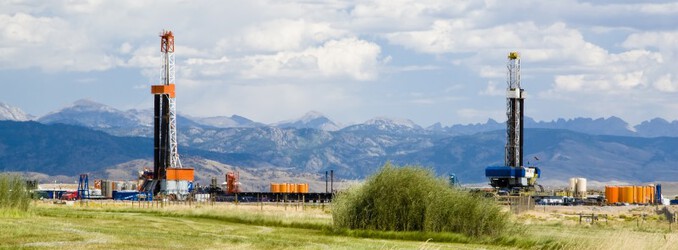
A recent assessment by the U.S. Geological Survey (USGS) has unveiled a substantial volume of undiscovered, technically recoverable oil and natural gas resources within the Mowry Composite Total Petroleum System, spanning parts of Wyoming, Colorado, and Utah. This new evaluation estimates an impressive 473 million barrels of oil and 27 trillion cubic feet of natural gas, figures that promise to significantly bolster the domestic energy supply narrative and inject new vitality into regional economies across the American West. For investors monitoring the long-term energy landscape, this discovery represents a critical update to the nation’s resource potential, offering a new lens through which to evaluate future production trends and investment opportunities in the Rocky Mountain region.
The Scale of the New Western Resource Play
The newly identified resources within the Mowry Composite Total Petroleum System are considerable, underscoring the enduring potential of domestic geology. With an estimated 473 million barrels of oil and a staggering 27 trillion cubic feet of natural gas, this assessment focuses specifically on *undiscovered* resources – areas where scientific analysis indicates substantial deposits yet to be tapped by industry. To put this into perspective, the Mowry Composite system, which includes formations like the Dakota Sandstone and the Mowry Shale, has historically produced approximately 7.3 trillion cubic feet of natural gas and 90 million barrels of oil since exploration began in the 1950s. The new assessment, therefore, represents a potential multi-fold increase over past production from these specific formations, suggesting a significant expansion of the known resource base. Furthermore, the USGS notes that other prolific formations in the Southwestern Wyoming Geologic Province, such as the Lance Formation and Mesa Verde Group, are not even included in this assessment, hinting at even broader regional potential. This evaluation provides critical data for responsible resource management and future development strategies, pointing towards a robust pipeline of future energy supply.
Bolstering Domestic Supply Amidst Shifting Market Dynamics
The discovery of such significant domestic resources comes at a pivotal time for global energy markets, where supply security remains a paramount concern for investors. As of today, Brent crude trades at $96.04, reflecting a 1.32% uptick on the day, while WTI crude sits at $92.40, up 1.23%. These gains follow a noticeable period of volatility, with Brent having declined by 8.8% over the past 14 days, from $102.22 to $93.22. Gasoline prices currently stand at $2.98. In this context of fluctuating prices and a persistent global appetite for energy, a substantial domestic find like the Mowry Composite bolsters the narrative of American energy independence. While these resources are technically recoverable and not yet producing, their existence can influence long-term investment strategies by reducing perceived geopolitical supply risks and offering a stable, domestically sourced energy foundation. This potential for future production can act as a crucial counterweight to global supply shocks, providing a buffer against international price volatility and supporting the U.S.’s strategic energy position.
Investor Outlook: Navigating Future Supply and Price Signals
This new assessment will undoubtedly feed into the complex models and forecasts that guide investor decisions. Many investors are currently grappling with fundamental questions, such as building a base-case Brent price forecast for the next quarter and seeking consensus 2026 Brent forecasts. While the Mowry Composite discovery is a long-term play, its existence adds a critical new variable to the supply side of the equation. Analysts will begin to factor this potential into their longer-range outlooks, especially when considering the sustainability of U.S. production growth. Near-term, the market will remain highly sensitive to upcoming events. The OPEC+ Joint Ministerial Monitoring Committee (JMMC) meeting on April 18th and the subsequent full Ministerial meeting on April 20th will be closely watched for any shifts in global production quotas. Domestically, the Baker Hughes Rig Count, scheduled for April 17th and 24th, will offer granular insight into drilling activity, while the weekly API and EIA Petroleum Status Reports will provide crucial updates on crude inventories and demand trends throughout April. These immediate data points will drive short-term price action, but the underlying potential of the Mowry Composite strengthens the long-term supply picture for the U.S., potentially influencing capital allocation decisions in exploration and production over the coming years.
Strategic Implications for Western US Energy Development
The implications of the Mowry Composite assessment extend beyond mere resource numbers; they touch upon strategic energy policy and regional economic development. The emphasis on “responsible resource management” by government officials suggests a balanced approach to tapping these new reserves, likely incorporating modern environmental and operational standards. For the Western states of Wyoming, Colorado, and Utah, this discovery represents a significant economic opportunity, promising job creation, infrastructure investment, and sustained local economic growth. It could attract new capital and technology, fostering a renewed interest in conventional and unconventional plays across the Rocky Mountain region. Furthermore, the fact that this assessment focuses on *undiscovered* resources, and explicitly excludes other known productive formations in the area, hints at the vast, untapped geological potential that still exists. This could lead to further scientific assessments and increased exploration activity, solidifying the American West’s role as a critical contributor to the nation’s energy future and offering compelling prospects for investors seeking long-term growth in the domestic energy sector.