Navigating a Volatile Energy Landscape: Tariffs, Geopolitics, and Inflationary Pressures
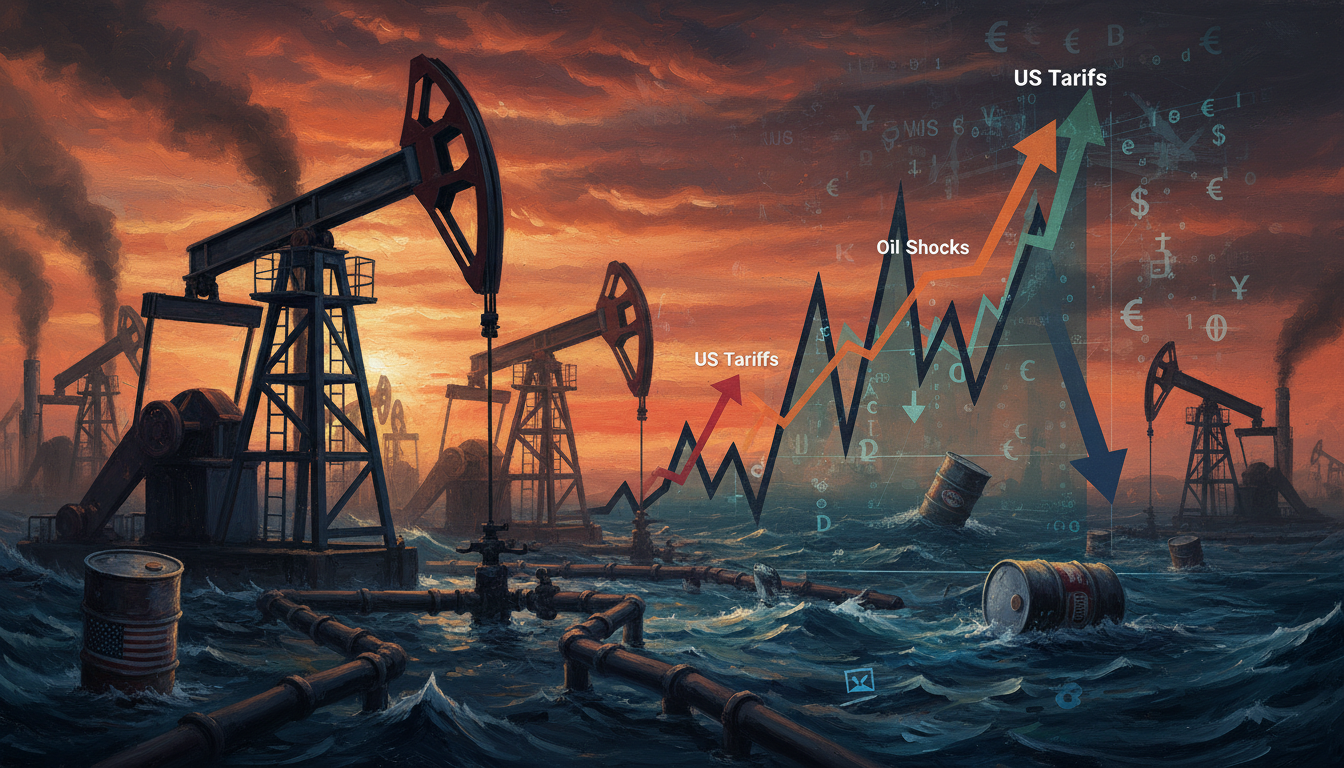
The global investment landscape for oil and gas is currently defined by a confluence of powerful, often conflicting, forces. While significant liquidity injections have provided a cushion for broader risk markets, the underlying currents of trade disputes, escalating geopolitical tensions, and persistent inflationary pressures continue to drive considerable volatility. For energy investors, understanding these intertwined dynamics is paramount to identifying both risk and opportunity in a market grappling with dual shocks that directly impact global trade flows and critical energy prices.
Crude Oil’s Resilient Rally Amidst Geopolitical Unrest
The energy market demonstrates a clear upward trend, largely fueled by ongoing geopolitical uncertainties. As of today, Brent crude trades robustly at $112, reflecting a 1.45% increase within a daily range of $110.86 to $112.43. Similarly, WTI crude stands at $106.13, marking a 1.01% gain, having moved between $104.98 and $106.65. This upward momentum isn’t an isolated event; our proprietary data reveals Brent has surged over 12% in the past two weeks alone, climbing from $99.36 on April 13th to $111.70 by April 30th. This consistent climb underscores persistent supply anxieties and the market’s sensitivity to regional instability. The immediate ripple effect is evident in gasoline prices, which currently sit at $3.66, up 1.11% today, directly impacting consumer inflation expectations and the broader economic outlook. Geopolitical flashpoints, such as the recently extended Israel-Lebanon ceasefire despite sporadic exchanges, and the stalled US-Iran negotiations over nuclear weapons and port blockades, continue to add a substantial risk premium to crude prices, keeping markets on edge.
Trade Barriers and Their Impact on Global Equities
Beyond the immediate energy shock, the specter of trade protectionism introduces another layer of market uncertainty. Recent commentary regarding potential US tariffs on UK exports poses a significant threat to established trade flows, particularly impacting the UK economy. Such measures risk sterling depreciation, potentially offsetting any gains from higher U.S. yields, and could see EUR/GBP strengthen if the dispute is perceived as a localized UK issue. While major equity indices like the S&P 500 continue to post new highs, often supported by sectors like technology and broad market liquidity, these gains remain vulnerable. The sustained rally in the Dow Jones 30 and the Transportation Index, which are closely watched indicators, would need to break key resistance levels (50,000 and 1,300 respectively) to confirm durable bullish momentum. Should oil prices continue their advance, further fueling inflation and pushing bond yields higher, the current equity valuations could face considerable pressure, potentially leading to a sharp market correction.
Investor Focus: Supply Dynamics and Forward Price Trajectories
Our proprietary intent data highlights that investors are acutely focused on crude oil trends and future price forecasts. A recurring question asks for a base-case Brent price forecast for the next quarter. Given the current geopolitical backdrop, persistent supply concerns, and the recent upward trajectory, a scenario where Brent continues to test higher resistance levels, potentially moving towards $120-$125, remains a plausible base case, particularly if global tensions intensify or OPEC+ discipline wavers. Investors are also keen to understand OPEC+ compliance, with queries surfacing about which members might be over-producing. While specific overproduction figures are often opaque, the market remains highly attentive to any signs of quota breaches that could temporarily ease tightness, though the overarching narrative still points to a constrained supply environment.
The next two weeks will offer critical insights for refining these forecasts. The Baker Hughes Rig Count, scheduled for May 1st and May 8th, will provide a snapshot of drilling activity. More significantly, the EIA Short-Term Energy Outlook on May 2nd will offer updated supply-demand projections, forming a crucial reference point for market participants. Weekly API and EIA inventory reports (May 5th/6th, May 12th/13th) will deliver granular data on US crude stockpiles, which can trigger short-term price movements. Furthermore, the IEA Oil Market Report on May 12th will provide a comprehensive global overview, often serving as a significant catalyst for market sentiment and long-term outlooks.
Inflationary Headwinds and Bond Market Pressures
The combined pressure from elevated energy prices and trade tariffs is directly feeding into growing inflation expectations. This, in turn, exerts upward pressure on long-term bond yields. The risk scenario where oil continues its upward march, inflation expectations grow unchecked, and bond yields climb towards 4.5% presents a significant challenge for investment portfolios. Such an environment would be detrimental to gold, which often struggles when real yields rise, and would place considerable strain on equity valuations, especially those of growth stocks. Furthermore, a sustained rise in oil prices and U.S. bond yields could limit any potential downside for the U.S. Dollar Index, despite it currently approaching a key support level. Investors must brace for an environment where liquidity, while supportive, may not be sufficient to fully offset the compounded effects of higher inflation, escalating yields, and persistent trade friction.