Washington is signaling a renewed and aggressive stance on global oil flows, directly targeting key nodes of illicit trade and geopolitical influence. The latest salvo from the U.S. Treasury involves a sweeping sanctions package aimed at throttling Iran’s oil revenue stream and undermining Moscow’s economic leverage in the Balkans. For energy investors, this represents a significant uptick in enforcement risk, potentially reshaping supply dynamics and adding a fresh layer of geopolitical premium to crude prices. As we dissect the specifics, it becomes clear that these actions are not isolated but part of a calculated strategy to degrade the infrastructure supporting sanctioned oil, demanding close attention from anyone positioned in the commodity markets.
Washington Escalates Sanctions on Iran’s Oil Lifelines and Russian Influence
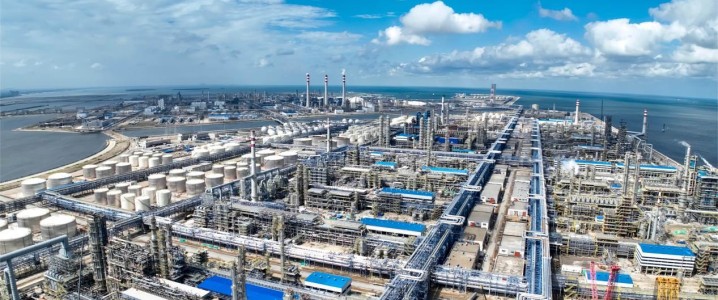
The U.S. Treasury has unleashed its most comprehensive sanctions volley since midsummer, blacklisting approximately 100 individuals, vessels, and companies. At the heart of this action is the direct targeting of China-based entities implicated in facilitating Iranian crude exports. Notably, China’s Shandong Jincheng Petrochemical Group, a prominent “teapot” refinery in Shandong province, stands accused of purchasing millions of barrels of Iranian crude since 2023. Further, the Rizhao Shihua Crude Oil Terminal at Lanshan Port has been sanctioned for allegedly handling tankers belonging to Iran’s “shadow fleet,” including vessels like the Kongm, Big Mag, and Voy, which are instrumental in disguising and moving sanctioned barrels across Asia. This marks the fourth such round this year specifically focused on Chinese buyers of Iranian oil, reinforcing Treasury Secretary Scott Bessent’s commitment to “degrade Iran’s cash flow by dismantling key elements of its export machine.”
In parallel, Washington allowed a critical sanctions waiver to expire for Serbia’s NIS refinery, a Gazprom Neft-linked entity that supplies roughly 80% of Serbia’s fuels. This decision immediately redirected crude flows via Croatia’s JANAF pipeline onto a short OFAC license set to expire on October 15th. The logistical disruption is already evident, with JANAF projecting an €18 million revenue loss and Serbia’s president warning of dwindling fuel stocks by November. Together, these actions underscore Washington’s dual-pronged approach: tightening the noose on Iran’s illicit oil trade while simultaneously challenging Russia’s energy influence in strategic regions, sending a clear message that sanctions enforcement is intensifying.
Market Volatility Amidst Intensifying Geopolitical Risk
The oil market is currently navigating a period of significant volatility, with recent price action reflecting a complex interplay of supply, demand, and geopolitical factors. As of today, Brent crude trades at $90.38 per barrel, marking a notable 9.07% decline within the day, having ranged from $86.08 to $98.97. Similarly, WTI crude is priced at $82.59, down 9.41%, trading between $78.97 and $90.34. This intraday dip follows a broader trend; our proprietary data shows Brent has shed nearly 20% over the past two weeks, dropping from $112.78 on March 30th to its current level. While today’s sharp decline may reflect broader market sentiment or profit-taking, these new, aggressive sanctions against Iranian oil and its facilitators inject a distinct bullish supply risk into the equation. For investors, the concern is clear: if Washington succeeds in meaningfully disrupting Iran’s “shadow fleet” and its network of buyers, a significant portion of global supply, albeit illicit, could be constrained, potentially counteracting demand concerns or other bearish drivers over the medium term.
Investor Focus: Supply Integrity and Future Price Trajectories
Our proprietary reader intent data highlights a persistent concern among investors regarding the integrity of global oil supply and the outlook for crude prices. Key questions consistently surfacing include “What are OPEC+ current production quotas?” and “What do you predict the price of oil per barrel will be by end of 2026?” These inquiries underscore the market’s sensitivity to supply-side shocks and the critical role of OPEC+ in balancing the market. The latest U.S. sanctions directly impact these investor considerations. By targeting China’s “teapots” and the logistical network supporting Iran’s exports, Washington aims to make the financing, insuring, and discreet movement of Iranian barrels significantly riskier and more costly. This could force these refiners to seek alternative, legitimate crude sources, potentially increasing demand for official OPEC+ production or other non-sanctioned barrels. Such a shift would naturally put upward pressure on prices, making OPEC+’s upcoming decisions on quotas even more pivotal. Investors are keenly watching how effectively these sanctions can remove illicit supply from the market and what ripple effects that might have on the overall supply-demand balance and, consequently, on end-of-year price forecasts.
Navigating Forward: Key Events Shaping the Energy Landscape
The coming two weeks are packed with critical events that will provide further clarity on market direction and the ongoing implications of intensified sanctions enforcement. Investors should mark their calendars for the OPEC+ Joint Ministerial Monitoring Committee (JMMC) Meeting on April 19th, immediately followed by the full OPEC+ Ministerial Meeting on April 20th. These gatherings are paramount, as the group will reassess current market conditions and potentially signal adjustments to their production quotas. Any indication of maintained or even deepened cuts in response to perceived market oversupply, or conversely, a hint of increased production if sanctions bite harder than expected, will significantly impact sentiment.
Further insights into the U.S. market, a crucial global benchmark, will come from the API Weekly Crude Inventory reports on April 21st and 28th, and the official EIA Weekly Petroleum Status Reports on April 22nd and 29th. These data releases will offer a fresh look at U.S. crude, gasoline, and distillate stocks, providing vital clues about domestic demand and supply trends. Finally, the Baker Hughes Rig Count on April 24th and May 1st will indicate the health of U.S. drilling activity, offering a forward-looking perspective on non-OPEC supply growth. Monitoring these events closely will be essential for investors aiming to navigate the evolving supply risk landscape shaped by Washington’s assertive sanctions strategy.


