US-Saudi Energy Pacts Fortify Global Supply Chains and Investment Outlook
In a significant move poised to reshape global energy dynamics and bolster long-term energy security, the United States and Saudi Arabia recently solidified their economic partnership with a series of landmark agreements. These deals, forged during the visit of U.S. President Donald Trump to the Kingdom, underscore a strategic alignment between two of the world’s most influential energy powers, presenting compelling opportunities for investors tracking the oil and gas sector.
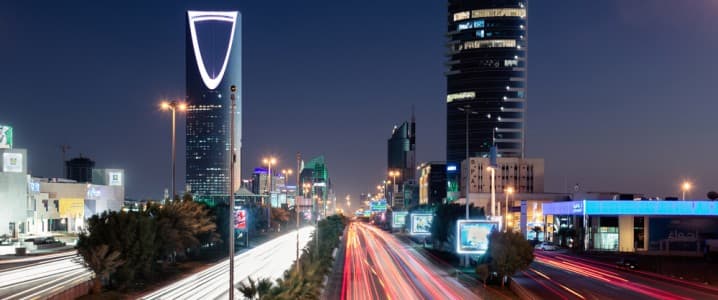
The core of this enhanced cooperation was an economic partnership agreement inked by President Trump and Saudi Crown Prince Mohammed bin Salman. This was further amplified at the Saudi–U.S. Investment Forum 2025 in Riyadh, a pivotal gathering that attracted key industry leaders and financial titans, including BlackRock CEO Larry Fink and entrepreneur Elon Musk, signaling the broad-ranging implications of these strategic alliances.
Aramco’s $3.4 Billion Bet on US Refining and Petrochemicals
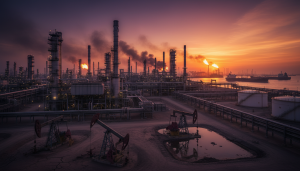
At the forefront of these energy pacts is Saudi Aramco’s substantial commitment to expanding its footprint within the United States. Amin Nasser, Aramco’s chief executive, announced a formidable $3.4 billion agreement aimed at enhancing the Motiva refinery in Port Arthur, Texas. This significant capital injection is earmarked for integrating chemicals production capabilities into the existing refining operations, marking a strategic pivot towards higher-value downstream products.
Motiva Enterprises, wholly controlled by Saudi Aramco, operates this colossal refinery, which stands as the second-largest in the United States by operable capacity. As of January 1, 2024, data from the U.S. Energy Information Administration confirmed its strategic importance, trailing only Marathon Petroleum’s 631,000-bpd facility at Galveston Bay, Texas. The Motiva refinery is a critical supplier of vital fuels, currently producing conventional gasoline, specialized commercial aviation fuel, ultra-low sulfur diesel, high-cetane export diesel, and Texas low emissions diesel. This expansion is set to diversify its output, positioning Motiva as a more comprehensive energy and petrochemical hub, which promises robust returns for Saudi Aramco and strengthens the US industrial base.
Forging Ahead in the Global LNG Market: Aramco’s US Strategy
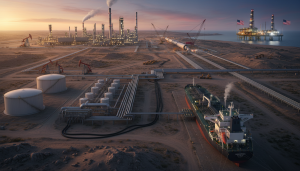
Beyond refining, Saudi Aramco is making aggressive inroads into the burgeoning liquefied natural gas (LNG) market, leveraging the United States’ position as a leading exporter. CEO Amin Nasser confirmed additional agreements with prominent U.S. energy companies NextDecade and Sempra. These collaborations highlight Aramco’s strategic vision to secure diversified energy supplies and expand its global gas portfolio.
A key component of this strategy involves a memorandum of understanding (MoU) with Sempra, under which Aramco anticipates receiving approximately 6.2 million tons per year (Mtpa) of LNG. This builds upon previous discussions, including a non-binding Heads of Agreement (HoA) signed last year. That earlier pact outlined a potential 20-year sale and purchase agreement for 5.0 Mtpa of LNG from Sempra’s Port Arthur LNG Phase 2 expansion project. Furthermore, the HoA explored the possibility of Aramco acquiring a 25% equity stake in the second phase of the Port Arthur LNG development. These moves underscore Aramco’s confidence in the long-term demand for natural gas and its strategic decision to invest heavily in U.S. infrastructure. Nasser’s direct quote, “The US is really a good place to put our investment,” succinctly encapsulates the rationale behind these significant commitments, pointing to the stability, resource abundance, and robust regulatory framework of the American energy sector.
A Broader Economic and Geopolitical Rebalancing
The series of agreements extends beyond individual energy deals, signaling a deeper economic and geopolitical rebalancing between the two nations. The overarching economic cooperation agreement provides a framework for future investments across various sectors, not just energy. For investors, this signifies a more stable and predictable environment for capital deployment in both economies, particularly within the energy complex.
The presence of global financial powerhouses like BlackRock and innovators such as Elon Musk at the investment forum underscores the high-level interest and confidence these partnerships command. These endorsements suggest that the strategic alliance is viewed not merely as a transactional arrangement but as a foundational shift towards enhanced energy resilience and economic collaboration that will drive growth and create new investment avenues for decades to come.
Investment Implications: Diversification and Energy Security
For investors monitoring the oil and gas landscape, these developments offer clear signals. Saudi Aramco’s aggressive capital allocation towards U.S. refining and LNG projects represents a strategic diversification away from sole reliance on crude oil production. This diversification strengthens its global value chain and mitigates risk, while simultaneously enhancing energy security for the United States through robust domestic processing and diversified gas supplies.
The multi-billion dollar commitments reinforce the long-term investment appeal of the U.S. energy sector, particularly in refining, petrochemicals, and LNG export infrastructure. These ventures promise sustained activity, job creation, and robust returns, making the US a compelling destination for international capital in the energy transition era. As the global energy market continues to evolve, these strategic partnerships between the US and Saudi Arabia are set to play a crucial role in shaping future supply, demand, and investment trends, making them essential viewing for any serious oil and gas portfolio.