The Sanction Paradox: Iran’s Shadow Supply and Market Implications
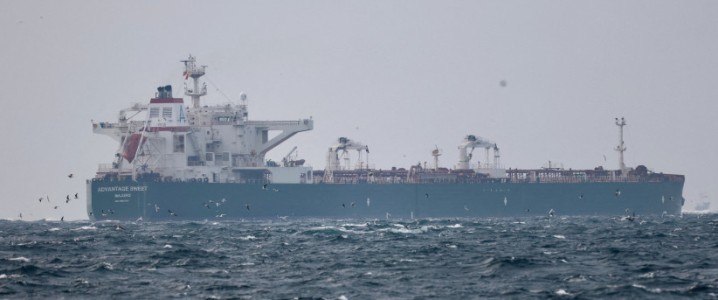
The global oil market continues to grapple with a complex interplay of geopolitical pressures and unwavering demand, nowhere more evident than in the persistent flow of Iranian crude despite intensified U.S. sanctions. The U.S. Treasury Department recently levied fresh penalties targeting Iran’s covert oil trade network, specifically an Iraqi businessman’s operation that has reportedly disguised Iranian crude as Iraqi since 2020, generating billions for Tehran. Additional sanctions struck at vessels forming part of Iran’s “shadow fleet” and financial institutions linked to Hezbollah, underscoring Washington’s intent to disrupt revenue streams fueling destabilizing activities. Yet, against this backdrop, China’s appetite for discounted Iranian barrels remains robust, creating a paradoxical supply dynamic that demands careful consideration from energy investors.
Geopolitical Crosscurrents and Current Market Sensitivity
The market’s reaction to these layered geopolitical signals has been notable. As of today, Brent crude trades at $90.38 per barrel, experiencing a sharp decline of 9.07% within the day’s range of $86.08 to $98.97. Similarly, WTI crude has fallen to $82.59, down 9.41% from its daily high. This significant daily slump follows a broader trend; our proprietary data indicates Brent has dropped by an alarming $20.91, or 18.5%, from $112.78 on March 30th to $91.87 just yesterday. This pronounced softening in prices reflects heightened sensitivity to supply-side signals, even those unofficial. Despite U.S. efforts, China’s continued imports of Iranian oil—nearly 1.4 million barrels per day in the first half of 2025, often routed through Malaysia via ship-to-ship transfers to avoid detection—effectively increase global supply, albeit through unofficial channels. These shadow shipments, which reportedly brought Iran nearly $1 billion in June alone, introduce an element of ‘unofficial oversupply’ that can pressure benchmarks, especially when combined with other market anxieties. The official stance from Beijing, reporting no Iranian crude imports since 2022, only further highlights the opacity of this crucial supply component.
Investor Outlook: Navigating Uncertainty in 2026 and Beyond
The complexity of Iran’s shadow oil trade directly impacts investor confidence and long-term price projections. Our reader intent data shows investors are keenly asking about the price of oil per barrel by the end of 2026, and the implications for OPEC+ production quotas. This dual policy approach from Washington—sanctioning networks while a former President signals tolerance for Chinese purchases of Iranian oil—creates significant ambiguity. This “muddled policy” allows Tehran to maintain substantial export volumes, effectively undermining the intended impact of sanctions on global supply. For investors seeking to predict crude prices through 2026, this ongoing unofficial supply from Iran, driven by Chinese teapot refiners’ demand for heavily discounted barrels, complicates traditional supply-demand models. It also directly challenges the market management efforts of OPEC+, whose members are constantly assessing global supply against their own production targets. The persistent presence of these barrels makes it harder to gauge true market tightness and introduces an unpredictable variable into future price forecasts, requiring investors to account for this ‘invisible’ supply.
Upcoming Events and Their Influence on Iranian Supply Dynamics
Looking ahead, the energy market calendar is packed with events that could further clarify or complicate the Iranian oil supply picture. The immediate focus is on the upcoming OPEC+ meetings: the Joint Ministerial Monitoring Committee (JMMC) on April 18th, followed by the Full Ministerial meeting on April 19th. Investors will be closely watching for any signals regarding production quotas. Will the continued, albeit unofficial, influx of Iranian crude influence OPEC+’s assessment of global market balance? If OPEC+ perceives the market as adequately supplied due to these shadow flows, it could temper any discussions around tightening supply further. Beyond OPEC+, the API Weekly Crude Inventory (April 21st, 28th) and EIA Weekly Petroleum Status Report (April 22nd, 29th) will provide critical insights into U.S. crude stockpiles and demand, offering a clearer picture of domestic market dynamics against the international backdrop. Finally, the Baker Hughes Rig Count on April 24th and May 1st will indicate North American production trends, another key variable. Each of these events, when viewed through the lens of Iran’s persistent shadow exports, offers a piece of the puzzle for investors aiming to understand where oil prices are headed and how effective current geopolitical pressures truly are.


