US Rare Earths Mine: New Investment Frontier
The global energy landscape is undergoing a profound transformation, subtly shifting investor focus from traditional fossil fuels towards the foundational elements of the 21st-century economy. While crude oil remains a dominant force, a new investment frontier is rapidly emerging: critical minerals and rare earth elements (REEs). This strategic pivot is exemplified by Ramaco Resources’ recent groundbreaking in Wyoming, signaling a significant domestic effort to secure vital materials currently dominated by foreign supply chains. For sophisticated investors, understanding this evolving resource narrative is paramount, as the strategic value of these minerals could rival that of oil in the decades to come.
The Strategic Imperative: Beyond Black Gold
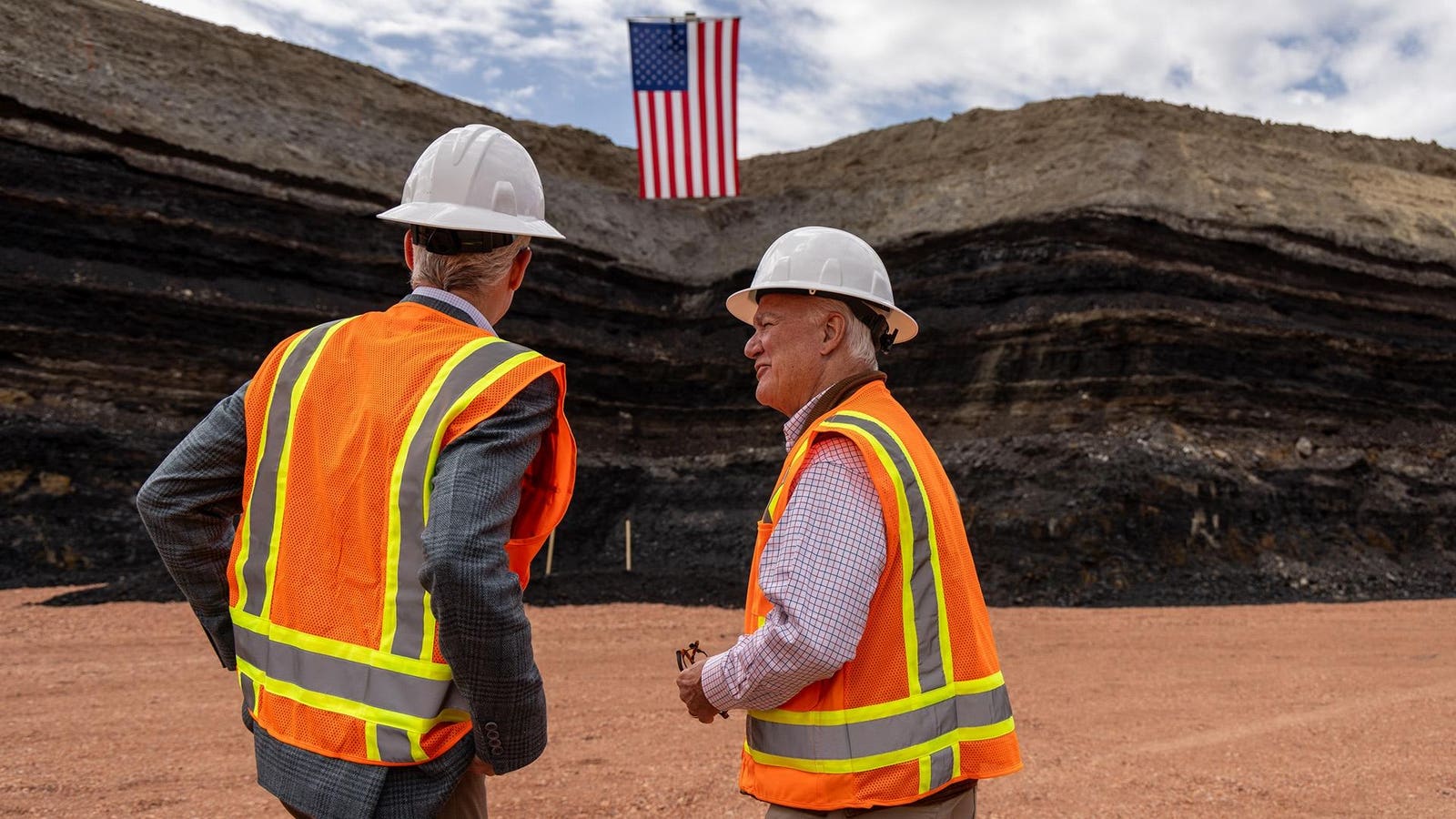
Ramaco’s Chairman and CEO, Randall Atkins, succinctly captures the essence of this shift, declaring that “Critical minerals and rare earths are to this century what oil was to the 20th century.” This isn’t mere hyperbole; it reflects a geopolitical reality where access to specific elements underpins technological advancement and national security. The Brook Mine in Sheridan, Wyoming, while ostensibly a coal operation—the first new one in the state in five decades—holds a far more valuable proposition: a rich deposit of dysprosium, neodymium, scandium, and gallium. These are not obscure elements; they are indispensable for a myriad of high-tech applications, from the powerful magnets in electric vehicles and wind turbines to advanced semiconductors, night-vision goggles, and even hypersonic missile systems.
America’s current reliance on foreign sources, primarily China, for approximately 90% of its total rare earth demand presents a significant vulnerability. Ramaco’s ambitious plan to meet over 10% of the nation’s 10,000 tons per year total rare earths demand once its pilot processing plant is operational by late 2026 represents a crucial step towards supply chain resilience. This drive for domestic production is not limited to Ramaco; the US government, through initiatives like the Pentagon’s recent $400 million investment in MP Materials, underscores the critical importance placed on securing these resources. This signals a robust, long-term commitment to fostering a domestic critical minerals industry, creating a fertile ground for strategic investment.
Navigating the Energy Market’s Shifting Tides
Against the backdrop of this emerging critical minerals sector, the traditional oil and gas market continues its dynamic dance, albeit with recent shifts that underscore the need for diversified energy portfolios. As of today, Brent crude trades at $94.81 per barrel, marking a modest daily decline of 0.13%, while West Texas Intermediate (WTI) is at $91.08, down 0.23%. This stability, however, follows a notable period of volatility. Over the past two weeks, Brent crude has seen a significant price correction, dropping from $102.22 to $93.22, a nearly 9% retreat. Such fluctuations inevitably prompt investors to query the market’s trajectory, particularly regarding next quarter’s Brent price forecasts.
The recent downturn, coupled with ongoing geopolitical uncertainties, highlights the inherent risks and opportunities within the fossil fuel sector. While crude oil remains vital, the strategic push towards critical minerals offers a compelling diversification avenue. Investors are actively seeking new frontiers that offer both growth potential and a hedge against the cyclical nature of traditional energy commodities. The Brook Mine project, with its dual focus on coal and high-value rare earths, positions Ramaco at the nexus of both established and nascent energy sectors, offering a unique value proposition in an increasingly complex market.
A New Domestic Frontier: Ramaco’s Brook Mine vs. MP Materials
The domestic rare earth landscape is quickly taking shape, with Ramaco’s Brook Mine emerging as a formidable contender alongside established players like MP Materials. While MP Materials, with its $7.3 billion market capitalization, currently operates America’s sole producing rare earths mine at Mountain Pass, California, Ramaco’s Brook Mine presents a distinct profile. MP Materials primarily yields “lighter” rare earths, such as cerium, though it does produce several hundred tons of heavy rare earth oxides annually, representing about 2% of its output. The Pentagon’s recent $400 million injection into MP Materials, earmarked partly for a new magnet factory ten times the size of its Fort Worth facility, underscores the strategic importance of expanding domestic processing capabilities.
However, Ramaco’s CEO, Randall Atkins, asserts the Brook Mine’s unique advantage: its potential to be the sole domestic supplier of heavier, more valuable rare earth elements. Unlike Mountain Pass, Brook Mine’s ore is reportedly free of radioactivity, simplifying processing. This focus on dysprosium and neodymium, crucial for high-performance magnets and defense applications, positions Ramaco as a critical piece in the puzzle of US rare earth independence. With a current market capitalization of $1 billion and an 80% year-to-date share price appreciation, Ramaco (RAM) is attracting significant investor attention, reflecting the market’s growing recognition of its strategic resource base and future potential. The distinction between “light” and “heavy” rare earths is pivotal for investors evaluating the long-term value and strategic relevance of these domestic projects.
Key Catalysts and Forward-Looking Investment Signals
For investors tracking the broader energy and critical minerals sectors, the coming weeks present several key data releases and events. On April 17th and 24th, the Baker Hughes Rig Count will offer insights into US upstream activity, a barometer for traditional oil and gas production trends. More significantly for global crude supply, the OPEC+ Joint Ministerial Monitoring Committee (JMMC) convenes on April 18th, followed by the Full Ministerial OPEC+ Meeting on April 20th. These gatherings are critical for understanding potential output adjustments that could significantly impact global crude prices and supply dynamics. Furthermore, the API Weekly Crude Inventory reports on April 21st and 28th, along with the EIA Weekly Petroleum Status Reports on April 22nd and 29th, will provide crucial updates on domestic stock levels, offering demand signals that can influence short-term price movements.
While these events primarily concern traditional hydrocarbons, they set the macro stage for all energy-related investments. In the critical minerals space, Ramaco’s progress towards its late 2026 pilot processing plant completion is the immediate, tangible catalyst to monitor. Success here will validate its resource claims and processing technology, potentially unlocking substantial value. Beyond operational milestones, investors should closely watch for further government initiatives, strategic reserve discussions, and potential off-take agreements that could solidify Ramaco’s market position. The overarching trend of de-risking supply chains and fostering domestic resource independence will continue to drive investment interest, positioning companies like Ramaco at the forefront of this new, essential investment frontier.