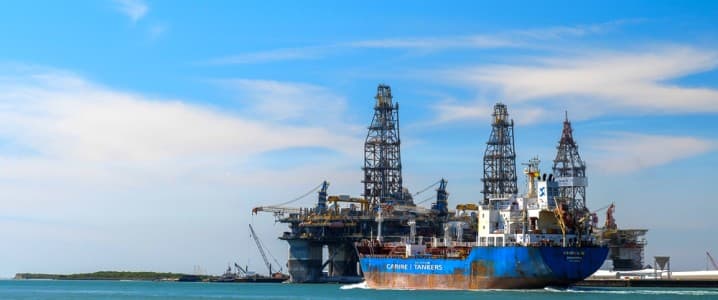
In a fascinating twist within the global energy landscape, U.S. oilfield services giant Weatherford International has not only maintained but expanded its operations in Russia. This move comes despite the backdrop of ongoing U.S. and EU sanctions targeting the Russian energy industry, presenting a unique case study for investors navigating complex geopolitical and market dynamics. For those tracking the oil and gas sector, this strategy warrants close examination, particularly as global crude prices exhibit significant volatility and key OPEC+ decisions loom on the horizon.
Weatherford’s Russian Gambit: A Deep Dive into the Numbers
Weatherford International’s commitment to the Russian market is evident in its financial performance. Revenues from its Russian operations climbed to 7% of its total $2.4 billion for the first half of 2026, marking a notable increase from 5% in the same period of 2025. This expansion translates into tangible asset growth, with the company reporting $332 million in cash and assets held within Russia by the end of June 2026, a substantial rise from $233 million just a year prior. This growth stands in stark contrast to the actions of competitors like Baker Hughes and Halliburton, both of whom divested their Russian businesses following the 2022 conflict, leaving Weatherford and SLB as the primary U.S. majors with a significant presence. Furthermore, the company’s internal reports indicated that higher drilling activity in Russia during the second quarter of 2026 provided a crucial counterbalance to declining activity in North America and Latin America, although well construction activity saw a decline in both regions. The firm’s second-quarter revenues from its Russian, European, and sub-Saharan African business segment reached $244 million, reflecting a robust 23% sequential increase from $199 million in the first quarter of 2026, even if it represented a 5% decline on an annual basis. A clear indicator of this expansion is the posting of over 100 job openings for its Russian business since late February 2026, directly following the implementation of U.S. sanctions targeting the oilfield services sector.
Navigating Sanctions and Investor Scrutiny
The continued operation and expansion of Weatherford in Russia naturally raise questions among investors regarding compliance and risk. The prevailing understanding is that the company has meticulously restructured its Russian operations, effectively ‘ring-fencing’ them from the broader business to avoid breaching international sanctions. This strategic separation aims to ensure that while services continue to be provided locally, the financial and operational flows remain isolated. However, for investors, the true value accretion of such a strategy is paramount. Our proprietary reader intent data reveals a keen interest in company-specific performance and geopolitical risks, with queries such as “How well do you think Repsol will end in April 2026?” reflecting broader concerns about operational resilience in a volatile global environment. A critical aspect of this ring-fencing strategy is the destination of the generated revenues. Experts suggest there’s at least a “50/50 chance” that revenues generated within Russia remain in Russia, potentially reinvested locally rather than flowing back to the U.S. parent company. This implies that while the Russian segment contributes to the company’s top-line revenue, its direct impact on the U.S. parent’s free cash flow and shareholder distributions could be limited, an important distinction for any investor evaluating Weatherford’s investment profile.
The Broader Market Backdrop: Volatility and Investment Implications
Weatherford’s strategic moves unfold against a backdrop of significant volatility in the global crude oil market, a critical factor for any oilfield services provider. As of today, Brent crude trades at $90.38 per barrel, experiencing a sharp 9.07% decline within a daily range spanning $86.08 to $98.97. Similarly, WTI crude has seen a substantial dip to $82.59 per barrel, down 9.41% and trading between $78.97 and $90.34. This acute intraday drop extends a broader bearish trend, with Brent having fallen by 18.5% from $112.78 on March 30th to $91.87 yesterday. Such pronounced shifts in crude prices directly impact exploration and production budgets globally, influencing demand for drilling, well construction, and other essential oilfield services. While Weatherford’s diversified revenue streams, particularly from its Russian operations, offer a degree of insulation, persistent global price pressure could still temper overall drilling activity. For oil and gas investing, understanding the interplay between geopolitical strategies and market fundamentals is key to assessing the resilience and growth potential of service companies.
Key Catalysts on the Horizon: OPEC+ and Rig Activity
Looking ahead, the immediate focus for oil and gas investors centers on crucial upcoming energy events that will undoubtedly shape market sentiment and drilling expenditure. The OPEC+ Joint Ministerial Monitoring Committee (JMMC) is scheduled to meet tomorrow, April 18th, followed by the full Ministerial Meeting on April 19th. Our proprietary reader intent data highlights intense market anticipation for these gatherings, with frequent inquiries such as “What are OPEC+ current production quotas?” underscoring the importance of potential output adjustments. Any decision by the cartel to alter production targets could significantly influence global supply-demand balances, directly impacting crude prices and, consequently, the demand for oilfield services worldwide. Beyond OPEC+, the market will closely monitor weekly inventory data from the American Petroleum Institute (API) on April 21st and 28th, and the U.S. Energy Information Administration (EIA) on April 22nd and 29th, for insights into domestic supply dynamics. Furthermore, the Baker Hughes Rig Count, scheduled for April 24th and May 1st, will provide real-time indicators of drilling activity, a direct driver of revenue for companies like Weatherford. These forthcoming data points and strategic decisions will offer critical context for Weatherford’s diversified operational strategy and help answer investor questions like “what do you predict the price of oil per barrel will be by end of 2026?”
Strategic Implications for Oilfield Services Investors
Weatherford’s unique position in the Russian market presents a nuanced investment thesis for those focusing on the oilfield services sector. On one hand, the company demonstrates an impressive ability to identify and capitalize on demand in a high-activity, albeit geopolitically complex, region. This strategy offers a degree of operational diversification from more mature or less active basins, contributing to top-line growth and asset accumulation. On the other hand, the inherent geopolitical and reputational risks associated with operating in a sanctioned environment cannot be overlooked. The long-term viability and ultimate financial benefit of operations structured to contain revenues within Russia remain critical considerations for shareholders. The divergence in strategic approaches between Weatherford and SLB, versus Halliburton and Baker Hughes, highlights different risk appetites and market philosophies within the sector. Investors must carefully weigh the potential for growth in a unique market against the challenges of sanctions compliance and the opaque nature of revenue repatriation, ensuring their portfolio decisions align with their risk tolerance and long-term investment objectives in the dynamic energy sector.


