Venezuela’s Oil Market Re-Opens: A New Era for International Energy Investment
The global oil and gas landscape is witnessing a seismic shift as Venezuela, home to the world’s largest proven crude reserves, actively re-engages with international energy players. Recent agreements underscore a profound pivot, inviting U.S. firms back into a jurisdiction previously largely inaccessible. This resurgence of interest signals a crucial inflection point for investors closely monitoring supply dynamics and geopolitical shifts in the energy sector.
U.S. Firms Signal Confidence in Venezuela’s Strategic Re-Entry
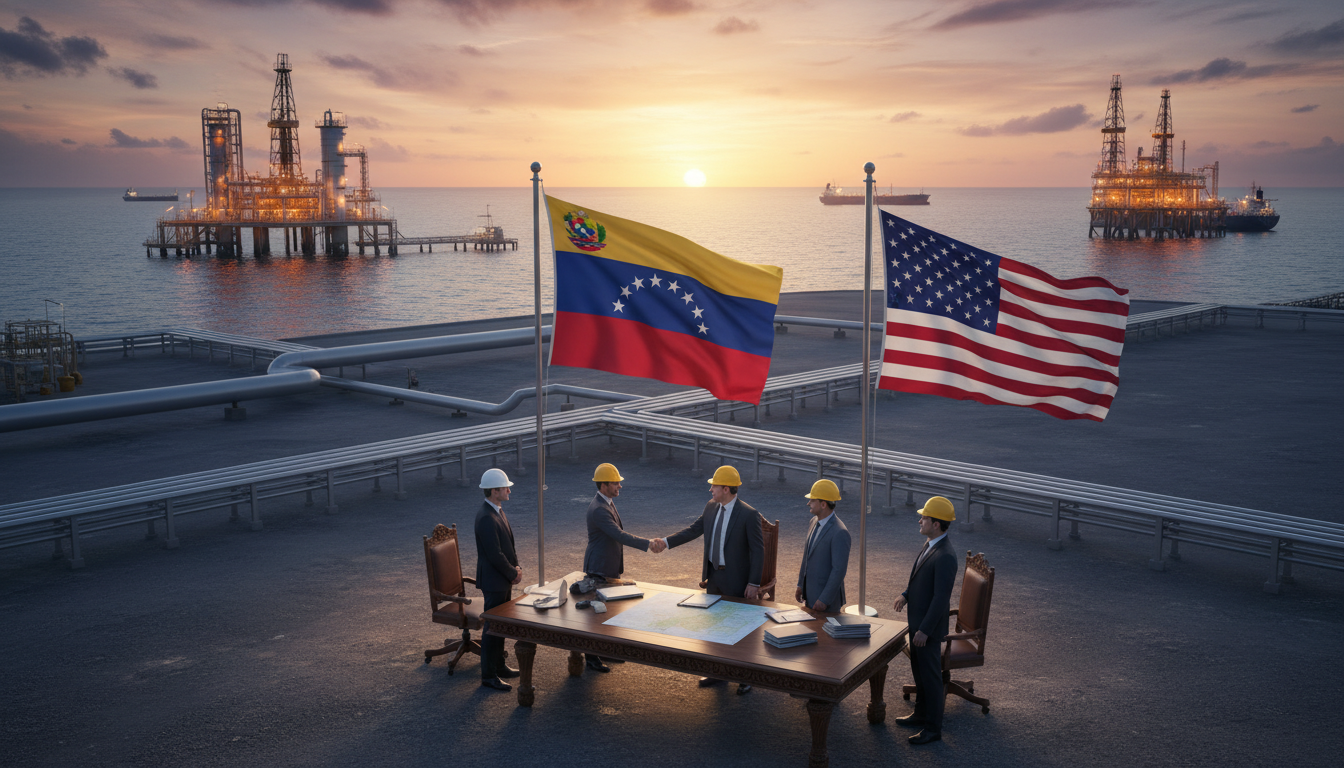
In a move that sends a clear message to the international investment community, the Venezuelan government, led by interim President Delcy Rodríguez, has inked significant deals with two American energy companies: Hunt Overseas Oil Company and Crossover Energy. These pioneering agreements pave the way for their operations within the formidable Orinoco Belt, the nation’s prime hub for heavy and extra-heavy crude resources. The ceremonial signing, notably attended by Jarrod Agen, President Trump’s energy adviser and executive director of the National Energy Dominance Council, adds a layer of diplomatic significance, further highlighted by the first direct flight from Miami to Caracas in nearly a decade. This convergence of political endorsement and corporate commitment marks a pivotal moment, suggesting a strategic de-risking of Venezuelan assets for foreign capital.
Shifting Tides: The Catalysts Behind Renewed International Engagement
The current wave of international interest in Venezuela’s vast hydrocarbon potential is not arbitrary; it’s the direct consequence of a series of dramatic political and regulatory shifts. The decisive capture of Nicolas Maduro and his subsequent extradition to face drug-trafficking charges in the United States dramatically altered the political calculus. Coupled with the U.S. asserting control over Venezuelan oil sales and a strategic easing of sanctions on operations involving the state oil firm, PDVSA, the pathway for foreign companies has significantly cleared. Prior to these developments, only Chevron held specific authorization to conduct operations and export Venezuelan crude to the U.S., highlighting the restrictive environment that has now, demonstrably, begun to unwind. This evolving political backdrop creates an environment ripe for reassessment by global energy investors seeking long-term growth opportunities.
European Majors Position Themselves for Production Boosts
The allure of Venezuela’s resource wealth is extending far beyond U.S. borders, with major European energy entities actively pursuing their return. Supermajors such as Italy’s Eni, Spain’s Repsol, and the UK’s BP are not merely exploring; they are securing preliminary agreements aimed at invigorating both oil and gas production, and initiating new exploration endeavors. This diversified approach suggests a long-term strategic vision that encompasses more than just crude oil, reflecting a broader energy transition imperative within these companies.
Just recently, Eni and Repsol, two powerhouses in the European energy landscape, announced their definitive plans to significantly ramp up natural gas production from their jointly held Cardon IV gas field. This focus on natural gas aligns with global demand trends and offers a cleaner energy profile compared to heavy crude. Simultaneously, BP has solidified its commitment by signing a crucial memorandum of understanding with Venezuela. This agreement outlines “potential areas for co-operation in material gas and future exploration,” explicitly opening the door for the British supermajor to potentially explore offshore gas resources. Such developments signal a multi-faceted re-engagement, promising increased output and new discoveries across various hydrocarbon streams, all of which will inevitably impact global energy supply and pricing.
U.S. Giants Explore Opportunities in a Re-Emerging Market
The re-opening of Venezuela’s energy sector has not gone unnoticed by the titans of the American oil and gas industry. Heavyweights like ExxonMobil and ConocoPhillips are reportedly sending technical teams and high-level representatives to the country to meticulously evaluate potential opportunities. Reports indicate that executives from both companies have engaged directly with Venezuelan officials, underscoring the seriousness of their interest. These preliminary assessments by industry leaders are critical indicators for the broader investment community, suggesting that a significant capital deployment could be on the horizon as these firms weigh the long-term prospects against the evolving risk profile. The participation of such prominent players would undoubtedly accelerate the recovery and modernization of Venezuela’s energy infrastructure, offering substantial returns for early and strategic investors.
Investment Horizon: Gauging the Potential and Risks
For investors, the re-engagement with Venezuela presents a compelling, albeit complex, opportunity. The sheer scale of the nation’s untapped and under-produced reserves offers immense potential for production growth, which could significantly impact global supply balances over the coming years. The return of international expertise, technology, and capital is vital for revitalizing PDVSA’s aging infrastructure and overcoming years of underinvestment. While the initial focus appears to be on known heavy crude assets like the Orinoco Belt, the burgeoning interest in natural gas exploration and production further diversifies the investment thesis.
However, navigating this re-emerging market demands careful consideration. Investors must closely monitor the stability of the political environment, the robustness of legal frameworks, and the consistency of regulatory policy. The speed and scale of production ramp-ups will hinge on ongoing geopolitical stability and the ability of new agreements to translate into tangible, consistent operations. For those with a strategic, long-term outlook and an appetite for emerging market opportunities, Venezuela’s re-entry onto the global energy stage represents a potent, high-stakes proposition demanding keen analytical oversight.