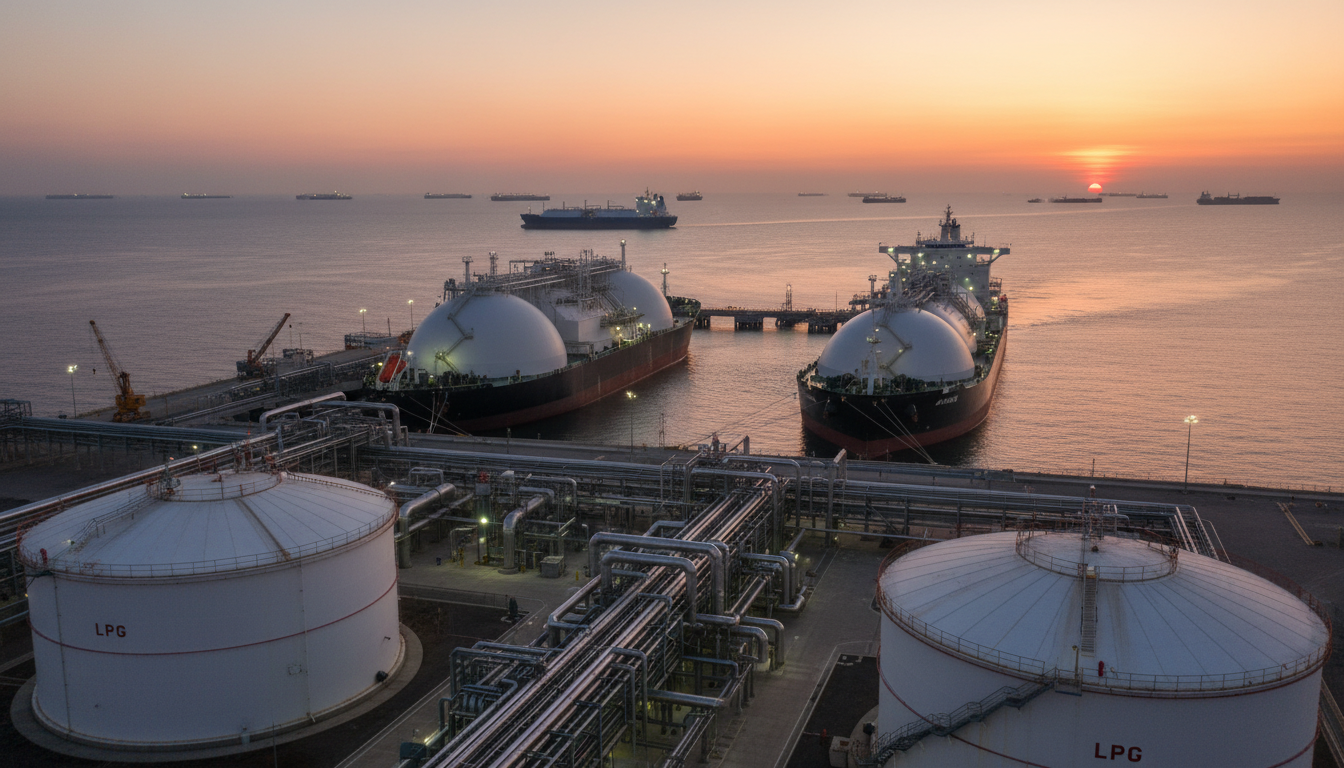
The global liquefied petroleum gas (LPG) market is currently experiencing significant turbulence, with Asia’s major importers, notably India and China, aggressively reorienting their sourcing strategies towards the Americas. This critical shift comes in response to severe supply disruptions emanating from the West Asia, a situation that has sent spot premiums for this essential commodity soaring to unprecedented levels and introduced considerable uncertainty into global energy commodity prices.
Geopolitical tensions, specifically the U.S.-Israeli conflict with Iran that flared in late February, have directly impacted energy flows. This instability in a vital production region has triggered a sharp decline in LPG exports from the West Asia, traditionally Asia’s top supplier of the fuel used extensively for both domestic cooking and as a crucial feedstock for petrochemical plants. The repercussions are far-reaching, directly squeezing profit margins for Asian petrochemical manufacturers, compelling them to scale back production, and escalating energy costs for millions of households across the continent.
West Asian Supply Collapse Drives Price Surge
The data paints a stark picture of the supply shock. Kpler, a leading analytics firm, reported a dramatic 73 percent month-over-month plunge in Middle Eastern LPG exports during March, reducing volumes to just 419,000 barrels per day (bpd). This sudden contraction ignited a ferocious bidding war in the market. By March 30, spot premiums for April-loading propane and butane from the Gulf surged to a record $250 per metric ton above March Saudi contract price swaps, as indicated by pricing agency Argus. In parallel, Saudi Aramco responded to the tight market by significantly increasing its April official selling prices (OSPs). The price for propane saw a substantial rise of $205 per ton, reaching $750, while butane climbed $260 per ton to hit $800.
Market participants are observing a definitive pivot. Vasudev Balagopal, global head of petrochemical trading at Marex, noted that key importers like India are actively pursuing diversification strategies. Their focus has broadened to include increased procurement from regions such as the United States, Norway, and Canada, alongside maintaining essential supplies from the Gulf, highlighting the fragility of traditional supply routes in the face of geopolitical risk.
The Americas Step Up: A New Supply Horizon with Constraints
In a direct response to Asia’s burgeoning supply deficit, U.S. LPG exports are forecast to reach an all-time high of 2.7 million bpd in April. Preliminary Kpler data indicates a significant portion, approximately 1.8 million bpd, is slated for Asia, representing a 14 percent increase from March volumes. This burgeoning demand from Asia has, in turn, pushed U.S. Gulf spot terminal fees for propane and butane to new record levels. Argus data showed propane fees reaching $273.525 per ton and butane fees touching $240.09 per ton on March 19, underscoring the escalating costs associated with securing these critical energy commodities.
While the United States is rapidly expanding its role as a global LPG supplier, industry experts caution that it cannot fully compensate for the disruption from the West Asia. Greg Bower, a broker at New Stone, points out that U.S. export terminals were already operating close to their maximum capacity even before the recent conflict intensified. Furthermore, logistical challenges inherent to the long-haul trade persist. The transit time from the U.S. Gulf Coast to Asian markets spans over 30 days, a significant increase compared to the roughly two-week voyage from the West Asia. This extended shipping duration exacerbates supply strains, especially amidst lingering uncertainty regarding the potential reopening of the strategic Strait of Hormuz as part of any fragile ceasefire arrangements.
The scale of the supply shift becomes evident when examining historical import patterns. Last year, the West Asia accounted for approximately 48 percent of total Asian LPG imports, averaging 1.54 million bpd. In contrast, the United States supplied about 39 percent, or 1.26 million bpd, according to Kpler data. This historical dependency underscores the immense challenge involved in rebalancing supply chains on such short notice.
Demand Destruction and Market Rebalancing Efforts
The insufficient availability of LPG, coupled with elevated prices, has inevitably led to a notable “demand destruction” across various sectors in March. Rystad Energy estimates that regional steam crackers experienced an LPG demand loss of approximately 135,000 bpd in March compared to February levels. Further declines are projected, with an additional 35,000 bpd expected in April and 11,000 bpd in May, impacting overall petrochemical industrial output.
In China, propane dehydrogenation (PDH) plants, which produce propylene—a vital building block for plastics and other chemicals—were already operating at a reduced capacity of 60-65 percent due to compressed margins. Rystad anticipates these plants will further trim their runs by five percentage points in April, directly attributable to feedstock shortages. For household consumption, India’s demand for cooking gas dropped by around 205,000 bpd in March, highlighting the broad impact on consumers.
While the overall supply situation in India is showing gradual improvement, with long-haul cargoes arriving from distant regions like Argentina and the United States, shortages persist. Manish Sejwal, an analyst at Rystad, projects an recovery in Indian LPG demand from April, with the extent of losses narrowing by approximately 70,000 bpd. This suggests a slow but steady rebalancing of the market as new supply routes solidify and inventory levels stabilize.
Investor Outlook: Navigating Volatility in Global LPG Markets
For investors monitoring the global energy landscape, the current LPG market dynamics present a complex scenario. The crisis underscores the profound vulnerability of established global energy supply chains to geopolitical volatility. While surging prices pose significant challenges for downstream industries and consumers, they simultaneously create opportunities for producers and shippers in alternative supply regions like the Americas, potentially boosting their margins and highlighting the value of diversified energy portfolios.
Going forward, continuous vigilance on Middle East stability and the pace of U.S. export infrastructure development will be critical factors influencing the future trajectory of global LPG markets. The ability of major importers to effectively diversify their sourcing, coupled with the resilience of the global shipping industry, will dictate how quickly this market can rebalance and find a new equilibrium amid ongoing geopolitical tensions.