Europe’s Energy Conundrum: Beyond US LNG Reliance
The global energy landscape continues its dramatic reshaping, with Europe at the epicenter of a profound strategic re-evaluation. Geopolitical tensions, notably the ongoing Russia-Ukraine conflict, have fundamentally altered the continent’s energy supply matrix, significantly curtailing its historical dependence on Russian natural gas. This seismic shift has propelled American liquefied natural gas (LNG) into a critical, albeit complex, role as a primary alternative. However, the emerging economic uncertainties, exacerbated by potential shifts in U.S. trade policy and persistent global market volatility, demand a more robust and diversified energy strategy for Europe. Investors in the oil and gas sector must keenly observe Europe’s evolving energy policy, which increasingly calls for a multi-pronged approach encompassing nuclear power, accelerated renewable deployment, and a strategic reassessment of indigenous gas resources, rather than an over-reliance on any single import source.
The Evolving Role of American LNG in European Energy Security
In the immediate aftermath of precipitous declines in Russian gas deliveries, U.S. LNG emerged as an indispensable lifeline for European energy security, working in tandem with stable supplies from Norway. This period saw a significant surge in transatlantic LNG flows, a testament to the flexibility and rapid deployment capabilities of the global LNG market. Yet, market dynamics began to shift in 2023 and continued through 2024, reflecting a moderation in European demand. Data from the U.S. Energy Information Administration (EIA) reveals a 19% decrease in European imports of American LNG in 2024 compared to the previous year.
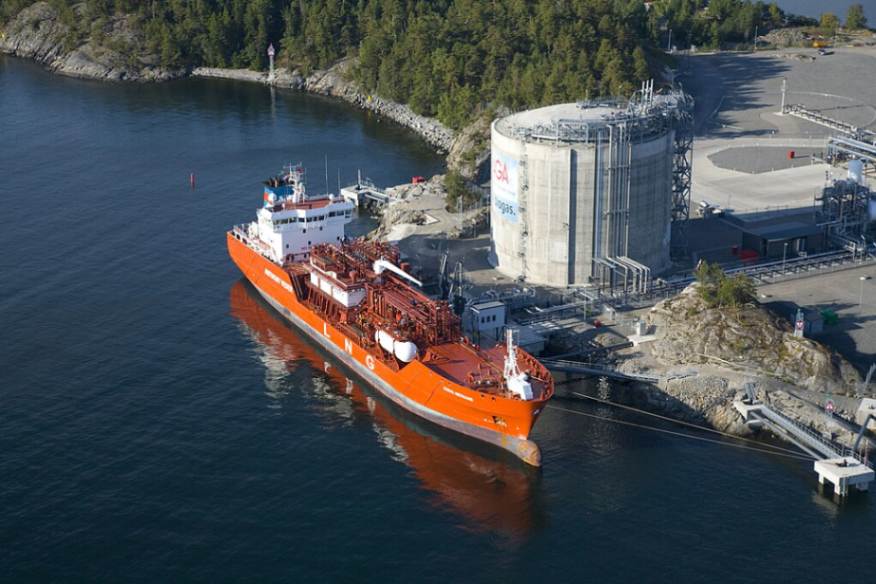
This moderation was largely attributable to Europe’s proactive measures in enhancing its energy resilience. The continent significantly boosted its natural gas storage capabilities, providing a crucial buffer against supply disruptions. Concurrently, European LNG import capacity experienced a remarkable 40% expansion between 2021 and 2024, dramatically increasing the region’s ability to receive and process seaborne gas. Despite these evolving conditions and reduced overall import volumes, the United States maintained its dominant position, supplying a substantial 45% of the European Union’s total LNG imports in 2024. This figure underscores the enduring, albeit recalibrating, significance of American gas in the continent’s energy mix, highlighting a continued strategic reliance.
However, this reliance on imported LNG, regardless of origin, presents inherent vulnerabilities for energy investors. Price volatility remains a significant concern, driven by the intricate interplay of global supply and demand, intensified competition from high-growth Asian markets, and unpredictable weather patterns. Recent market indicators in early 2025 offered a stark reminder, as European gas prices experienced a sharp surge due to colder-than-average temperatures and heightened international demand for LNG cargoes. Such fluctuations introduce considerable risk for industrial consumers and energy utilities, impacting profitability and long-term planning. Furthermore, the development and maintenance of the necessary LNG regasification and distribution infrastructure demand colossal capital outlays. Germany, for instance, has invested heavily in constructing multiple floating storage and regasification units (FSRUs) to bolster its import capabilities, representing significant long-term financial commitments.
Europe’s Strategic Pivot: Beyond Import Dependence
Recognizing the inherent risks of over-reliance on any single import source, Europe is actively pursuing a comprehensive diversification strategy that extends beyond simply switching gas suppliers. A key component of this strategy involves revisiting indigenous hydrocarbon resources, particularly in established producing regions like the North Sea. Countries such as Norway and the United Kingdom are diligently assessing the potential of untapped reserves, including those in challenging offshore zones. These exploration efforts aim to partially offset the natural decline in mature domestic production, providing a degree of self-sufficiency and mitigating import dependency.
However, the pathway to unlocking these new upstream opportunities is fraught with considerable financial and technical hurdles. Offshore projects, by their very nature, require highly complex infrastructure, entail lengthy development lead times, and demand massive upfront capital investments. Moreover, these endeavors operate within an increasingly stringent environmental and regulatory framework, facing heightened scrutiny from policymakers and the public alike. For energy investors, this translates to elevated project risks, extended payback periods, and the need for robust environmental, social, and governance (ESG) compliance strategies. These constraints highlight the limitations of relying solely on fossil fuel exploration to secure future energy needs.
Consequently, Europe’s long-term energy security strategy is broadening to include a significant pivot towards low-carbon and zero-carbon energy sources. Nuclear energy, with its capacity for consistent, baseload power generation, is experiencing a renaissance in several European nations. Governments are either extending the operational lives of existing nuclear plants or exploring the development of new facilities, recognizing its vital role in decarbonization and energy independence. Simultaneously, investment in renewable energy technologies, including wind and solar power, continues at an unprecedented pace. Policy incentives, technological advancements, and increasing cost-effectiveness are driving rapid deployment across the continent. This holistic approach, integrating stable nuclear power with expanding renewables and a pragmatic assessment of domestic gas, aims to build a resilient, sustainable, and less volatile energy future for Europe, offering diverse opportunities and challenges for investors across the entire energy spectrum.
For investors in the oil and gas sector, understanding these multifaceted shifts is paramount. While US LNG will continue to play a crucial role in balancing European energy needs in the near to medium term, the continent’s strategic trajectory is unequivocally towards greater self-reliance and diversification. This necessitates a careful evaluation of investment opportunities in LNG infrastructure, upstream exploration in challenging environments, and the rapidly expanding renewable and nuclear sectors. The era of singular dependence is waning, replaced by a complex mosaic of energy sources designed to withstand future geopolitical and market shocks.