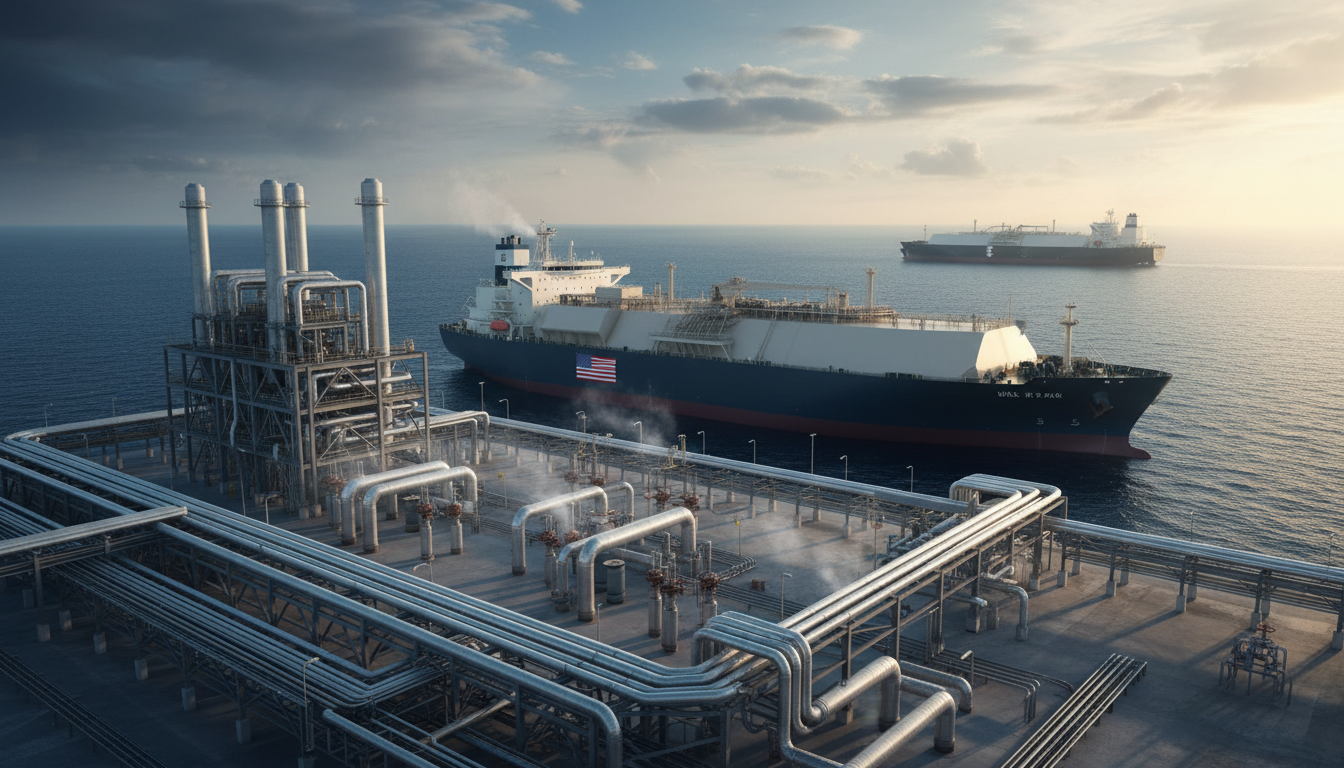
U.S. LNG Steadies Global Energy Markets Amidst Middle East Instability
The global liquefied natural gas (LNG) market has navigated significant turbulence, primarily due to recent geopolitical events impacting Qatar’s export capabilities. Iranian attacks on Qatari facilities and subsequent disruptions to vital Middle East shipping lanes severely curtailed one of the world’s leading LNG suppliers. Yet, despite these profound challenges, total global LNG supplies have remarkably maintained record highs. This stability is largely attributable to the formidable response from U.S. LNG exporters, who have rapidly scaled up operations to mitigate the deficit.
The lingering uncertainty surrounding peace negotiations in the region means that restoring damaged Qatari LNG export infrastructure remains a distant prospect. This could lead to a multi-year reduction in output from the world’s third-largest producer. QatarEnergy’s CEO confirmed last month that these attacks have effectively removed 17% of Qatar’s LNG export capacity for a duration that could extend up to five years. This significant disruption presented an immediate and critical void in the global energy supply chain.
In response, American LNG facilities have moved swiftly, operating at maximum liquefaction capacity and optimizing vessel loading schedules to extract every possible metric ton of gas. This aggressive push has, for now, successfully compensated for the unexpected shortfall from Qatar. However, this pace is unsustainable indefinitely. U.S. export terminals will inevitably require scheduled maintenance, and the looming hurricane season presents a significant weather-related threat to loading operations. These factors indicate an eventual moderation in U.S. LNG export volumes, which could trigger a more acute tightening in global LNG markets than the stability observed thus far.
U.S. Exports Forge Ahead with Record-Breaking Volumes
The data underscores the remarkable performance of U.S. LNG exporters. Projections from commodities intelligence firm Kpler indicate that U.S. facilities are on track to load an unprecedented 32.15 million metric tons (MT) of LNG during the first four months of 2026. This represents a robust 28% increase compared to the same period in 2025, marking the most substantial year-over-year tonnage growth for these months since 2020. This surge highlights the strategic importance and operational agility of American energy infrastructure.
Critically, the approximately 7 million MT of additional LNG shipped by the U.S. during this period has effectively outpaced the 6.93 million MT reduction in volumes loaded by Qatar over the same timeframe. This compensatory action has been pivotal in maintaining market equilibrium. Consequently, total global seaborne LNG export volumes are set to reach a new peak, exceeding 149 million tons for the January to April window. This global figure reflects a 6% year-over-year increase, with the U.S. commanding a record 18% share of these crucial supplies. For energy investors, these figures underscore the growing influence of the U.S. in global natural gas markets and its role as a cornerstone of energy security.
Key Infrastructure Driving American Export Dominance
The surge in U.S. LNG exports is directly linked to the record throughput achieved by the nation’s primary export facilities. Cheniere Energy’s Sabine Pass terminal in Louisiana continues its role as the leading export hub for U.S. LNG, accounting for approximately 25% of all U.S. LNG exports during the first quarter of the year, according to LSEG data. This consistent performance solidifies its position as a critical asset in the American energy landscape.
However, it is Venture Global’s Plaquemines LNG terminal that has emerged as a particularly dynamic contributor to the substantial increase in U.S. volumes this year. The facility has recorded an astonishing 240% year-over-year jump in its export volumes. During the first quarter, Plaquemines loaded nearly 6.5 million tons of LNG, a significant rise from less than 2 million tons in the corresponding period of 2025. This impressive upswing of approximately 4.5 million tons propelled Plaquemines to become the second-largest U.S. export facility and was instrumental in pushing total quarterly U.S. shipments above 31 million tons for the first time. Such rapid expansion and operational success at terminals like Plaquemines offer compelling insights for investors monitoring the growth trajectory of U.S. natural gas infrastructure.
Navigating Future Demand and Operational Realities
The timing of the Middle East conflict and its immediate impact on Qatari LNG flows provided a distinct advantage to U.S. exporters. Panicked buyers, confronted with sudden supply gaps, had limited alternatives but to secure replacement volumes rapidly to cover their short-term gas requirements. This period of urgent demand enabled U.S. suppliers to operate at peak efficiency and maximize revenue opportunities.
Now, with the initial shock of Qatar’s export reductions largely absorbed, prospective LNG buyers can approach their procurement strategies with more measured consideration. Moreover, natural gas consumption in major LNG markets, particularly Europe, typically declines to annual lows during the warmer months as heating and cooling demands diminish. Given that European nations have been the primary destination for U.S. LNG, absorbing approximately 72% of American exports so far in 2026, this seasonal dip in utility consumption could temper U.S. LNG export orders.
Nonetheless, a crucial factor supporting continued demand is the state of European gas inventories. Following substantial drawdowns over the past winter, these inventories currently stand at only around 30% full. This necessitates significant replenishment efforts ahead of the next heating season. Therefore, steady LNG orders from natural gas storage operators are anticipated over the coming months. This underlying demand should provide a foundational level of support for LNG export volumes in the U.S. and other producing nations, even if the extreme urgency of recent import orders subsides.
Paradoxically, a potential easing in European import orders might be welcomed by U.S. LNG exporters. These facilities have been running at full throttle since the beginning of the year to capitalize on the opportunities presented by Qatar’s forced export cuts. A less frantic pace would allow for essential maintenance work at liquefaction facilities and export terminals. It would also create crucial operational flexibility to manage potential weather-related delays from the storms and hurricanes that are characteristic of the U.S. summer months. While these maintenance-induced export curtailments will reduce overall supplies for the broader LNG market, they are necessary for long-term operational integrity and could, in turn, create localized pockets of market tightness that other global exporters may be tasked with filling.