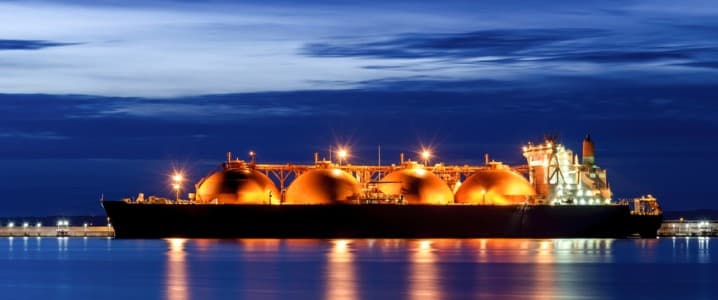
The global energy landscape continues to be shaped by a delicate balance of geopolitical imperatives and fundamental supply-demand dynamics. A recent pronouncement from Washington, indicating an expectation for Japan to cease all Russian energy imports, introduces a new layer of complexity to this already intricate picture. This directive, stemming from high-level discussions between the US Treasury Secretary and Japan’s Finance Minister, underscores the G7’s sustained commitment to intensifying economic pressure on Moscow. However, for Japan, a nation heavily reliant on imported hydrocarbons, this presents a significant challenge, particularly concerning its liquefied natural gas (LNG) supplies from the Sakhalin-2 project. Investors must carefully assess the implications of such a move, not just for Japan’s energy security and the global LNG market, but also for broader crude price stability amidst ongoing market volatility.
Japan’s Energy Security Dilemma: The Sakhalin-2 Conundrum
At the heart of Washington’s expectation lies Japan’s existing dependence on Russian energy, specifically LNG. While Japan successfully halted crude oil imports from Russia in early 2023, it continued to receive both crude and, more crucially, LNG from the Sakhalin-2 project under a special sanction waiver. This waiver acknowledged Japan’s critical need, with approximately 9% of its total LNG imports, equating to around 6 million tons annually, originating from Russia. A significant 5 million tons of this volume is secured through long-term contracts with the Sakhalin-2 consortium, which notably includes Japanese energy giants Mitsui & Co. and Mitsubishi Corporation alongside operator Gazprom.
Japanese government officials have consistently reiterated the vital role of these supplies for the nation’s energy security, especially given the existing contractual obligations and the involvement of domestic firms. The prospect of fully suspending these imports, therefore, isn’t merely a political decision; it’s an economic and logistical tightrope walk. Finding alternative, equivalent LNG volumes on the global spot market, particularly under current market conditions, could prove costly and challenging. This situation highlights the inherent tension between geopolitical solidarity within the G7 and the practical energy security requirements of member nations, a dynamic that investors should monitor closely as it could influence global LNG pricing and availability.
Market Response and Investor Focus Amidst Price Fluctuations
The immediate market reaction to such geopolitical pronouncements often reveals underlying sentiment. As of today, Brent crude trades at $96.3 per barrel, down 3.11% within a daily range of $95.59 to $98.97. Similarly, WTI crude is at $87.83, registering a 3.66% decline, fluctuating between $87.02 and $90.34. Gasoline prices also reflect this downward pressure, currently at $3.03, down 1.94%. This recent softening in crude prices, following a notable 14-day trend where Brent declined from $112.57 to $98.57, a drop of over 12%, may seem counterintuitive given the potential for supply disruption from increased sanctions. However, it underscores the market’s careful assessment of the G7’s approach to applying pressure, aiming to avoid a significant spike in energy costs that could destabilize global economies.
Investors are keenly observing these dynamics. A common question from our readers concerns the current Brent crude price and the models powering such responses, indicative of a widespread desire for reliable, real-time market intelligence amidst volatility. The apparent disconnect between headline geopolitical risk and current price action suggests that broader macroeconomic concerns, inventory levels, and the perceived ability of global supply to absorb potential disruptions are currently outweighing the immediate impact of this specific sanction threat. However, any concrete move by Japan to cut Russian LNG could quickly re-inject bullish sentiment into the natural gas and, by extension, the crude markets, especially if alternative supplies are scarce.
Forward Outlook: Upcoming Events and Supply Dynamics
The coming weeks hold several critical energy events that could further shape the market’s response to these geopolitical pressures. This Friday, April 17th, marks the OPEC+ Joint Ministerial Monitoring Committee (JMMC) meeting, followed by the full Ministerial Meeting on Saturday, April 18th. Investors are asking about OPEC+’s current production quotas and any signals regarding future supply adjustments. Should Japan proceed with suspending Russian energy imports, particularly LNG, the global market will need to absorb this shift, potentially increasing demand for alternative sources. The OPEC+ decisions, therefore, will be scrutinized for any indications of increased output to stabilize crude markets, which could indirectly impact the broader energy complex.
Furthermore, the API Weekly Crude Inventory report on April 21st and the EIA Weekly Petroleum Status Report on April 22nd will provide crucial insights into US supply levels and demand trends. These reports, alongside the Baker Hughes Rig Count on April 24th, will offer a clearer picture of domestic production capabilities and inventory builds or drawdowns. A significant tightening of global LNG supply due to Japan’s actions, coupled with any unexpected shifts in crude inventories or OPEC+ policy, could trigger heightened volatility across the energy sector. Investors should prepare for potential price swings as these intertwined events unfold, demanding robust data and analytical tools to navigate the evolving landscape.
Investment Implications: Diversification and Risk Management
For energy investors, the potential for Japan to suspend Russian energy imports underscores the persistent geopolitical risk inherent in the sector. Companies with significant exposure to Russian assets, or those heavily reliant on specific import channels, face renewed scrutiny. Conversely, this situation could present opportunities for LNG producers in other regions, particularly in the US, Qatar, and Australia, as Japan seeks to diversify its supply sources. The long-term contracts held by Mitsui & Co. and Mitsubishi Corporation for Sakhalin-2 LNG will need careful re-evaluation, potentially impacting their earnings and strategic direction.
From a portfolio perspective, this development reinforces the importance of diversification and robust risk management strategies. As investors increasingly seek stable returns amidst fluctuating crude prices and geopolitical uncertainties, understanding the granular details of global energy flows becomes paramount. The ongoing pressure on nations to reduce reliance on specific suppliers, driven by security concerns rather than purely economic factors, means that energy security will remain a dominant theme in investment decisions. Companies with strong balance sheets, diversified asset bases, and resilient supply chains are likely to be better positioned to weather these evolving challenges and capitalize on new opportunities in the dynamic oil and gas investing environment.


