Geopolitical Tensions Reshape Energy Investing: Why Tanker Shipping Rates Are Outperforming Crude
As the geopolitical landscape continues to fuel volatility across global energy markets, and diplomatic resolutions in critical regions remain elusive, traditional oil prices have seen significant appreciation. However, a less conventional, yet remarkably more lucrative, investment strategy has captivated astute investors: the fundamental cost of transporting crude oil across the world’s oceans. This unexpected surge underscores a critical re-evaluation of where genuine leverage resides within the expansive energy complex.
The Unprecedented Ascent of Maritime Freight
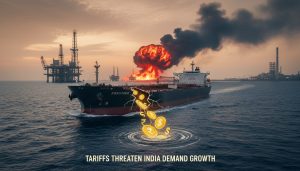
The Breakwave Tanker Shipping ETF (BWET), a specialized exchange-traded fund designed to capture movements in crude oil tanker freight rates, has delivered an astonishing performance, rocketing over 600% year-to-date. This remarkable surge is a direct consequence of escalating conflicts and operational disruptions plaguing key maritime chokepoints, driving shipping costs dramatically higher. Launched only in May 2023, BWET, a relatively modest $30 million portfolio, stands out starkly in an ETF market boasting over $13 trillion in total assets. Its explosive growth is compelling market watchers to shift focus from the raw commodity to the indispensable infrastructure that facilitates global energy movement.
Industry research director, Cinthia Murphy, observes that the sheer scale of BWET’s ascent is prompting a fundamental re-think among market participants. Rather than exclusively tracking crude oil prices, which have exhibited extreme fluctuations this year, investors are increasingly turning their attention to the vital logistical arteries on which the global energy trade depends. “This is ultimately a narrative centered around shipping expenditures,” Murphy notes. “Whenever significant disruptions impact global shipping routes, freight futures experience a parabolic rise, and one particular ETF excels at capturing this performance like no other.”
Disruption as a Catalyst: The Strait of Hormuz and Beyond
The persistent friction in the Strait of Hormuz, a critical transit point for a substantial portion of the world’s oil supply, has repeatedly demonstrated its capacity to rapidly inflate freight futures. This re-pricing of risk associated with navigating commodities through such volatile regions extends beyond just crude oil. For example, the broader Baltic Exchange Dry Index, which tracks worldwide shipping costs for dry bulk commodities, has climbed over 6% in the past week and registered a robust 41% gain since the start of the year.
Nonetheless, the movement of crude oil specifically has been a dominant storyline, according to Paul Baiocchi, head of fund sales & strategy at SS&C Technologies. While the U.S. Oil Fund (USO) has climbed nearly 90% as of Friday, and the SPDR State Street Energy Select Sector SPDR ETF (XLE), tracking energy equities, has advanced over 23%, these impressive figures pale in comparison to the dramatic escalation witnessed in freight futures. BWET’s extraordinary climb, in fact, began well before the latest intensification of Middle East conflicts, showcasing a staggering increase of over 1,000% over the last twelve months.
Murphy further emphasizes that while oil prices have indeed seen substantial appreciation, and the broader energy sector has experienced a blockbuster year across the board, “BWET’s performance is unequivocally in a league of its own.” This exceptional outperformance is increasingly drawing the attention of Wall Street equity research teams, who are now dedicating greater analysis to the surging valuations of tanker stocks.
The Macro-Economic Undercurrent: Infrastructure and Resilient Supply Chains
Baiocchi also ties this robust rally in shipping rates to a more expansive, overarching theme currently unfolding across global financial markets: a pervasive underinvestment in critical energy infrastructure coupled with a growing imperative for more resilient supply chains. He highlights that even prior to recent conflicts, many global commodity markets were already facing significant vulnerabilities, and current events have only exacerbated these existing challenges. This extends beyond merely oil transport to encompass the wider development and modernization of energy systems worldwide.
Consequently, nations and corporations globally are engaged in an urgent scramble to identify and secure more stable and reliable sources of energy. This strategic pivot inherently places a premium on the infrastructure capable of moving these resources, thereby supporting the elevated freight rates we are currently observing.
While the Breakwave Tanker Shipping ETF continues to command significant investor attention due to its outsized returns, experts caution that freight rates are inherently susceptible to volatility, often driven by transient, short-term shocks. However, as ongoing geopolitical friction fundamentally reshapes global trade routes and supply dynamics, a growing segment of the investment community is looking beyond simple commodity price fluctuations. Instead, they are finding compelling profit opportunities within the complex, yet critical, logistical framework that governs how energy commodities ultimately reach the market.