US Gulf of Mexico: Deepwater Resurgence Buffers Looming Production Dip
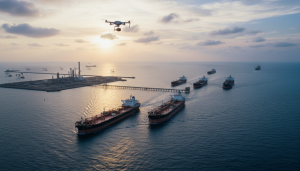
The United States faces a projected downturn in its overall oil output next year, marking the first decline since 2021. However, this anticipated contraction is poised for significant mitigation, thanks to a robust resurgence from an often-overlooked yet historically vital basin: the U.S. Gulf of Mexico. This deepwater region is stepping into the spotlight, demonstrating its enduring strategic importance to the nation’s energy landscape.
Forecaster Wood Mackenzie Ltd. reveals compelling data indicating that producers in the Gulf are set to inject substantial new volumes into the market. This year alone, the region will bring online an impressive 300,000 barrels of new daily output, with a further 250,000 barrels per day anticipated in 2026. These gains, stemming from multi-year development projects, are projected to elevate total Gulf production beyond 2 million barrels per day. This represents a remarkable increase of approximately 40% compared to 2020 levels, underscoring a powerful come-back narrative for offshore operations.
Shale Slowdown and Offshore Resilience
This deepwater expansion unfolds against a backdrop of slowing growth in U.S. shale production. Weaker crude oil prices have prompted onshore producers to scale back drilling rigs and operational costs, a direct response to increased supply from OPEC and its allies. The Energy Information Administration’s (EIA) Short-Term Energy Outlook, released recently, projects overall U.S. oil production to contract by 0.4% next year, reaching 13.37 million barrels per day. This forecast makes the Gulf’s burgeoning contribution particularly critical for maintaining national energy output stability.
The renewed prominence of the Gulf of Mexico marks a significant turnaround from the past two decades. Historically, the region grappled with challenges including the Deepwater Horizon incident, escalating development costs, and pandemic-induced operational shutdowns, causing it to cede dominance to the rapid expansion of the shale sector. However, the current environment of suppressed crude prices is now exerting pressure on shale drillers, while major, long-cycle deepwater projects, planned years in advance, are strategically poised to come online.
“While the market’s attention largely remains fixed on onshore activities, the true growth driver for U.S. oil production this year will originate from offshore,” observed Miles Sasser, a senior research analyst at Wood Mackenzie. “The projects within the Gulf of America are demonstrating excellent ramp-up performance, a development that will likely surprise many investors and analysts.”
Strategic Investments by Oil Majors
Major integrated oil companies, with their long-term investment horizons and robust balance sheets, are leading this deepwater resurgence. Chevron Corp., for instance, is on track to boost its Gulf production by 50% from last year’s figures, aiming for 300,000 barrels per day by 2026. The company’s recent deepwater developments are notable for their exceptional economics, boasting break-even prices below $20 a barrel, positioning them among the lowest-cost producers globally, according to Bruce Niemeyer, Chevron’s president of production.
Shell Plc is also making significant strides, with its Sparta project, designed for 90,000 barrels per day, anticipated to commence operations in 2028. BP Plc, another key deepwater player, has a series of strategic projects scheduled through the end of the decade, poised to expand its production capacity by approximately 20% to exceed 400,000 barrels per day. These substantial, long-term investments in the Gulf arrive at a time when many in the industry are discussing the potential peak of U.S. shale production, highlighting the differing investment cycles and risk profiles of offshore versus onshore plays.
Deepwater’s Distinct Economic Profile
The economic characteristics of deepwater projects differ fundamentally from those of shale. As Jesse Jones, a senior upstream analyst at Energy Aspects, points out, Gulf production growth has only outperformed shale in three of the last ten years, and each instance coincided with periods of low oil prices and decelerating demand. This pattern underscores a crucial distinction: “Shale producers exhibit a more rapid response to weaker prices,” Jones explains. Their shorter cycle times allow for quicker adjustments to market fluctuations, both up and down. Conversely, deepwater projects, with their multi-year development timelines and massive upfront capital expenditures, are designed for long-term production and require higher price stability or lower operating costs to justify investment.
The inherent resilience of these large-scale offshore developments to short-term price volatility makes them attractive to majors seeking stable, long-life assets. The current market environment, where shale is pulling back due to price sensitivity, perfectly illustrates the strategic value of these long-term, high-volume offshore commitments. For investors, this shift highlights the importance of diversifying exposure across different types of oil and gas assets, recognizing the unique risk-reward profiles of each.
Implications for Investors and Energy Security
The strong performance from the U.S. Gulf of Mexico is not merely an operational success story; it carries significant implications for energy investors and national energy security. As the overall U.S. oil production growth moderates, the deepwater contribution acts as a crucial stabilizer, cushioning the impact of a potential aggregate decline. This sustained output from a reliable domestic source contributes to reducing reliance on international markets and bolstering national energy independence.
For financial market participants, understanding this dynamic is key. The narrative of U.S. oil production has long been dominated by the rapid, flexible growth of shale. However, the deepwater Gulf’s consistent, substantial contribution, especially during periods of market volatility and shale retrenchment, offers a vital counter-narrative. It signals a more diversified and robust U.S. production profile than often perceived, with long-life deepwater assets providing a foundational layer of supply. Investors should monitor the progress of these large-scale offshore projects and the strategic shifts by major oil companies, as they increasingly underscore the enduring value and critical role of the U.S. Gulf of Mexico in the global energy matrix.