Investors closely monitoring the U.S. oil sector are bracing for a projected national output reduction in 2026, marking the first annual decline since 2021. However, this anticipated contraction is set to be significantly cushioned by a robust and often overlooked source of supply: the Gulf of Mexico. The Energy Information Administration’s (EIA) latest Short-Term Energy Outlook forecasts a 0.4% drop in overall U.S. production next year, settling at 13.37 million barrels per day (bpd). Despite this national downtrend, the deepwater Gulf of Mexico (GoM) is poised for a significant uplift, mitigating what could otherwise be a more substantial decrease in domestic crude supplies.
The Gulf’s Strategic Re-emergence in U.S. Oil Production
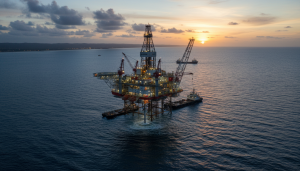
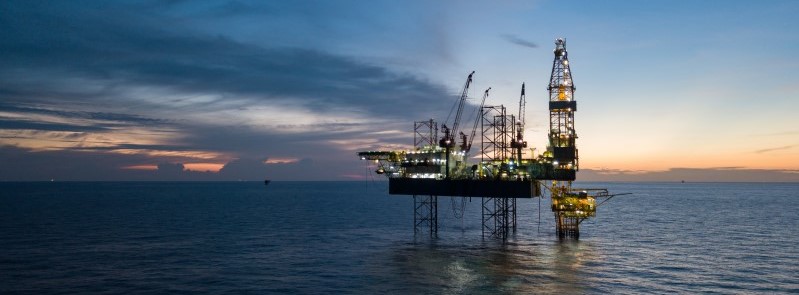
The GoM is undergoing a remarkable renaissance, injecting substantial new volumes into the market at a critical juncture. Industry forecasts from Wood Mackenzie Ltd. indicate a significant boost, with GoM producers bringing online an estimated 300,000 barrels per day of fresh output this year, followed by an additional 250,000 bpd in 2026. This surge is expected to elevate the region’s total production beyond 2 million bpd, representing an impressive 40% increase compared to 2020 levels. These are not rapid-cycle projects but rather the fruition of multi-year, capital-intensive developments, now strategically timed to come online and offer a crucial counter-cyclical supply during periods of broader market softness.
This offshore expansion unfolds against a backdrop of decelerating growth in the prolific U.S. shale plays. The onshore sector, historically the engine of American oil dominance over the past decade, is now contending with market pressures including softer crude prices and heightened supply from OPEC+ nations. In response, many onshore operators have scaled back drilling activity and implemented cost-cutting measures, impacting their short-term production trajectories. Miles Sasser, a senior research analyst at Wood Mackenzie, highlighted this evolving dynamic, stating, “While many analysts and investors remain fixated on onshore developments, the undeniable production growth this year is originating from offshore. The assets within the Gulf of Mexico are demonstrating impressive ramp-up curves, a development that might surprise a considerable segment of the market.”
Deepwater Resilience: A Financial Edge in Volatile Markets
For nearly two decades, the spectacular rise of shale production overshadowed the steady, albeit slower, contributions from the GoM. Now, with tumbling crude prices exerting pressure on the more agile shale drillers, the long-gestation, high-yield offshore projects are demonstrating their unique strategic value and financial resilience. The economic advantage of these deepwater ventures is particularly compelling for long-term investors. Bruce Niemeyer, Chevron’s President of Production for the Americas, revealed that the company’s most recent GoM developments boast breakeven crude prices below $20 per barrel. This positions them among the lowest-cost producing assets globally, offering a robust hedge against price volatility and ensuring profitability even in challenging market conditions. For context, Brent crude recently settled just above $67 per barrel, having declined approximately 10% since early April.
This inherent cost advantage helps explain why offshore production often gains prominence during periods of market weakness. Jesse Jones, a senior upstream analyst at Energy Aspects, observed that GoM production growth has historically outpaced shale in only three of the past ten years, each instance coinciding with periods of lower oil prices and tempered demand. “Shale producers inherently possess a greater agility and thus react more swiftly to fluctuations in crude prices,” Jones explained, highlighting the stark contrast in operational response times between the two segments. This fundamental difference underscores the strategic importance of balancing portfolios with both rapid-response onshore and resilient deepwater assets for comprehensive energy investment.
Major Operators Drive Offshore Momentum
Leading integrated energy companies are spearheading this deepwater revival, committing significant capital to unlock the GoM’s vast potential. Chevron Corporation, for instance, projects a substantial 50% increase in its GoM production from last year’s figures, targeting 300,000 bpd by 2026. Shell Plc is advancing its Sparta project, slated to deliver 90,000 barrels per day when it commences operations in 2028, showcasing continued investment in large-scale deepwater developments. Similarly, bp Plc is executing a series of strategic projects throughout the current decade, anticipating an approximate 20% boost in its GoM production capacity, pushing volumes beyond 400,000 bpd. These significant, multi-billion-dollar commitments underscore a long-term belief in the region’s enduring potential and its critical role in global energy supply, even as concerns emerge from fracing companies about the potential peak of U.S. shale production.
The sustained investment by these energy majors in the Gulf of Mexico reflects a calculated strategy to diversify their production profiles and capitalize on assets with superior economics and longer lifespans. Unlike the shorter-cycle nature of shale, deepwater projects offer predictable, high-volume output over many decades, providing a steady revenue stream and enhancing energy security. This long-term horizon is particularly appealing in an environment where capital allocation is increasingly scrutinized for both financial returns and environmental considerations. The GoM’s established infrastructure and regulatory framework also contribute to its attractiveness for large-scale, complex projects.
Navigating the Broader Energy Landscape
Broader policy discussions aimed at fostering domestic energy production, including from the Gulf, continue to shape the investment landscape for U.S. oil and gas. Efforts to streamline regulations and support exploration can create a more favorable environment for long-term projects. However, global trade dynamics and strategic decisions by major oil-producing alliances, which at times have contributed to increased supply, have also exerted downward pressure on crude prices. This complex interplay of policy support, global supply management, and market prices ultimately drives the investment decisions that lead to pullbacks in price-sensitive shale operations, while deepwater projects, with their longer lead times and lower operating costs, often maintain their development trajectories. Understanding these macroeconomic and geopolitical forces is crucial for investors assessing the long-term viability and profitability of U.S. oil and gas assets.
Investment Implications: Beyond the Horizon
For investors, the evolving U.S. oil production narrative presents a critical strategic shift. While shale remains a formidable force, its sensitivity to price volatility highlights the increasing strategic importance of the Gulf of Mexico’s deepwater assets. These projects, characterized by their lower breakevens, multi-year development cycles, and long-term production profiles, offer a degree of stability and growth that can effectively soften broader national declines. As the U.S. energy mix continues to adapt and global energy demand remains robust, understanding the distinct dynamics and investment merits of both onshore and offshore segments will be paramount for informed capital allocation in the oil and gas sector. The GoM’s resurgence is not merely a cyclical upturn but a fundamental re-evaluation of its enduring value in the global energy market, offering a compelling proposition for those seeking resilient, long-term energy exposure.