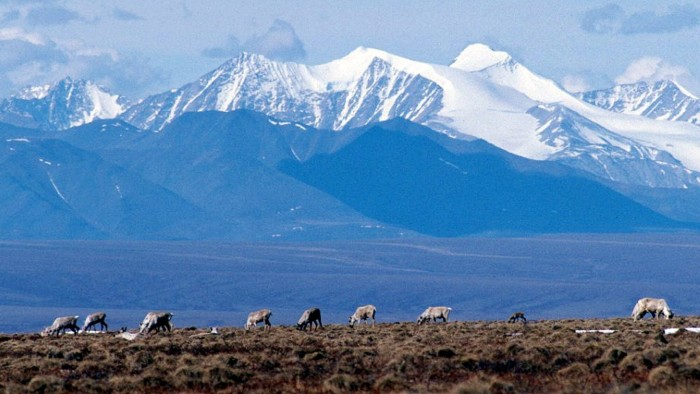
The recent announcement by the Trump administration to roll back Biden-era environmental restrictions in Alaska’s National Petroleum Reserve marks a significant policy shift aimed at bolstering domestic energy production. This move, which proposes to open vast swathes of the 23 million-acre reserve to oil and gas exploration, is framed by the Interior Department as a crucial step towards an “energy renaissance.” While the political rhetoric signals a strong pro-drilling stance, savvy oil and gas investors must look beyond the headlines to dissect the practical implications for crude supply, market dynamics, and their investment portfolios. The long-term viability and immediate impact of this policy in a region historically challenging for development warrant a closer examination, especially against the backdrop of current market volatility and impending global energy events.
Policy Reversal: Unlocking Alaska’s Potential?
The core of the administration’s action involves ditching a previous rule that heavily restricted activity on 13 million acres within the National Petroleum Reserve, areas previously designated as “special areas” for their ecological significance. According to Interior Secretary Doug Burgum, this change aims to “utilize Alaska’s resources instead of burying them under red tape,” fulfilling a campaign promise to the oil industry. This directive stems from an executive order signed on the first day of the president’s return to office, mandating agencies to revise or rescind orders inconsistent with unleashing Alaska’s resource potential. Industry groups and Republican legislators, including Senator Lisa Murkowski, have lauded the decision, arguing it enables energy production without compromising environmental standards. Conversely, environmental organizations and Democratic voices have predictably condemned the move, warning of the industrialization of sensitive Arctic areas in pursuit of fossil fuels. For investors, this creates a clear regulatory direction favoring development, but the path from policy to production is often fraught with more than just political hurdles.
Alaskan Barrels: A Long Road to Market Amidst Current Volatility
While the policy shift is certainly noteworthy, its immediate impact on global crude supply or pricing is likely to be minimal, if not negligible. As of today, Brent crude trades at $96.62, showing a 1.93% gain, with WTI crude following suit at $92.94, up 1.82%. Gasoline prices also reflect an upward trend at $3 per gallon. However, this daily uptick comes after a significant market correction, with Brent having declined nearly 9% over the past 14 days, from $102.22 on March 25th to $93.22 on April 14th. This broader market movement underscores that policy announcements, particularly those concerning long-lead-time projects in challenging environments, often have more psychological than immediate supply-side effects. A critical factor for investors to consider is the historical context: major oil companies have largely abandoned Alaska in recent decades, deterred not only by environmental opposition but also by the prohibitively high costs associated with drilling in the Arctic. The sheer capital expenditure, logistical complexities, and extended timelines required to bring new Alaskan fields online mean that any significant new barrels from this policy decision are years, if not a decade, away from reaching the market. This makes the enthusiasm for “unleashing” Alaska’s potential a long-term speculation rather than a near-term supply catalyst.
Investor Focus: Beyond Headlines to Production Realities
Many investors are currently asking about the consensus Brent forecast for 2026 and how policy shifts like this might influence their base-case price models. The key takeaway for a sophisticated investor is that while the political will to increase US energy production is evident, the economic reality of Alaskan drilling remains challenging. Unlike the rapid-cycle shale plays in the Lower 48, which can respond to price signals within months, Arctic projects demand immense upfront capital, face extreme weather conditions, and require extensive infrastructure development. Even if an oil major were to commit today, the regulatory approval processes, permitting, exploration, and development phases could easily span five to ten years before first oil flows. Furthermore, the risk of future administrations reversing these policies introduces a layer of political uncertainty that can deter long-term capital commitments. Therefore, while Alaska holds substantial resources, the impact on the global supply-demand balance and, consequently, on Brent price forecasts for the coming quarters or even years, is likely to be marginal compared to other, more dynamic supply sources.
Navigating the Immediate Future: Geopolitics, Inventories, and OPEC+
For investors seeking more immediate drivers for the oil market, attention should remain firmly on upcoming global events and fundamental data. The long-term potential of Alaska pales in comparison to the short-term influence of OPEC+ decisions and weekly inventory reports. Looking ahead, the Baker Hughes Rig Count, scheduled for April 17th and 24th, will offer insight into North American drilling activity. More critically, the OPEC+ Joint Ministerial Monitoring Committee (JMMC) meeting on April 18th, followed by the Full Ministerial Meeting on April 20th, will dictate global production quotas. Any decisions regarding current supply cuts or future output levels will have an immediate and profound impact on crude prices. Additionally, the API Weekly Crude Inventory reports on April 21st and 28th, alongside the EIA Weekly Petroleum Status Reports on April 22nd and 29th, will provide crucial real-time insights into US supply and demand dynamics, guiding market sentiment far more directly than any distant Alaskan prospects. Investors should prioritize these near-term catalysts, geopolitical developments, and global demand trends, particularly from key consumers, over the long-horizon promise of Arctic barrels.