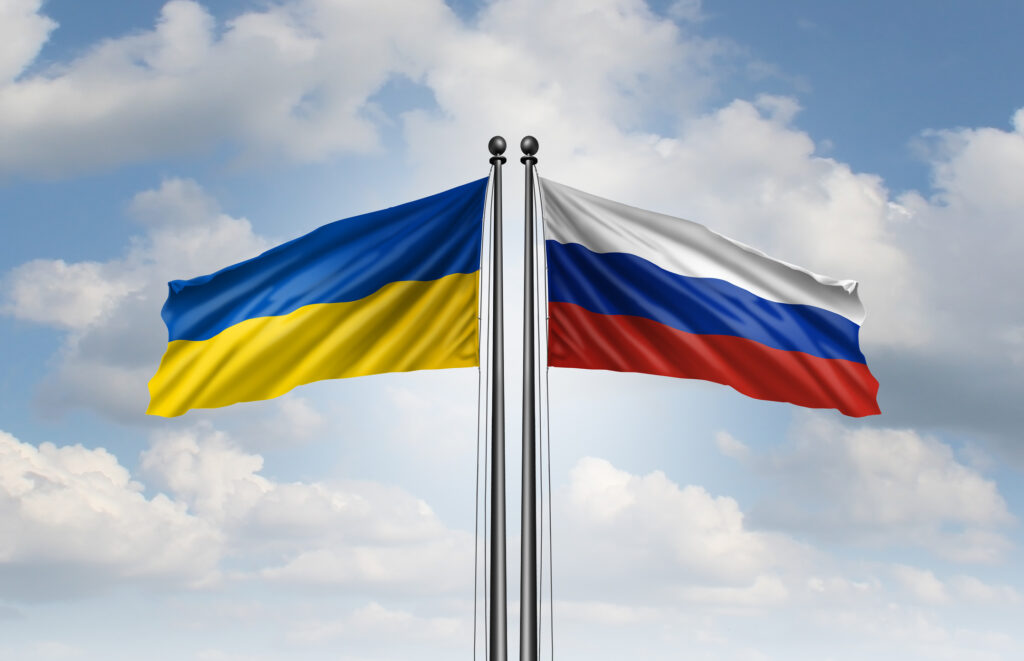
The global energy landscape continues to be reshaped by geopolitical forces, yet a striking paradox persists: despite widespread sanctions, significant financial flows from the United States and the European Union still reach Russia for critical energy and commodity imports. This ongoing trade, now three years into the conflict, highlights the entrenched dependencies and the complex web of global supply chains that defy simple disentanglement. Meanwhile, emerging economies like India have strategically deepened their engagement with Russian suppliers, creating a multi-speed market where investment opportunities and risks diverge sharply. For energy investors, understanding these evolving trade dynamics, coupled with real-time market shifts and upcoming pivotal events, is crucial for navigating an increasingly fragmented and volatile market.
The EU’s Strained Decoupling: Persistence Amidst Sanctions
The European Union has made demonstrable strides in reducing its reliance on Russian energy, with overall imports from Russia contracting by an impressive 86% between the first quarter of 2022 and the first quarter of 2025. Total goods imported from Russia in Q1 2025 amounted to 8.74 billion euros, a sharp drop from 30.58 billion euros recorded four years prior. Since January 2022, the EU has still imported 297 billion euros worth of Russian goods, underscoring the scale of past dependency. The EU’s ban on maritime crude oil imports has drastically cut Russia’s share of petroleum products to just 2.01% in 2025, down from 28.74% in 2021, translating to a reduction from 14.06 billion euros to 1.48 billion euros in Q1 2025. Similarly, natural gas imports saw Russia’s share plummet from 48% to 17% over the same period. However, this decoupling is far from complete. The EU continues to purchase natural gas, nickel, certain oil products, and notably, remains significantly reliant on Russian fertilizers, iron, and steel. Russia was still the largest exporter of fertilizers to the EU in Q1 2025, holding a 25.62% market share. These persistent ties illustrate the formidable challenges in re-engineering complex supply chains, presenting continued geopolitical risk for investors in affected sectors.
India’s Energy Calculus: A Strategic Surge in Russian Imports
In stark contrast to the EU’s strategic withdrawal, India has aggressively leveraged the shifting global energy landscape to its economic advantage. Data from the Indian Commerce Ministry reveals a dramatic surge in India’s imports from Russia, skyrocketing from $8.25 billion in 2021 to $65.7 billion in 2024. The primary driver of this increase has been crude oil, with imports jumping from $2.31 billion in 2021 to $52.2 billion in 2024. This strategic pivot allows India to secure discounted energy supplies, supporting its robust economic growth. Beyond crude, India’s imports of coal and related products from Russia also surged to $3.5 billion from $1.12 billion, and fertilizer imports rose to $1.67 billion in 2024 from $483 million in 2021. This substantial re-routing of Russian commodities to India has profound implications for global trade flows, refining margins, and the overall balance of power in energy markets. Investors must recognize India’s deepening ties as a structural shift, influencing global pricing and commodity availability.
Navigating Volatility: Market Prices and Investor Focus on Future Supply
The intricate dance of sanctions, shifting trade routes, and ongoing geopolitical tensions continues to fuel significant volatility in crude markets. As of today, Brent crude trades at $90.38 per barrel, marking a notable 9.07% decline within the day, fluctuating between a range of $86.08 and $98.97. Similarly, WTI crude is priced at $82.59, down 9.41% today, with a day range of $78.97 to $90.34. This sharp daily drop comes after a period of sustained pressure, with Brent crude having fallen over 18% in the past 14 days, from $112.78 on March 30th to $91.87 on April 17th. Gasoline prices are also feeling the pressure, currently at $2.93, down 5.18% today. Our proprietary reader intent data indicates that investors are keenly focused on understanding these price movements, frequently asking about the predicted price of oil per barrel by the end of 2026. This reflects a deep concern over market stability and future returns. Furthermore, questions regarding current OPEC+ production quotas highlight the market’s sensitivity to supply-side management, especially as Russian output navigates sanctions and new trade channels. These price swings and investor anxieties underscore the critical need for granular analysis of supply-demand fundamentals, especially those impacted by geopolitical shifts in major producing regions.
Geopolitical Crossroads: Upcoming Events Shaping Energy Futures
The coming weeks present a series of critical events that will undoubtedly influence crude oil prices and the broader energy market, directly impacting the investment landscape. This weekend, the Joint Ministerial Monitoring Committee (JMMC) and the full Ministerial OPEC+ meeting on April 18th and 19th, respectively, stand as pivotal moments. Investors are eager to learn if OPEC+ will adjust current production quotas, a decision that could either stabilize or further destabilize an already volatile market. Any changes to output, particularly in light of ongoing Russian supply dynamics, will have immediate repercussions. Furthermore, the market will closely watch the API Weekly Crude Inventory report on April 21st and 28th, followed by the EIA Weekly Petroleum Status Report on April 22nd and 29th. These reports offer vital insights into US supply and demand, providing a crucial counterpoint to global geopolitical supply risks. Rounding out the forward-looking calendar, the Baker Hughes Rig Count on April 24th and May 1st will indicate future production trends in North America. These scheduled data releases and policy decisions, set against the backdrop of persistent Russian energy flows, will be instrumental in shaping investor sentiment and portfolio strategies over the near term.
Investment Implications: Adapting to a Fragmented Global Energy Landscape
The continued flow of billions in energy and commodity payments to Russia from the US and EU, juxtaposed with India’s aggressive uptake of Russian supplies, paints a picture of a global energy market in profound transition. For investors, this fragmentation creates both significant risks and unique opportunities. The EU’s ongoing, albeit diminished, reliance on Russian inputs signals structural challenges in achieving complete energy independence, implying that certain sectors may remain exposed to geopolitical tensions. Conversely, India’s strategic sourcing strategy highlights the emergence of new demand centers and trade corridors that offer alternative revenue streams for producers and trading opportunities for agile investors. The sharp fluctuations in Brent and WTI crude prices, as seen today and over the past two weeks, are a direct consequence of this complex interplay, exacerbated by the uncertainty surrounding OPEC+ decisions and global inventory levels. Successful energy investing in this environment requires a nuanced understanding of these evolving trade patterns, an acute awareness of upcoming market catalysts, and a robust framework for assessing geopolitical risks across diverse energy commodities. The era of a singular global energy market has yielded to a more complex, multi-polar reality, demanding adaptability and rigorous analysis from all market participants.