US Ethane Exports to China Plunge into Uncertainty Amid New Licensing Rules
A fresh directive from the US Commerce Department has cast a shadow over the booming trade of US ethane to China, compelling exporters to secure new licenses for shipments. This sudden policy shift introduces significant uncertainty for a crucial trade route that has seen record volumes, immediately sending ripples across global energy markets and supply chains for key petrochemical feedstocks.
The escalating trade tensions between Washington and Beijing have once again manifested in a move directly impacting the energy sector. This week’s order requires a broad spectrum of companies to obtain specific export licenses for shipping various goods, including critical hydrocarbon liquids like ethane and butane, to China. Furthermore, some previously issued licenses have been revoked, signaling a more stringent enforcement environment. This development follows a period where US ethane exports to China surged to an unprecedented 492,000 barrels per day in 2024, according to the US Energy Information Administration. These volumes accounted for nearly half of all US ethane exports, underscoring the strategic importance of this trade. Notably, despite China having recently increased tariffs on US goods to 125%, a crucial waiver had been granted to petrochemical producers heavily reliant on American ethane, highlighting the commodity’s essential role in their operations.
Immediate Disruptions in Maritime Logistics
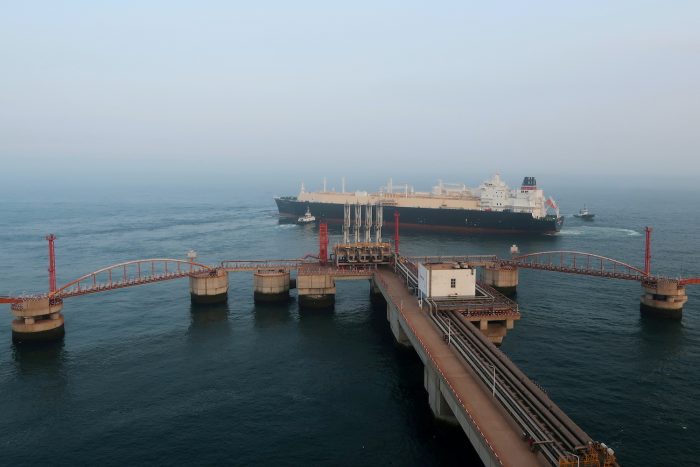
The impact on maritime logistics was swift and visible. Shipping data reveals at least two Very Large Gas Carriers (VLGCs) were reportedly idled at US ports this week, awaiting clearance to load ethane. An additional fifteen tankers are either en route to or anchored off the US Gulf Coast, collectively poised to load approximately 284,000 barrels per day of ethane in June. This sudden regulatory hurdle jeopardizes these scheduled movements, creating a bottleneck in the supply chain.
Specific instances further highlight the immediate dilemma. The VLGC Pacific Ineos Grenadier, intended to transport ethane for Ineos, has been docked at Enterprise Products Partners’ Morgan’s Point terminal in La Porte, Texas, since last Friday. Similarly, the Stl Qianjiang remains anchored near Energy Transfer’s Nederland terminal, awaiting a loading slot for Chinese petrochemical giant Satellite Chemical. These vessels now represent tangible examples of the immediate disruption facing the energy supply chain. Major players like Enterprise Products Partners, a significant handler of ethane and butane, have publicly acknowledged evaluating their operational procedures and internal controls, indicating the profound uncertainty surrounding their ability to secure the necessary licenses for continued trade.
Industry Perspectives and Future Outlook for Ethane Markets
Industry stakeholders are expressing serious concerns regarding the long-term implications. A Chinese ethane importer, preferring anonymity due to the sensitivity of the situation, described the potential suspension of all exports as a “major issue” and indicated their cautious monitoring of exporters’ ability to secure new licenses promptly. The urgency reflects China’s reliance on US ethane as a critical feedstock.
Market analysts are quick to highlight the potential for immediate market dislocation. Julian Renton, an analyst at East Daley Analytics, noted the risk of “immediate market disruption” if the restrictions hold. Should these restrictions persist, Chinese petrochemical facilities could face severe shortfalls of essential feedstocks, potentially leading to stalled production and delayed project developments. Given that Chinese petrochemical firms frequently opt for ethane as a more cost-effective alternative to naphtha, a sustained interruption could force a costly pivot in their operational strategies, impacting their competitive edge.
For US oil and gas producers, China represents a vital market for their natural gas liquids (NGLs). A prolonged disruption in ethane exports would necessitate finding alternative markets or adjusting production, potentially impacting domestic NGL pricing and producer economics. In the short term, some traders suggest that Chinese operators might experience limited immediate impact, citing adequate existing stock levels. However, this buffer is finite. The longer the licensing uncertainty persists, the greater the risk of depleting reserves and facing critical shortages. Companies like Ineos, which also procures ethane for its European operations, might explore diverting cargoes to other destinations to mitigate losses and maintain supply to their non-Chinese facilities.
Investor Implications in a Shifting Trade Landscape
This evolving situation demands close attention from investors in the oil and gas sector, particularly those with exposure to NGL production, midstream infrastructure, and petrochemicals. The uncertainty surrounding US-China energy trade introduces a new layer of geopolitical risk that could influence commodity prices, shipping rates, and the profitability of companies engaged in these cross-border transactions. The ability of US exporters to navigate this new regulatory landscape and secure timely licenses will be a critical determinant of market stability in the coming months.
The long-term implications for global ethane trade flows and the competitive dynamics between different petrochemical feedstocks remain to be seen. However, the immediate message is clear: the rules of engagement for energy trade with China have just become considerably more complex, introducing significant operational and financial challenges that warrant careful consideration from all market participants.