US DOE Fuels Nuclear Sector Growth with New Projects
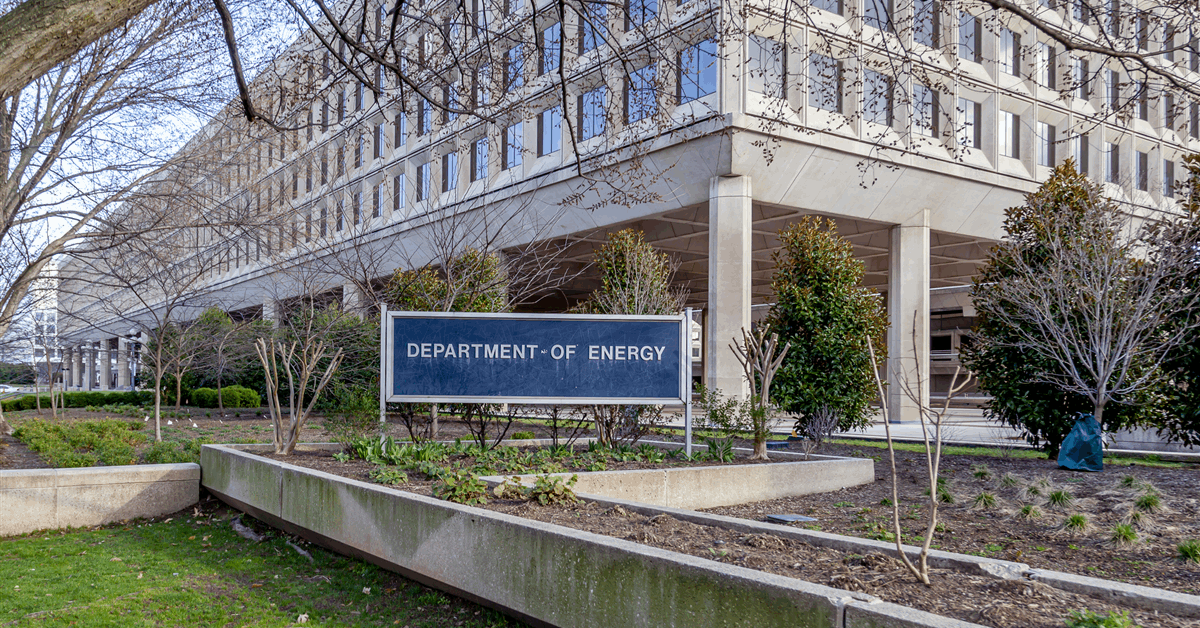
The United States Department of Energy (DOE) has significantly expanded its commitment to bolstering domestic nuclear energy capabilities, recently announcing the selection of four additional projects for its pioneering nuclear fuel pilot program. This strategic initiative aims to cultivate a robust, U.S.-based supply chain for advanced reactor fuels, a critical step towards enhancing energy independence and accelerating the deployment of next-generation nuclear technologies. This move signals a profound shift in energy investment focus, offering a compelling long-term diversification play for portfolios traditionally weighted towards fossil fuels, especially as the global energy landscape navigates both short-term volatility and a long-term decarbonization imperative.
Strategic Fuel Production: De-Risking the Nuclear Renaissance
The latest additions to the DOE’s Fuel Line Pilot Program underscore a concerted effort to de-risk the development of advanced reactors by securing a reliable, domestic fuel source. Joining the cohort are Santa Clara-based Oklo Inc., slated to construct three fuel production facilities to support its Aurora and Pluto reactors, as well as other fast reactor designs. Charlotte-based Terrestrial Energy Inc. will develop fuel, specifically Standard Assay Low-Enriched Uranium (SALEU) enriched to below five percent uranium-235, for its innovative molten salt reactor design. Oak Ridge-based TRISO-X Inc., a subsidiary of X Energy LLC, is establishing an additional fuel fabrication laboratory to integrate, train, and validate systems for its TX-1 commercial TRISO fuel facility, renowned for its proprietary tri-structural isotropic particle fuel designed for high-temperature resilience. Rounding out the selections is Hawthorne-based Valar Atomics Inc., which will focus on TRISO fuel fabrication for its Ward250 reactor and other high-temperature gas reactors. These companies, many of whom are already participants in the DOE’s broader Reactor Pilot Program, will leverage the Department’s authorization processes, though they bear full responsibility for the construction, operation, decommissioning, and feedstock sourcing of their facilities. The pathway to potentially access High-Assay Low-Enriched Uranium (HALEU) through the DOE’s HALEU Availability Program further sweetens the proposition for private sector investment and a streamlined commercial licensing trajectory. This expansion builds upon the initial selection of Oak Ridge-based Standard Nuclear Inc., which operates extensive, fully permitted radiological facilities, bringing the total projects under the fuel pilot program to five.
Nuclear’s Stable Horizon Amidst Oil Market Swings
While the long-term investment thesis for nuclear energy solidifies, the traditional oil and gas market continues its characteristic volatility. As of today, Brent crude trades at $91.65, reflecting a 2.05% decline from its opening, having ranged between $91.58 and $93.04. Similarly, WTI crude sits at $88.90, down 2.49% within a daily range of $88.76 to $90.34. Gasoline prices also experienced a slight dip, currently at $3.06, down 0.97%. This daily movement is indicative of the broader trend observed over the past fortnight, where Brent crude has shed a significant $14, or 12.4%, plummeting from $112.57 on March 27th to $98.57 yesterday, April 16th. This persistent price fluctuation, driven by a complex interplay of geopolitical factors, supply decisions, and demand shifts, underscores the appeal of diversifying into sectors like nuclear. The DOE’s strategic investment in domestic fuel production, while a long-term play, offers a counter-cyclical hedge against the often-unpredictable dynamics of the fossil fuel market. Investors seeking stability and a clear path towards energy independence will find the predictable, long-cycle nature of nuclear development an attractive contrast to the immediate, often reactive, movements in crude prices.
Upcoming Catalysts: From OPEC+ Decisions to Nuclear Milestones
The immediate horizon for energy investors remains dominated by traditional oil market catalysts. Our proprietary data indicates that investors are keenly anticipating the upcoming OPEC+ Joint Ministerial Monitoring Committee (JMMC) meeting this Friday, April 17th, followed by the full Ministerial meeting on Saturday, April 18th. These gatherings are critical for setting production quotas and will undoubtedly influence crude price trajectories in the near term. Furthermore, the weekly API Crude Inventory report on Tuesday, April 21st, and the EIA Weekly Petroleum Status Report on Wednesday, April 22nd, along with the Baker Hughes Rig Count on Friday, April 24th, will offer crucial insights into short-term supply and demand dynamics. These events will be repeated the following week, highlighting the constant flow of data driving daily oil and gas trading decisions. In contrast, the catalysts for the burgeoning nuclear fuel sector, while less frequent, carry significant long-term weight. The DOE’s pilot program selections represent foundational steps. Future catalysts will include successful facility construction, regulatory approvals for fuel production, and the eventual deployment of advanced reactors powered by this domestically produced fuel. The “fast-track approach to commercial licensing” promised by the DOE is a critical forward-looking element that could accelerate the realization of these strategic projects, providing tangible milestones for investors to track in the coming years.
Investor Focus: Beyond the Daily Barrel Count
Our proprietary reader intent data reveals a prevailing investor focus on the immediate pulse of the oil market. Common queries revolve around “What are OPEC+ current production quotas?” and “What is the current Brent crude price?”, indicating a strong emphasis on short-term market drivers and price discovery. While these questions are crucial for managing daily exposure in traditional oil and gas investments, the DOE’s expansion of the nuclear fuel program speaks to a different, yet equally vital, investment thesis: long-term energy security and decarbonization. For investors looking beyond the daily barrel count, this nuclear initiative presents a compelling opportunity to participate in a sector poised for significant growth and strategic importance. The fact that companies like Oklo, Terrestrial Energy, TRISO-X, and Valar Atomics are responsible for all construction, operation, and decommissioning costs, alongside sourcing nuclear material, underscores the substantial private capital commitment already being channeled into this space. This private sector engagement, coupled with the DOE’s facilitating authorization process, positions these companies and the broader advanced nuclear sector as a high-potential area for strategic investment, offering a differentiated play from the volatile, short-cycle nature of conventional energy markets.


