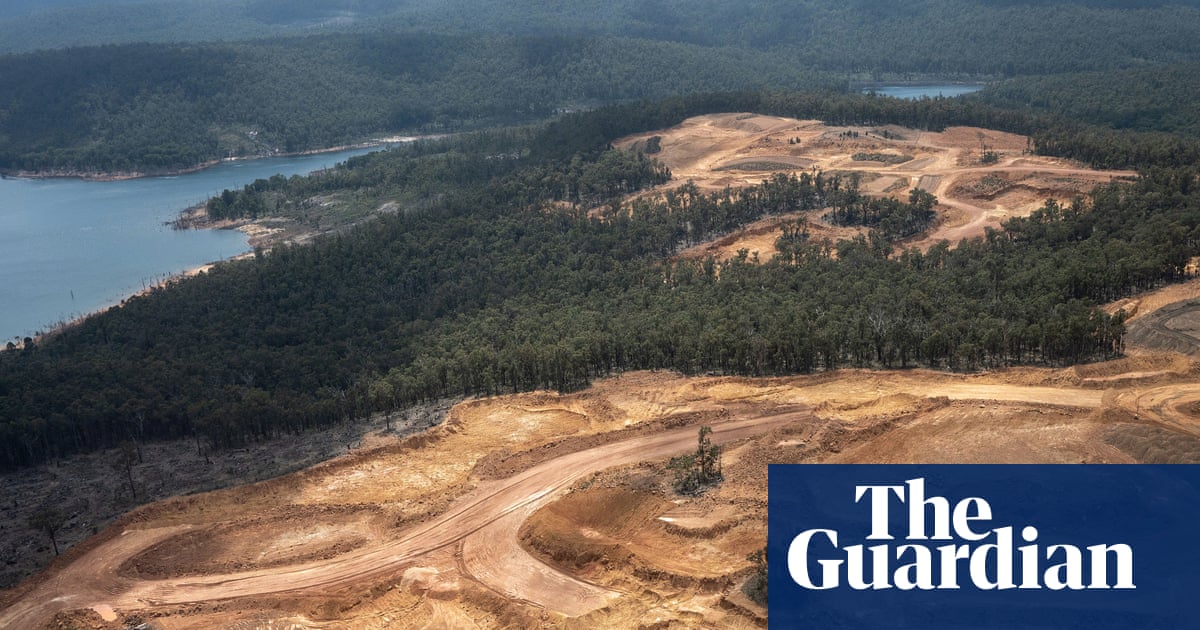
The global energy landscape is undergoing a profound transformation, moving beyond traditional hydrocarbons to embrace a broader definition of resource security. A recent pivotal decision by the Australian government, granting US mining giant Alcoa an exemption to continue clearing land in Western Australia’s jarrah forest, despite a history of unlawful practices, underscores this shift. This move, directly linked to a critical minerals agreement with the US for strategic resources like gallium, highlights the complex interplay between national interest, environmental stewardship, and geopolitical alliances. For sophisticated investors, this development signals both significant opportunities in strategic resource plays and considerable ESG risks that demand careful evaluation.
The Geopolitical Imperative: Fueling Strategic Resource Development
The Australian government’s controversial decision to allow Alcoa to proceed with its bauxite mining operations, even in the face of persistent illegal land clearing, is a clear manifestation of a burgeoning geopolitical imperative: securing critical minerals. At the heart of this decision lies a strategic minerals deal forged last year with the Trump administration, focused on the supply of gallium. Gallium, a vital component for advanced defense systems and burgeoning renewable energy technologies, positions this agreement as a cornerstone of future economic and national security for both the US and Australia.
The involvement extends beyond bilateral ties, with the Japanese government and Sojitz Corporation partnering with Alcoa to develop a gallium plant at Alcoa’s Wagerup refinery. This multi-national collaboration, backed by committed funding and equity from both the Australian and US governments, elevates the project’s strategic significance. It demonstrates a concerted effort by allied nations to de-risk critical supply chains, reducing reliance on potentially volatile sources and bolstering domestic and allied industrial capabilities. For investors, this signals robust government backing, potentially de-risking long-term capital deployments in projects deemed critical to national interests, despite the inherent environmental controversies.
Navigating ESG Headwinds: Alcoa’s Regulatory Conundrum
While the strategic importance of critical minerals is undeniable, the circumstances surrounding Alcoa’s exemption present a significant challenge for ESG-conscious investors. Documentation reveals Alcoa unlawfully cleared land in the northern jarrah forest for 15 years, despite warnings from the federal environment department dating back to 2011. The environment minister, Murray Watt, announced an “unprecedented” $55 million penalty, an enforceable undertaking, but notably, this penalty was applied only to a six-year period from 2019-2025, leaving a decade of prior illegal clearing unaddressed due to statute of limitations.
The minister justified granting Alcoa an 18-month national interest exemption to continue clearing, allowing time to consider a proposal for expanding its Huntly and Willowdale mining operations through 2045. This decision, aimed at “reinforcing and giving confidence” to the US and Japan regarding Australia’s commitment, has ignited outrage from conservationists. They argue that prioritizing strategic alliances over consistent enforcement of environmental protection laws (specifically the EPBC Act) sets a dangerous precedent. For investors, this situation highlights the delicate balance governments must strike between economic and strategic imperatives and environmental responsibilities. It also underscores the potential for significant reputational damage, regulatory uncertainty, and social license risks for companies operating in such sensitive sectors.
Market Dynamics and Diversification: Beyond Crude Volatility
In the broader energy market, investors are constantly recalibrating their portfolios against a backdrop of significant volatility. As of today, Brent Crude trades at $93.86, showing a robust 3.79% gain, following a day range of $89.11-$95.53. Similarly, WTI Crude stands at $90.63, up 3.67%. This recent upswing contrasts sharply with the past two weeks, where Brent experienced a significant decline of nearly 20%, falling from $118.35 on March 31 to $94.86 by April 20. This kind of rapid fluctuation keeps many investors, like those frequently asking “is WTI going up or down” or “what do you predict the price of oil per barrel will be by end of 2026?”, intensely focused on traditional energy price movements.
Against this backdrop of crude price uncertainty, the strategic minerals sector, exemplified by the US-Australia gallium deal, offers a compelling diversification strategy. While traditional oil and gas remain central to the global economy, the long-term, government-backed nature of critical mineral projects provides a different risk-reward profile. Investments in these strategic resources, essential for the energy transition and national defense, can offer a hedge against the cyclical nature and geopolitical sensitivities inherent in the fossil fuel markets. They represent an opportunity to participate in a growth segment driven by structural demand shifts rather than short-term supply-demand imbalances that dominate daily crude trading.
Forward View: Policy Commitments and Long-Term Value Creation
Looking ahead, the Australian government’s 18-month national interest exemption provides Alcoa with a critical window to solidify its long-term operational plans, particularly the proposed expansion of its Huntly and Willowdale operations to 2045. This extended timeline, coupled with the explicit government commitment to “give confidence” to international partners like the US and Japan, suggests a strong foundation for future project stability and growth. The strategic importance of gallium ensures that this project will likely continue to receive high-level political attention and support, mitigating some of the operational risks often associated with large-scale mining.
While the immediate focus of this deal is critical minerals, it exists within a larger energy security narrative. Upcoming events in the broader energy calendar, such as the OPEC+ JMMC Meeting tomorrow (April 21), EIA Weekly Petroleum Status Reports (April 22, April 29), and the EIA Short-Term Energy Outlook on May 2, will continue to shape the traditional energy investment landscape. These regular updates provide crucial context on global supply, demand, and policy direction. However, the Alcoa-gallium agreement underscores that energy investment is evolving, encompassing a wider array of resources deemed vital for economic prosperity and national security. For investors seeking long-term value, understanding these shifts and the policy commitments underpinning them is paramount to identifying resilient opportunities in the unfolding energy transition.


