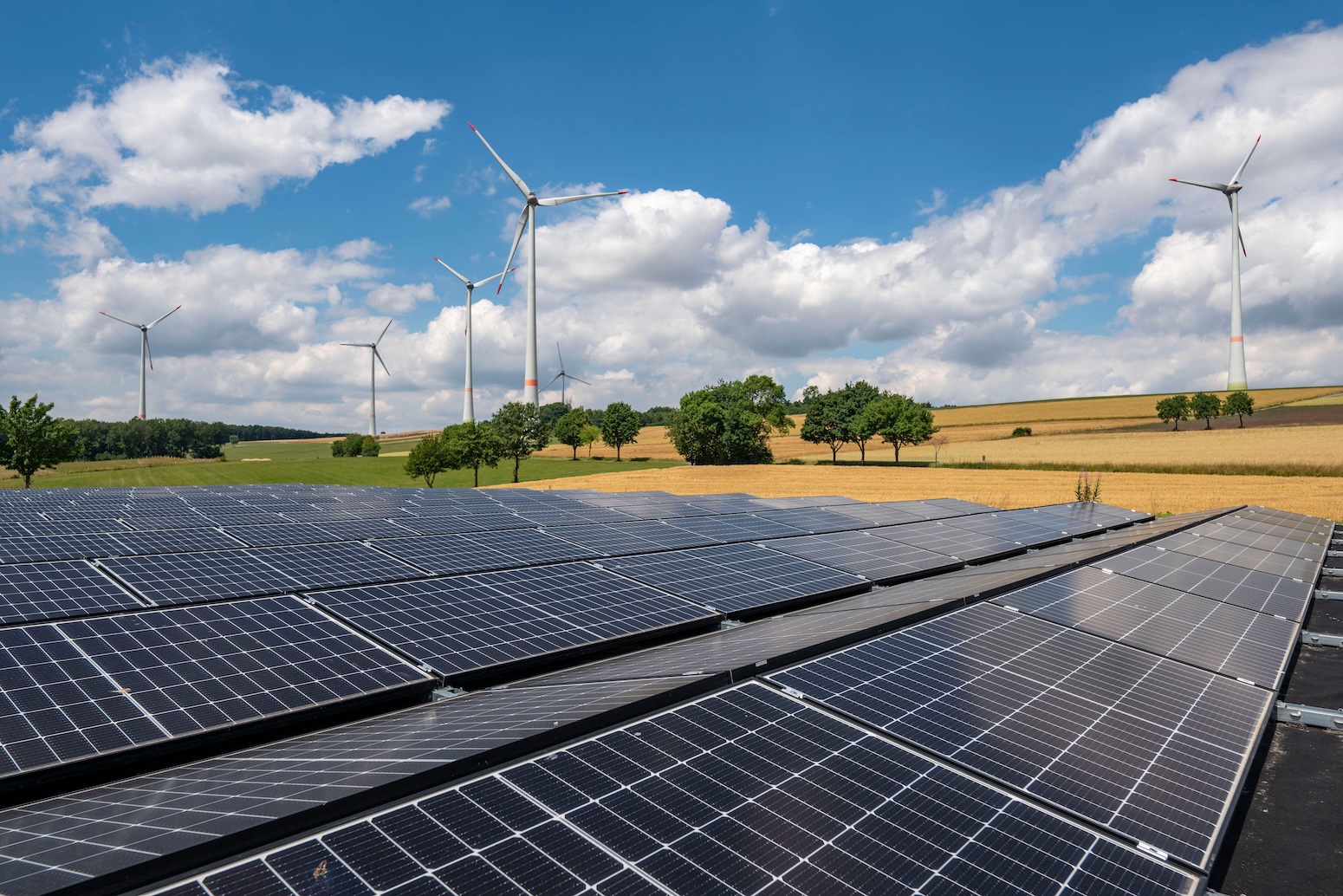
A significant shift in the global energy landscape is underway, with recent pronouncements from the United Nations and research from the International Renewable Energy Agency (IRENA) underscoring the “unstoppable” momentum of renewable energy. These reports assert that “smart economics” are now firmly in favor of clean energy investments, driven by plummeting costs and expanding capacity. For oil and gas investors, this isn’t merely an environmental narrative; it’s a fundamental re-evaluation of long-term capital allocation and risk management. While traditional energy sources continue to power much of the global economy, the economic case for renewables is becoming increasingly compelling, demanding a sophisticated analytical approach to portfolio strategy.
The Economic Imperative: Renewables’ Cost Advantage
The core argument for the accelerating energy transition lies in the hard economics. Recent data reveals a dramatic reduction in the cost of renewable energy technologies over the past decade. In 2024, a striking 91% of newly commissioned renewable power projects proved more cost-effective than any new fossil-fuel alternatives. Specifically, new solar photovoltaics (PV) and onshore wind installations are now, on average, 96% cheaper than building new coal or gas-fired power plants. The global average cost for solar PV has fallen to $0.43 per kilowatt-hour (kWh), and onshore wind to $0.34/kWh, representing 41% and 53% cost advantages, respectively, over the least-cost new fossil fuel option. This economic edge translated into tangible savings, with the 582 gigawatts (GW) of renewable capacity added in 2024 avoiding an estimated $57 billion in fossil fuel use. While some inflationary pressures and supply chain issues caused minor cost increases for specific technologies between 2023 and 2024 (e.g., solar PV up 0.6%, onshore wind up 3%), the long-term trajectory points to continued cost reductions as technology matures and supply chains optimize. This persistent economic advantage is the bedrock of the “unstoppable” transition narrative.
Navigating Current Market Volatility Amidst Transition
Even as the long-term economic arguments for renewables strengthen, the immediate landscape for traditional oil and gas remains dynamic and volatile. As of today, Brent crude trades at $90.38 per barrel, marking a significant daily decline of 9.07%, with a day range between $86.08 and $98.97. Similarly, WTI crude sits at $82.59, down 9.41%, having traded between $78.97 and $90.34. Gasoline prices have also seen a drop, currently at $2.93 per gallon, down 5.18%. This current downturn is notable, especially considering Brent’s trend over the past two weeks, where it has shed $20.91, or 18.5%, moving from $112.78 on March 30th to $91.87 on April 17th. Such sharp movements in crude prices highlight the inherent instability and geopolitical sensitivities of the oil market. For investors, this volatility presents a dual challenge: managing exposure to traditional energy assets while simultaneously evaluating the increasingly stable and cost-competitive returns offered by renewable projects. The “smart economics” of renewables gain additional luster when juxtaposed against the unpredictable swings of the fossil fuel market, potentially driving further capital toward cleaner alternatives as investors seek more predictable returns.
Investor Focus: The Future of Fossil Fuels and OPEC+ Dynamics
Our proprietary reader intent data shows that investors are keenly focused on the near-term trajectory of oil prices and the strategies of key players. Questions such as “What do you predict the price of oil per barrel will be by the end of 2026?” and “What are OPEC+ current production quotas?” dominate discussions. These inquiries underscore the ongoing relevance of traditional energy markets despite the rising tide of renewables. This focus is particularly pertinent with critical calendar events on the horizon. The upcoming OPEC+ Joint Ministerial Monitoring Committee (JMMC) meeting on April 18th, followed by the Full Ministerial meeting on April 19th, will be pivotal. Any decisions regarding production quotas will directly impact global supply and, consequently, crude prices. Investors will also be closely watching the API Weekly Crude Inventory reports on April 21st and 28th, alongside the EIA Weekly Petroleum Status Reports on April 22nd and 29th, to gauge demand signals and stock levels. The Baker Hughes Rig Count on April 24th and May 1st will offer insights into North American production trends. These events will shape the supply-demand balance and investor sentiment for crude in the coming weeks and months, offering a crucial counterpoint to the long-term renewable growth narrative. While the UN declares fossil fuels are “running out of road,” these upcoming events demonstrate that the journey is far from over, requiring investors to balance long-term trends with short-term market catalysts.
Strategic Positioning in a Dual Energy Landscape
The convergence of rapidly advancing renewable economics and persistent, albeit volatile, demand for traditional energy sources necessitates a nuanced investment strategy. For oil and gas investors, this means not simply divesting, but strategically adapting. While the “unstoppable” growth of renewables, driven by their cost advantages and capacity additions, represents a clear long-term trend, the world still relies heavily on fossil fuels. Companies like Repsol, whose performance our readers are asking about for April 2026, represent integrated energy players that are themselves navigating this transition, often investing heavily in renewable portfolios alongside their traditional operations. The ongoing minor cost increases for some renewable technologies due to inflation and supply chain pressures serve as a reminder that the path to a fully clean energy system is not without its own challenges and learning curves. Astute investors will recognize that the energy transition is a marathon, not a sprint, requiring diversified portfolios that can capitalize on both the enduring, though evolving, role of hydrocarbons and the exponential growth potential of clean energy. The smart money will seek out companies demonstrating robust capital discipline in their legacy assets while aggressively expanding their low-carbon solutions, ensuring resilience and growth in a rapidly transforming global energy matrix.