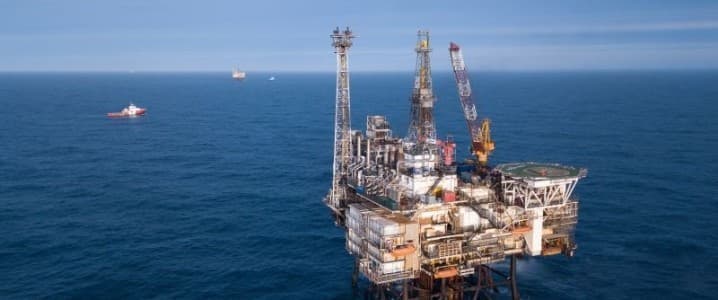
The future of energy investment in mature basins is undergoing a profound transformation, and nowhere is this clearer than in the UK North Sea. What was once heralded as a cornerstone of Britain’s energy independence, Equinor’s Rosebank project – the nation’s largest undeveloped oilfield – now finds itself in an indefinite holding pattern. This isn’t a technical setback, but a direct consequence of an evolving regulatory environment where climate mandates are increasingly overriding traditional economic and energy security imperatives. For investors, the implications extend far beyond a single $3.8 billion project; it signals a fundamental reassessment of risk and return in a region previously considered a stable frontier for hydrocarbon development.
Rosebank’s Uncharted Waters: A New Standard for Emissions Accounting
The Rosebank field, discovered in 2004, represents a significant prize: an estimated 336 million barrels of oil equivalent, comprising 210 million barrels of oil and 177 billion cubic feet of gas, situated 130 kilometers northwest of Shetland. This project, operated by Equinor with Ithaca Energy as a minority partner, was projected to deliver peak production of approximately 70,000 barrels per day of oil and 1.8 million cubic meters per day of gas. At its full potential, Rosebank could have covered up to 7% of the UK’s domestic oil demand, offering a vital bolster to energy security amidst declining indigenous production. However, its path to development was abruptly halted by a 2024 ruling from Scotland’s Court of Session. This landmark decision mandated that Environmental Impact Assessments for new projects must now extend beyond direct operational emissions (Scope 1 & 2) to include the downstream, or Scope 3, emissions generated when the extracted oil and gas are ultimately combusted. The Offshore Petroleum Regulator for Environment and Decommissioning (OPRED) subsequently ordered Equinor to resubmit its Environmental Statement under these expanded terms, putting the entire $3.8 billion investment on hold just as it approached a final investment decision. This regulatory pivot means development drilling, initially slated for the second quarter of 2025, has been pushed back to early 2026, with new consent unlikely before 2026. This directly impacts the project’s original 2026-27 onstream target, adding significant uncertainty and cost. Investors are keenly watching how such regulatory shifts will impact future supply, particularly given ongoing questions about global production quotas and their effect on market stability.
Market Volatility and the Cost of Regulatory Uncertainty
The shelving of Rosebank comes at a time when global energy markets continue to demonstrate a delicate balance between supply dynamics and demand fluctuations. As of today, Brent Crude trades at $98.01 per barrel, reflecting a -1.39% dip within a day range of $94.42 to $99.84. This figure represents a notable decline from $108.01 recorded on March 26, meaning Brent has shed $13.43, or 12.4%, over the past fourteen days. While still robust, the recent downward trend underscores how critical timely project execution is for capital-intensive ventures. The delay in Rosebank’s production, which could have contributed up to 70,000 b/d to global supply, represents a tightening of potential future volumes that the market will eventually have to price in. For Equinor and Ithaca Energy, the extended wait translates into higher financing costs, deferred revenues, and increased exposure to market price fluctuations. The regulatory goalposts have shifted dramatically, transforming the UK North Sea from a relatively stable, predictable investment environment into one characterized by heightened political and environmental risk. This new reality forces a re-evaluation of capital allocation strategies, not just for the UK but potentially for other basins considering similar expanded emissions accounting requirements. The implicit question from investors regarding current Brent prices and underlying market models reflects a broader concern about where future supply will originate and at what cost, especially when major projects are sidelined by non-market factors.
Forward Outlook: Supply Gaps and OPEC+ Dynamics
The Rosebank delay creates a long-term supply gap for the UK, further exacerbating the nation’s reliance on energy imports at a time when energy security remains a global priority. This domestic constraint stands in stark contrast to the active supply management strategies employed by major global producers. Investors are closely monitoring upcoming events that will shape the global supply narrative. Specifically, the OPEC+ Joint Ministerial Monitoring Committee (JMMC) meeting on April 18, followed by the full OPEC+ Ministerial Meeting on April 20, will be crucial. These gatherings frequently determine production quotas, directly influencing global crude availability and price stability. Our proprietary reader intent data reveals a significant interest in “OPEC+ current production quotas,” underscoring the market’s focus on these decisions. As the UK deliberately limits its own potential output by imposing stringent environmental hurdles on projects like Rosebank, global supply will increasingly hinge on the collective actions of organizations like OPEC+. The postponement of Rosebank’s onstream date beyond 2026-27 means its potential contribution to UK energy independence will be delayed, deepening the import dependency. This dynamic presents a complex challenge for investors: how to balance the imperative of energy security with evolving environmental mandates, particularly when political decisions in one region can have ripple effects on global supply-demand equilibrium and investment attractiveness elsewhere.
Reassessing UK North Sea Investment Viability
The Rosebank saga serves as a stark warning to exploration and production companies considering significant capital deployment in the UK Continental Shelf. The precedent set by the requirement to account for Scope 3 emissions in environmental assessments introduces a new layer of complexity and uncertainty that could deter future investment. While environmental stewardship is increasingly paramount, the sudden reinterpretation of regulatory requirements mid-project development dramatically elevates perceived risk. For the UK, which faces a natural decline in mature North Sea assets, shelving its largest undeveloped field could accelerate the decline in domestic production, impacting both energy security and the thousands of skilled jobs tied to the industry. The $3.8 billion investment in Rosebank alone supported hundreds of jobs. The broader industry implications are significant; if the UK continues to raise regulatory barriers for new hydrocarbon developments, capital will inevitably flow to jurisdictions with more predictable and favorable investment climates, even if those jurisdictions have less stringent environmental oversight. Investors are not just asking about current crude prices but also about the long-term viability of specific regions for oil and gas development, and the UK North Sea’s standing has undoubtedly been diminished by this regulatory intervention. This event will likely prompt a comprehensive reassessment of sovereign risk premiums for future offshore projects, making the UK a higher-cost and higher-risk proposition for energy developers.