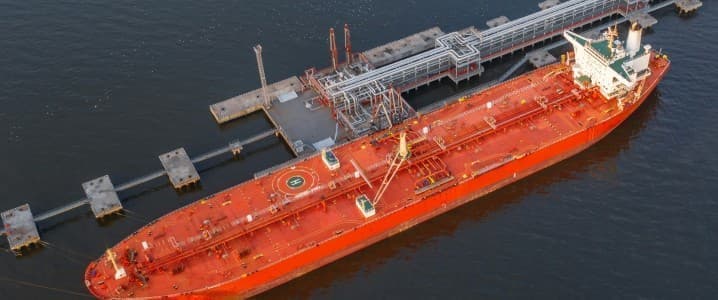
The global oil market is once again confronting heightened geopolitical risk following reports of a Ukrainian drone strike on a Russian ‘shadow fleet’ oil tanker in the Mediterranean. This incident, marking a significant expansion of hostilities to a new maritime domain, underscores the persistent vulnerability of energy supply chains and introduces a fresh layer of uncertainty for investors. As market participants grapple with the immediate implications and potential for further escalation, understanding the operational shifts, strategic targeting, and upcoming market catalysts becomes paramount for informed investment decisions.
Geopolitical Tensions Fueling Supply Risk Premium
Friday’s reports detailing a drone attack on the Omani-flagged Qendil tanker in the Mediterranean represent a critical escalation in the ongoing conflict. While the vessel was reportedly empty and posed no immediate environmental threat, the geographic reach of such strikes has significantly expanded, directly impacting the operational calculus for Russian oil exports. This development follows a pattern of increasingly aggressive targeting of Russia’s energy infrastructure, including refineries and storage facilities, by Ukrainian forces.
The immediate consequence for shipping has been a notable shift in Black Sea routes. Ship-tracking data indicates that tankers loading from the Russian port of Novorossiysk are now frequently avoiding the shortest path to the Bosphorus Strait. Instead, they are opting for a longer, roughly 350-mile detour along the Georgian and Turkish coasts, adding approximately 70% to their journey time. This operational adjustment, necessitated by the threat of drone attacks, inevitably increases transit costs and delivery times. Already, crude oil exports from Russia’s Black Sea terminals saw significant reductions in November, hampered by a combination of adverse weather and these escalating attacks on infrastructure.
While Brent Crude currently trades at $91.87, representing a 7.57% decline from its prior close, and WTI sits at $84, down 7.86%, this daily fluctuation occurs within a market inherently sensitive to supply disruptions. This recent strike injects a renewed geopolitical risk premium into the market, helping to stabilize prices against steeper downward momentum, especially considering Brent’s significant 18.5% drop over the last two weeks from $112.78 to its current level. The underlying tension from these events contributes to a higher price floor than might otherwise be observed, reflecting the persistent threat to a major oil exporter’s access to global markets.
Navigating Risk: Operational Shifts and Investor Queries
The operational challenges extend beyond mere route adjustments. The so-called ‘shadow fleet,’ comprising older vessels often operating with less transparent ownership and insurance arrangements, becomes a focal point of risk. Attacks on these vessels, even if empty, signal a broader intent to disrupt Russia’s ability to circumvent sanctions and export oil. The added distance and inherent dangers translate into increased operating costs, including potentially higher insurance premiums, which are ultimately borne by the price of crude and refined products.
Investors are keenly observing these dynamics, with many actively seeking clarity on the future trajectory of energy markets. Our proprietary reader intent data reveals a consistent theme this week, with investors asking questions such as, “What do you predict the price of oil per barrel will be by end of 2026?” This highlights the profound uncertainty introduced by geopolitical events and their cascading effects on global supply and demand balances. Furthermore, the strategic shift in Ukrainian targeting, moving from smaller-scale strikes on storage tanks to critical, hard-to-replace refinery equipment like cracking units (much of which is Western-made and subject to sanctions), suggests a long-term strategy to cripple Russia’s refining capacity. Such damage would not only impact crude exports but also disrupt Russia’s ability to supply refined fuels to international markets, further tightening product spreads globally.
Upcoming Catalysts: OPEC+ and Inventory Data in Focus
Against this backdrop of escalating geopolitical risk, the market calendar for the coming weeks presents several critical catalysts that will significantly influence investor sentiment and price discovery. With an OPEC+ Ministerial meeting scheduled for today, April 18th, investors are keenly awaiting any signals regarding production quotas. Our reader intent data underscores the market’s intense focus on this cartel’s influence, with many asking, “What are OPEC+ current production quotas?” The cartel’s stance on maintaining or adjusting output levels will be crucial in balancing the market’s supply anxieties against global demand trends. Any indication of a deviation from current policy, whether an unexpected cut or a surprise increase, could send ripples across the energy complex.
Further shaping investor sentiment will be the stream of inventory data releases. The API Weekly Crude Inventory report on April 21st, followed by the EIA Weekly Petroleum Status Report on April 22nd, will offer vital insights into U.S. crude and product balances. These reports, along with subsequent releases on April 28th (API) and April 29th (EIA), will indicate how current global disruptions and operational shifts might be translating into domestic supply shifts and demand responses. Additionally, the Baker Hughes Rig Count on April 24th and May 1st will provide a real-time pulse on North American upstream activity, offering clues about future supply capacity amidst a volatile pricing environment. These data points, combined with the ongoing geopolitical narrative, will provide a more comprehensive picture for investors seeking to position themselves effectively.
Investment Horizon: Strategies Amidst Geopolitical Volatility
For investors, the current environment demands a nuanced approach, balancing the inherent risks of geopolitical conflict with the fundamental drivers of supply and demand. The expanded scope of attacks on Russian shipping highlights increased maritime risk, potentially leading to higher insurance premiums and freight rates, which could benefit specific segments of the shipping industry. However, it also underscores the fragility of global energy flows, compelling a re-evaluation of supply chain resilience.
The strategic targeting of Russian refining infrastructure suggests a tightening of global product markets down the line, potentially favoring refiners in other regions. Investors should monitor crack spreads closely as an indicator of this dynamic. Furthermore, the ongoing uncertainty reinforces the long-term investment thesis for energy security and diversification of supply, potentially benefiting producers in stable regions and those developing alternative energy sources. Given the pronounced volatility, active risk management strategies, including hedging and careful portfolio allocation across upstream, midstream, and downstream sectors, remain essential. Staying attuned to both geopolitical developments and the forthcoming market data will be critical for navigating these complex and evolving energy markets.


