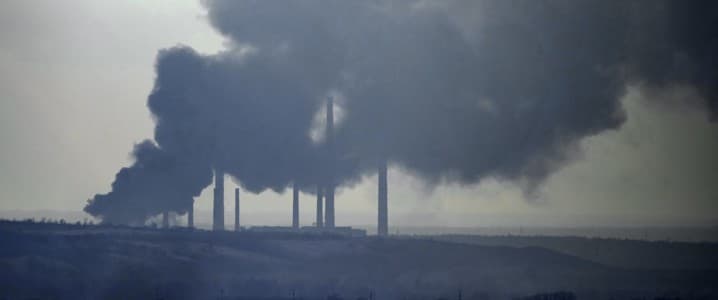
The Orenburg Strike: A Stark Reminder of Central Asia’s Entangled Energy Risks
The recent drone attack on Russia’s Orenburg gas processing complex, a critical node in Central Asia’s energy architecture, has sent ripples through the regional supply chain and delivered a potent reminder of geopolitical risk to global energy markets. This incident, forcing a significant curtailment of gas intake from Kazakhstan’s Karachaganak field, underscores the persistent and often underestimated vulnerabilities within the broader Eurasian energy landscape. For investors navigating an increasingly complex geopolitical environment, this event is not merely a regional headline; it highlights the profound operational and strategic challenges facing international energy players with assets intertwined with Russian infrastructure, compelling a re-evaluation of supply chain resilience and diversification strategies.
Kazakhstan’s Production on the Brink: Unpacking the Operational Fallout
The immediate fallout from the Orenburg strike was a substantial disruption to Kazakhstan’s energy output. The processing plant, strategically located in Russia, is indispensable for handling gas extracted from northwestern Kazakhstan. Its forced suspension led to a roughly one-quarter cut in gas production from the Karachaganak field, placing more than 250,000 barrels per day of oil-equivalent output at direct risk. This direct operational link means that when Orenburg falters, so does Karachaganak’s condensate and gas production, creating an instant choke point for a significant portion of Kazakhstan’s energy exports. The structural dependence extends beyond processing; Russia controls vital export pipelines such as the Caspian Pipeline Consortium (CPC) and the Druzhba network, acting as an effective downstream gatekeeper. This arrangement leaves major international partners in Karachaganak, including Shell, Eni, Chevron, Lukoil, and KazMunayGaz, exposed to external geopolitical events far from their direct operational control. Any prolonged shutdown at Orenburg would force these operators into costly and inefficient measures like re-injecting or flaring excess gas, further curbing valuable oil output and impacting profitability.
Market Dynamics and Investor Sentiment Amidst Supply Uncertainty
Even as this specific supply risk emerges, the broader crude oil market has seen significant downward pressure. As of today, Brent Crude trades at $90.38, reflecting a substantial 9.07% decline within the day, with its range fluctuating between $86.08 and $98.97. Similarly, WTI Crude has fallen to $82.59, down 9.41%, trading between $78.97 and $90.34. This recent volatility is part of a larger trend; Brent crude has dropped nearly 20% in the last two weeks alone, plummeting from $112.78 on March 30th to its current level. This sharp decline in benchmark prices, even in the face of a new supply disruption, suggests that broader macroeconomic concerns, demand outlooks, or other supply-side factors are currently outweighing regional incidents in investor perception. However, the Orenburg event adds to the underlying tension. Our proprietary reader intent data reveals a keen interest among investors regarding future oil price predictions for the end of 2026 and the specifics of OPEC+ production quotas. The drone strike, while regional, contributes to the complex calculus that makes such long-term price forecasts challenging, highlighting the unpredictable nature of supply-side shocks and their potential to quickly shift market sentiment, even if current prices reflect other dominant forces. Investors are acutely aware that while today’s market may be driven by demand fears, a series of such disruptions could rapidly rebalance the supply-demand equation.
Forward-Looking Catalysts: Upcoming Events and Their Interplay
The timing of the Orenburg incident adds another layer of complexity to several critical upcoming energy events. Investors will be closely watching the OPEC+ Joint Ministerial Monitoring Committee (JMMC) Meeting on April 19th, followed by the full OPEC+ Ministerial Meeting on April 20th. While the Orenburg disruption is regional, it serves as a fresh reminder of global supply fragility, potentially influencing discussions around production quotas. Will OPEC+ consider this, alongside other geopolitical tensions, when deliberating output policy? Our reader data indicates strong investor interest in OPEC+’s current production quotas, underscoring the market’s reliance on the cartel’s guidance. Following these crucial meetings, the market will turn its attention to the API Weekly Crude Inventory report on April 21st and the EIA Weekly Petroleum Status Report on April 22nd. These reports will provide vital insights into U.S. inventory levels and demand trends, offering a clearer picture of the immediate supply-demand balance. A prolonged Karachaganak curtailment, even if initially localized, could subtly tighten global markets over time, potentially manifesting in future inventory drawdowns if not offset by other supply increases. Further insights into North American production activity will come with the Baker Hughes Rig Count on April 24th. Each of these events, when viewed through the lens of recent supply disruptions like Orenburg, takes on added significance for investors seeking to gauge the stability and direction of global energy markets.
Strategic Implications and Diversification Imperatives for Investors
The Ukrainian strike on Orenburg is a significant development, marking the first instance where the ongoing conflict has directly constrained a non-Russian energy producer and exposed the deep interdependence of Central Asian energy systems. For investors, this event crystallizes several key considerations. Firstly, it elevates the risk profile of assets tied to Russian transit or processing, regardless of the ultimate ownership. The “energy war” now has a broader geographic reach, capable of impacting seemingly distant operations. Secondly, it reinforces the long-standing but often slow-moving imperative for diversification. While Astana has explored alternative routes towards China and across the Caspian, the physical reliance on Russian midstream assets remains a critical strategic vulnerability. Thirdly, the incident highlights Russia’s ongoing, complex role in regional energy strategy, balancing its own increased gas exports to Uzbekistan through Kazakhstan with the transit risks posed to Kazakh production. For global energy investors, understanding these intricate and volatile interdependencies is paramount. Portfolio managers must assess the direct and indirect exposures of their holdings, recognizing that operational security in key regions can be swiftly undermined by geopolitical events. This incident serves as a clear signal that the geopolitical risk premium in Central Asian energy assets, particularly those reliant on Russian infrastructure, remains a critical factor in investment decisions.


