Escalating Geopolitical Tensions and Energy Infrastructure Risk
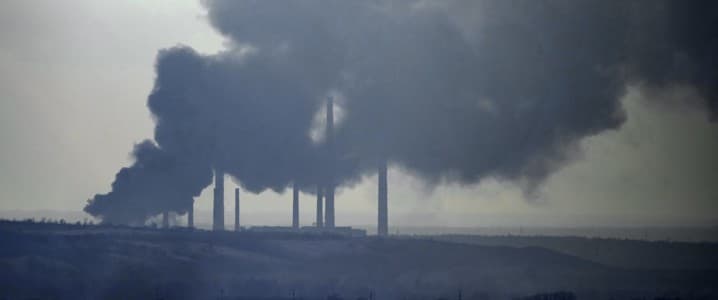
The geopolitical landscape for energy markets has undeniably sharpened following a renewed barrage of Russian missile and drone strikes targeting Ukraine’s critical energy infrastructure. These attacks, which tragically claimed three lives and forced nationwide power restrictions, represent a significant escalation in Moscow’s strategy to cripple Ukraine’s ability to maintain light and heat. Ukrainian officials have explicitly stated the goal is to “plunge Ukraine into darkness,” highlighting the direct and severe impact on energy security within the conflict zone. While many projectiles were intercepted, the sheer volume of over 700 missiles and drones launched underscores a persistent and dangerous threat. For investors, this immediately signals heightened regional instability, creating a constant overhang of potential disruptions that could ripple through global supply chains, even if direct crude production is not immediately affected.
Market Paradox: Risk Rises, Prices Fall
Despite the severe escalation in geopolitical risk emanating from Eastern Europe, the crude oil market has demonstrated a striking paradox. As of today, Brent Crude trades at $90.38, reflecting a notable -9.07% decline within the day’s range of $86.08-$98.97. Similarly, WTI Crude stands at $82.59, down -9.41% from its daily highs. This downward trajectory is not an isolated event; our proprietary 14-day Brent trend data reveals a significant -19.9% drop, from $112.78 on March 30th to the current $90.38. Gasoline prices have also followed suit, trading at $2.93, a -5.18% decrease. This divergence between escalating geopolitical tensions and falling prices suggests that other, more dominant market forces are currently at play, likely related to broader demand concerns or an oversupply perception. Investors appear to be discounting the direct impact of these localized Ukrainian infrastructure strikes on global crude availability, instead focusing on macroeconomic headwinds or robust non-OPEC supply.
Diplomatic Chessboard: China’s Role and Investor Questions
The intricate diplomatic maneuvering surrounding the Ukraine conflict adds another layer of complexity for energy market participants, particularly concerning China’s pivotal role. Ukrainian President Volodymyr Zelenskiy recently urged U.S. President Donald Trump to pressure Beijing to curtail its material and political support for Moscow, specifically highlighting China’s substantial purchases of Russian crude as a critical lifeline for the Kremlin’s war effort. While President Trump, following his meeting with Chinese leader Xi Jinping in South Korea, indicated an agreement to “work together on Ukraine” and roll back parts of their trade dispute, Chinese officials have yet to provide their own account of the talks. This ambiguity leaves investors questioning the future of Beijing’s energy trade with Russia, which remains crucial for financing Moscow’s campaign. Our reader intent data shows that investors are keenly focused on long-term oil price predictions for the end of 2026, a forecast heavily influenced by such geopolitical alignments and their implications for global supply and demand balances. Clarity on China’s stance could significantly shift investor sentiment and provide a clearer picture for these longer-term outlooks.
Navigating the Near-Term: OPEC+ and Inventory Data
In the immediate term, market participants are directing their attention to critical upcoming events that will shape the supply side of the equation, especially against the backdrop of recent price declines. The OPEC+ Joint Ministerial Monitoring Committee (JMMC) meeting this Sunday, April 19th, followed by the full OPEC+ Ministerial Meeting on Monday, April 20th, are paramount. Given the significant dip in crude prices over the past two weeks, a key question for investors — and one frequently posed by our readers through our AI assistant seeking “OPEC+ current production quotas” — is whether the alliance will consider adjustments to their existing output strategies. Any signal from OPEC+ regarding further cuts or a commitment to current levels will be closely scrutinized. Beyond OPEC+, the weekly API and EIA crude inventory reports, scheduled for April 21st and 22nd respectively, and again on April 28th and 29th, will provide crucial insights into short-term supply and demand dynamics within the U.S. market. Additionally, the Baker Hughes Rig Count on April 24th and May 1st will offer a glimpse into future production potential from North American producers. These fundamental data points, combined with OPEC+’s strategic decisions, will be instrumental in determining crude price movements in the coming weeks.


