Caspian Strikes and the Evolving Geopolitical Risk Premium in Energy Markets
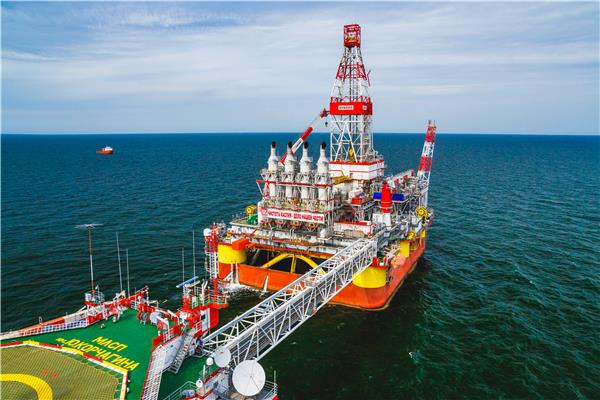
The geopolitical landscape of global energy has undergone significant shifts in recent months, with the Caspian Sea emerging as a critical, and increasingly vulnerable, new front. Historically a region of stable, albeit complex, energy production and transit, the deliberate targeting of offshore infrastructure has introduced a profound layer of uncertainty for investors. The December 19th attack on Lukoil PJSC’s Filanovsky field drilling platform, following an earlier strike on the Grayfer field, underscores an intensified strategy to disrupt Russian energy revenues. While the immediate operational impact and extent of damage to these facilities, including a patrolling Russian military ship, are still being assessed, the strategic implications for global energy security and supply chain integrity are undeniable. This ongoing escalation demands a fresh look at risk premiums, supply forecasts, and the pivotal role of upcoming market catalysts.
Escalating Vulnerability: A New Front in Offshore Energy Security
The repeated assaults on Russian energy infrastructure in the Caspian Sea mark a significant evolution in the conflict, extending beyond traditional land-based targets and Black Sea shipping. The December 19th incident at the Filanovsky field, a key asset for Lukoil, highlights a deliberate expansion of targets to offshore drilling and production platforms. This follows an earlier successful strike on Lukoil’s Grayfer field, which caused damage to a gas platform. These actions are part of a broader campaign aimed at degrading Russia’s ability to fund its military efforts by directly impacting its energy export capabilities. Investors must now factor in a heightened risk profile for offshore assets, not just in the Black Sea, but also in the relatively more enclosed and previously perceived safer waters of the Caspian. The targeting of these facilities, alongside refineries and sea terminals, signals a comprehensive strategy to disrupt the entire energy value chain, from extraction to export. This introduces new complexities for energy companies operating in conflict-adjacent regions and for global supply assurances.
Market Response and Current Price Dynamics
Despite the persistent geopolitical tensions and direct attacks on energy infrastructure, current market data reflects a more nuanced picture influenced by broader economic factors. As of today, Brent crude trades at $91.87 per barrel, marking a significant daily decline of 7.57%, with intraday volatility seeing prices range from $86.08 to $98.97. Similarly, WTI crude is at $84, down 7.86%, fluctuating between $78.97 and $90.34. This pronounced downturn, even in the face of supply-side threats, indicates that global demand concerns, perhaps tied to a softening economic outlook, are currently outweighing the geopolitical risk premium. Our proprietary data shows Brent’s 14-day trend has seen a substantial drop from $112.78 on March 30th to today’s $91.87, representing an 18.5% decrease. This trend suggests that while incidents like the Caspian strikes undoubtedly add a floor to prices and introduce an underlying fragility, the market’s immediate response is often dictated by a complex interplay of demand forecasts, inventory levels, and macroeconomic indicators. Investors should be wary of assuming a direct, linear price increase solely based on geopolitical events, as other powerful forces are clearly at play.
Navigating Forward: Upcoming Catalysts and Supply Dynamics
Looking ahead, the energy market is poised for several pivotal events that will shape price trajectories and investment strategies, especially against the backdrop of ongoing geopolitical instability. Foremost among these is the OPEC+ Full Ministerial Meeting scheduled for April 18th. The decisions from this meeting, particularly regarding production quotas, will be critical. Our proprietary reader intent data reveals a strong interest in “OPEC+ current production quotas” among investors, highlighting the market’s reliance on this cartel for supply guidance. The Caspian incidents, by potentially reducing Russian output or increasing the cost of operations, could add pressure on OPEC+ to either maintain cuts or consider adjustments to stabilize markets, although their primary focus remains market balance and price stability. Furthermore, the API Weekly Crude Inventory reports (April 21st, April 28th) and the EIA Weekly Petroleum Status Reports (April 22nd, April 29th) will offer crucial insights into U.S. supply and demand dynamics. These reports, alongside the Baker Hughes Rig Count on April 24th and May 1st, will provide granular data on inventory builds or draws, refinery utilization, and drilling activity, helping investors gauge the health of global demand and the resilience of supply in a volatile environment. Any significant deviations from expectations in these reports could trigger swift market reactions, especially if coupled with further geopolitical developments.
Investor Sentiment and the Quest for Long-Term Clarity
The current market environment, characterized by geopolitical shocks and macroeconomic crosscurrents, is clearly unsettling for many investors. Our first-party intent data from reader queries highlights a deep concern for long-term price stability and the performance of key industry players. Questions such as “what do you predict the price of oil per barrel will be by end of 2026?” and “How well do you think Repsol will end in April 2026?” underscore the desire for clarity amidst volatility. The strikes on Caspian platforms, while geographically distant for some, contribute directly to this uncertainty by introducing unquantifiable risks to future supply. When critical infrastructure is targeted, it forces a re-evaluation of long-term investment horizons for energy companies, impacting capital expenditure decisions and ultimately future supply. The ongoing discussions between Kremlin envoy Kirill Dmitriev and US officials, reportedly concerning a potential peace deal, represent a flicker of hope that could drastically alter the geopolitical risk premium. However, until concrete steps towards de-escalation are evident, investors must operate under the assumption of continued volatility and heightened supply-side risks, necessitating a flexible and well-diversified approach to oil and gas investments.


