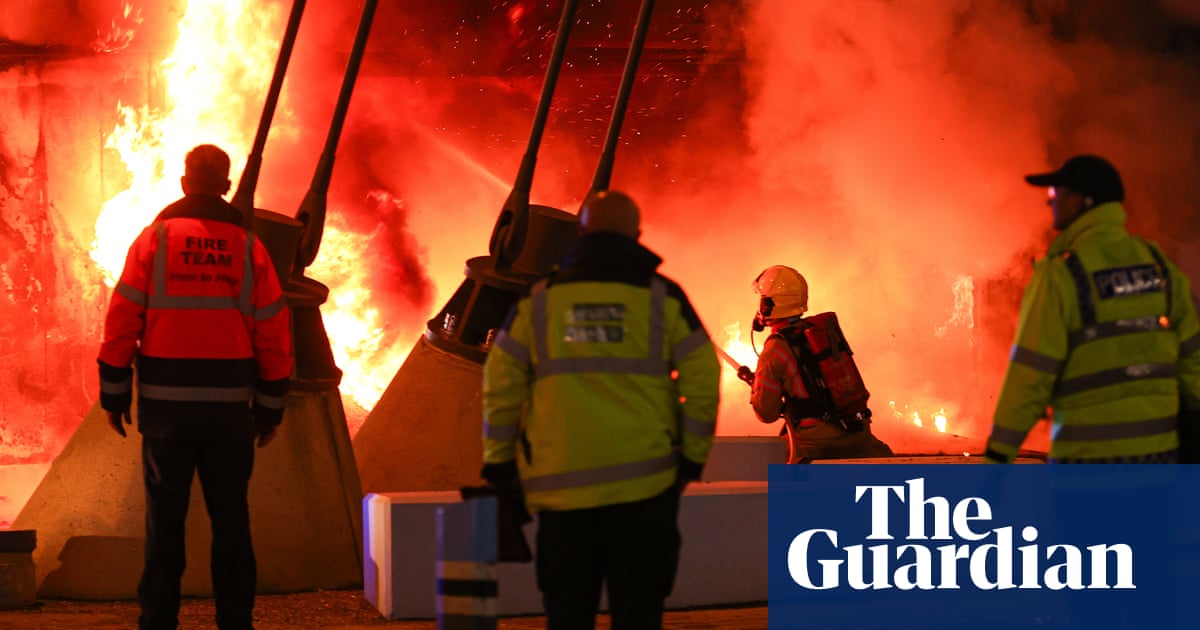
The Unseen Threat to UK Energy Infrastructure: Fire Service Deterioration
While global energy markets grapple with geopolitical tensions and supply-demand dynamics, a critical, yet often overlooked, domestic risk is quietly escalating within the United Kingdom: the severe degradation of its fire and rescue services. Oil and gas investors with exposure to UK assets must now factor in a deteriorating public safety net that poses tangible, unpriced threats to operational continuity and asset integrity. Over the past decade, England’s fire services have seen an estimated £1 billion funding plummet, coupled with a similar £1 billion shortfall in capital funding since a key government grant was removed in 2014-15. This financial neglect has left infrastructure “falling apart” and unable to modernize, directly impacting response capabilities. The human toll is stark: firefighter numbers have dropped by a quarter in seven years, translating to 11,000 fewer full-time staff, even as overall callouts have surged by a fifth over the last decade.
This erosion of capabilities isn’t merely a public safety concern; it’s an industrial risk. Oil and gas facilities, including refineries, storage terminals, gas processing plants, and offshore platforms, inherently carry significant fire and explosion hazards. A robust, well-funded, and rapidly deployable fire service is a fundamental layer of defense against catastrophic incidents. With fewer firefighters and aging equipment, response times to complex industrial fires will inevitably lengthen, and the ability to contain and mitigate major incidents will be compromised. The National Fire Chiefs Council (NFCC) warns that these mounting pressures “risk undermining public and firefighter safety” as they respond to 20% more incidents than a decade ago (600,185 in the year up to December 2024), with a staggering 65% increase in non-fire callouts adding to their burden. For investors, this translates into elevated operational risk, potential for prolonged shutdowns, and increased financial exposure in the event of an incident at a UK-based energy asset.
Market Volatility & Underpriced Regional Risks
The global oil market remains a complex tapestry of drivers, with investors constantly seeking clarity on future price trajectories. As of today, Brent Crude trades at $96.28, marking a 1.57% gain within a day range of $91-$96.89. This recent uptick follows a notable decline from $102.22 on March 25th to $93.22 on April 14th, illustrating the inherent volatility. While many of our readers are asking for a base-case Brent price forecast for the next quarter or the consensus 2026 Brent forecast, it’s crucial to integrate localized, unpriced risks like the UK fire service crisis into such models. The consensus often focuses on macro supply-demand, geopolitical events, and OPEC+ actions, but overlooks the potential for significant, regionally contained disruptions that could still ripple through the market.
A major incident at a UK refinery or gas terminal, exacerbated by an under-resourced fire service, could lead to significant localized supply disruptions, impacting refined product availability and potentially driving regional price spikes for gasoline or other fuels. While the immediate impact on global Brent prices might be limited compared to a major OPEC+ policy shift, the risk for operators in the UK is substantial. Increased risk profiles could also translate into higher insurance premiums for UK energy infrastructure, directly impacting the profitability and valuation of assets. As an example, gasoline currently trades at $2.99, up 0.67% today. Any disruption to UK refining capacity would undoubtedly pressure this figure for consumers and operators in the region, adding an unforeseen variable to investor forecasts that typically focus on broader market trends and inventory reports.
Upcoming Policy Decisions and Investment Outlook
The convergence of the UK government’s spending review next week with a busy global energy calendar presents a critical juncture for assessing future risk. While the Chancellor has reportedly prioritized the NHS and defense budgets, fire services have conspicuously not been mentioned. This oversight, according to the NFCC, could leave them as the “forgotten emergency service,” further entrenching the funding and resource crisis. For energy investors, this upcoming spending review is a crucial, if often overlooked, policy event. A failure to reverse the damage to fire services will solidify the elevated risk profile for UK energy assets well into the future.
This domestic policy decision unfolds against a backdrop of significant international energy events. The upcoming OPEC+ Joint Ministerial Monitoring Committee (JMMC) meeting on April 18th, followed by the Full Ministerial Meeting on April 20th, will heavily influence global crude supply. Concurrently, regular data releases such as the API Weekly Crude Inventory (April 21st, April 28th) and the EIA Weekly Petroleum Status Report (April 22nd, April 29th), alongside the Baker Hughes Rig Count (April 17th, April 24th), will provide key insights into current market fundamentals. While these events typically dominate investor attention, the UK’s internal policy choices regarding emergency services will dictate a foundational layer of operational safety and resilience for its energy sector. Investors evaluating UK upstream, midstream, or downstream opportunities must now critically assess the government’s commitment to essential public safety infrastructure, as it directly underpins the operational viability and long-term security of these investments.
The ESG Imperative and Operational Resilience
Beyond the immediate financial implications, the deteriorating state of UK fire services presents a significant challenge to the Environmental, Social, and Governance (ESG) mandates increasingly central to energy investing. A company’s commitment to safety and responsible operations is a cornerstone of its ESG profile. If external emergency services are compromised, the onus falls even more heavily on energy operators to bolster their internal safety protocols and response capabilities. This could necessitate increased capital expenditure on in-house fire-fighting equipment, personnel training, and emergency response planning, adding unforeseen costs to project economics.
The tragic deaths of two firefighters and a member of the public in a recent blaze in Oxfordshire, where a structure collapsed, serve as a grim reminder of the real-world consequences of fire incidents. While this specific event was not at an oil and gas facility, it underscores the inherent dangers firefighters face and the critical need for adequate resources and infrastructure. For oil and gas companies, the risk of a major incident not only carries direct financial penalties and potential production losses but also severe reputational damage and heightened regulatory scrutiny. Proactive investors will be evaluating how UK-exposed energy companies are responding to this emerging risk, assessing their internal resilience measures, and factoring in the potential for increased operational costs to mitigate a weakening public safety net. The question is no longer just “what is the consensus Brent forecast?”, but “what are UK operators doing to de-risk their assets in the face of a critical public service in decline?”


