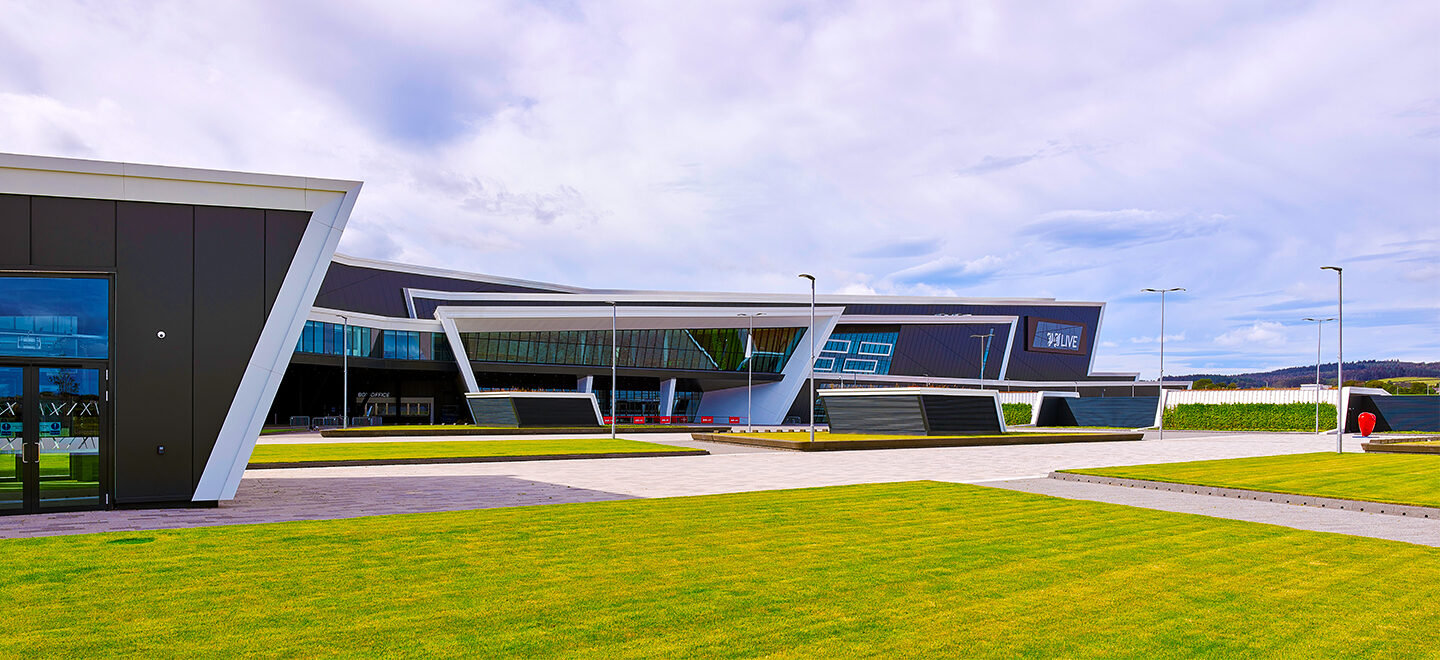
The UK energy sector stands at a critical juncture, marked by contrasting signals for investors. While the recent Offshore Europe (OE) conference in Aberdeen highlighted the industry’s technological prowess and commitment to decarbonization, it also underscored deep-seated anxieties stemming from an increasingly challenging political and economic landscape. For discerning investors, this dynamic environment presents both significant risks and under-the-radar opportunities, demanding a nuanced understanding of market fundamentals, policy shifts, and strategic positioning.
The Fading Luster of UK Offshore?
The recent SPE Offshore Europe event in Aberdeen served as a stark barometer for the health and sentiment surrounding the UK North Sea. Attendance figures painted a concerning picture, with only 25,000 visitors this year. This represents a significant 17% decline from the 30,000 attendees in 2023, and a staggering drop from the record 63,000 in 2013. The immediate consequence is SPE’s decision to shorten the 2027 event to three days, signaling a diminished outlook for the gathering itself.
This trend stands in stark contrast to its Norwegian counterpart, ONS (Offshore Northern Seas) in Stavanger, which is reportedly nearing a sell-out of exhibition space and expects between 60,000 and 70,000 attendees. This divergence suggests a growing perception gap regarding the investment attractiveness and future prospects of the UK versus Norwegian continental shelves. While the OE show floor still showcased impressive innovation, there was an observed shift in emphasis. Offshore wind, previously prominent, appeared somewhat muted, giving way to a renewed focus on traditional oil and gas technology, alongside crucial tie-ins to Carbon Capture and Storage (CCS) and Net Zero operations. This pivot reflects the industry’s pragmatic adaptation to evolving energy demands and regulatory pressures, even as the overall enthusiasm for the UK basin seems to wane.
Political Headwinds and Market Realities
Underpinning the somber mood at Offshore Europe is the palpable tension between the UK government’s energy policy and the needs of the oil and gas sector. The current national administration, under Prime Minister Kier Starmer, maintains a stance perceived as hostile towards upstream operations in the UK North Sea, notably by retaining the surcharge levy on production. This political climate creates a substantial layer of uncertainty for investors evaluating long-term commitments in the region, making it harder to justify capital expenditure against a backdrop of punitive taxation and ambiguous future policy.
This domestic policy risk is compounded by broader global market volatility. As of today, Brent Crude trades at $98.17, experiencing a 1.23% decline for the day, with WTI Crude at $89.89, down 1.4%. This daily fluctuation is part of a more significant trend: Brent crude has seen a substantial downturn over the past fortnight, falling from $112.57 on March 27th to $98.57 on April 16th – a significant $14 or 12.4% reduction. While gasoline prices show a modest daily decline of 0.32% to $3.09, the overall picture for crude is one of recent softness. For investors in the UK North Sea, these global price movements, combined with a domestically unfavorable political environment, amplify project risk and compress potential returns. The dismay expressed by local and regional officials regarding the national government’s stance highlights a disconnect that further complicates the investment thesis for the UK’s energy future.
Investor Questions: Navigating Supply, Price, and Policy
Our proprietary reader intent data reveals a clear focus among investors this week on understanding the dynamics of global oil supply and pricing. Questions such as “What are OPEC+ current production quotas?” and “What is the current Brent crude price?” frequently surface, indicating a keen awareness of how global supply decisions directly influence market stability and investment viability. This focus is particularly pertinent for the UK North Sea, where domestic policy risks intersect with international market forces.
With critical upcoming events like the OPEC+ Joint Ministerial Monitoring Committee (JMMC) meeting on April 18th and the full Ministerial meeting on April 20th, investors are closely monitoring for any signals regarding production adjustments. These decisions will undoubtedly shape global crude prices and influence the broader investment climate. For the UK, the implications are dual: a global tightening of supply by OPEC+ could provide some upward price support, potentially making North Sea projects more attractive despite domestic policy. Conversely, if OPEC+ maintains or increases quotas amidst soft demand, the UK’s high operating costs and tax burden could render new developments even less competitive. This intricate interplay between global supply management and localized political headwinds forces investors to weigh sovereign risk against the fundamental demand for hydrocarbons, making the UK a complex proposition in the global energy portfolio.
Strategic Opportunities Amidst the Flux
Despite the prevailing sentiment and political challenges, the UK energy sector still presents strategic opportunities for agile and forward-thinking investors. The observed emphasis at Offshore Europe on CCS and Net Zero operations points to a significant growth area. Companies with proven expertise in carbon capture, utilization, and storage, alongside those developing low-carbon solutions for existing infrastructure, are well-positioned to capitalize on the UK’s stated net-zero ambitions, regardless of the government’s stance on traditional oil and gas extraction. The UK’s extensive industrial clusters and geological storage capacity in the North Sea make it a prime candidate for large-scale CCS deployment.
Furthermore, the long-term energy security imperative for the UK and Europe cannot be overstated. While the government may appear hostile to new upstream developments, the underlying demand for reliable domestic energy supply remains. This creates potential for strategic acquisitions of existing, well-managed North Sea assets at potentially depressed valuations. Investors with a long-term horizon and a robust risk management framework may find value in optimizing mature basin production or investing in infrastructure critical for future energy transition projects. The ongoing global energy transition, coupled with regional geopolitical dynamics, ensures that well-positioned assets, even in challenging jurisdictions, will retain strategic importance for those willing to navigate the unique investment climate.


