The Unseen Costs of Coastal Erosion: A Growing Threat to UK Energy Infrastructure
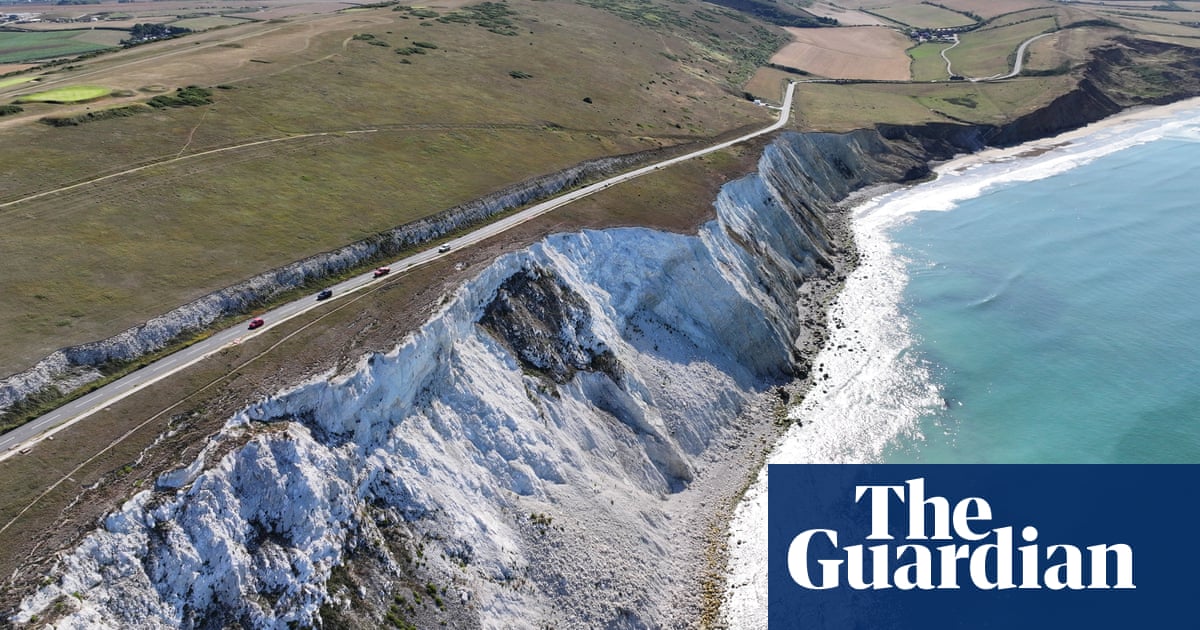
While the global energy market fixates on geopolitical tensions and supply-demand fundamentals, a more insidious threat is quietly eroding the foundations of critical infrastructure: coastal degradation. The ongoing battle to preserve an 11-mile stretch of the Military Road on the Isle of Wight, facing imminent collapse due to relentless erosion, serves as a stark microcosm. This isn’t merely a local highways issue; it’s a tangible demonstration of climate risk manifesting in physical assets, with profound implications for the UK’s energy security and the long-term valuation of coastal energy infrastructure. For investors, understanding these “slow-burn” risks is as vital as tracking daily price movements, as they represent a growing liability that will increasingly demand capital expenditure and influence strategic planning across the energy sector.
Coastal Vulnerability: From Scenic Roads to Strategic Energy Assets
The situation unfolding on the Isle of Wight’s southern coast highlights a vulnerability common to many coastal regions. With parts of the Military Road now less than five metres from plunging cliffs, and local authorities citing “real effects of geological erosion” exacerbated by extreme weather, the path forward is costly and uncertain. Rerouting a two-mile section inland, a measure that would only guarantee the route for another two decades, carries an estimated price tag exceeding £20 million. This financial burden and the operational risks associated with a deteriorating artery are not unique to public roads. The UK’s energy landscape is replete with critical assets situated along its extensive coastline: nuclear power stations, gas import terminals, offshore wind farm onshore connection points, and vital pipeline networks. These facilities, often built decades ago, now face intensified geological pressures from rising sea levels and more frequent, severe storms. The long-term integrity of these energy assets, and by extension, the reliability of UK energy supply, hinges on proactive investment in resilience, a factor increasingly influencing investor due diligence.
Market Snapshot: Brent, WTI, and the Looming Climate Risk Premium
As of today, Brent crude trades at $94.81, showing a marginal uptick of 0.02% within a day range of $91 to $96.89. WTI crude, meanwhile, sits at $90.97, experiencing a slight decline of 0.34%, with its daily fluctuation between $86.96 and $93.3. Gasoline prices are seeing some upward momentum, reaching $2.99, a 0.67% increase, within a range of $2.93 to $3.03. This current market sentiment reflects a complex interplay of immediate supply and demand dynamics, coming off a recent 14-day trend where Brent dropped from $102.22 on March 25th to $93.22 on April 14th, marking an 8.8% decline. While these price movements capture short-term sentiment, they often overlook the growing “climate risk premium” that sophisticated investors are beginning to factor into long-term asset valuations. The costs of coastal erosion, whether for a road or a power plant, represent non-trivial expenses that can impact operational expenditure, insurance premiums, and ultimately, asset profitability. Companies with significant coastal energy infrastructure that fail to articulate clear strategies for climate resilience may find their valuations under increasing pressure, irrespective of the prevailing crude price.
Upcoming Events and Strategic Adaptation for Energy Security
The next two weeks are packed with key energy market events that will undoubtedly shape short-term trading strategies. Investors are closely watching the Baker Hughes Rig Count on April 17th and 24th for indicators of drilling activity, alongside the highly anticipated OPEC+ JMMC meeting on April 18th and the full Ministerial meeting on April 20th, which will provide crucial guidance on global supply policy. Furthermore, the API Weekly Crude Inventory reports on April 21st and 28th, followed by the EIA Weekly Petroleum Status Reports on April 22nd and 29th, will offer granular insights into US petroleum demand and inventories. While these events are critical for understanding market fundamentals, forward-looking analysis must also integrate the accelerating need for strategic adaptation to physical climate risks. Decisions made by OPEC+ or the trajectory of US shale production directly influence the scale and location of new energy investments. However, for any new or existing infrastructure, a robust assessment of coastal vulnerability and a clear plan for mitigation – whether through reinforcement, relocation, or novel engineering solutions – is becoming non-negotiable. Companies that proactively integrate climate resilience into their capital expenditure plans and project development timelines will be better positioned to secure financing and ensure long-term operational stability.
Addressing Investor Concerns: Beyond Price Forecasts to Asset Integrity
Our proprietary reader intent data reveals a strong focus among investors on immediate market metrics, with frequent queries about building a base-case Brent price forecast for the next quarter and the consensus 2026 Brent outlook. There’s also significant interest in specific regional dynamics, such as the operational status of Chinese tea-pot refineries and drivers behind Asian LNG spot prices. While these questions are fundamental to navigating the energy market, the erosion of the UK coastline underscores a critical, often understated, dimension of investment risk: asset integrity. A secure, reliable energy supply chain depends on resilient physical infrastructure. The potential for a coastal road to disappear, costing tens of millions to mitigate, signals that similar, far more expensive, challenges await critical energy facilities. Companies that can demonstrate robust risk assessment and capital allocation towards climate adaptation, rather than just focusing on production targets or commodity prices, will differentiate themselves. This proactive stance on environmental risk management will become a key indicator of sustainable long-term value creation, influencing everything from insurance costs to shareholder confidence and ultimately, a company’s ability to operate profitably in an increasingly volatile physical environment.


