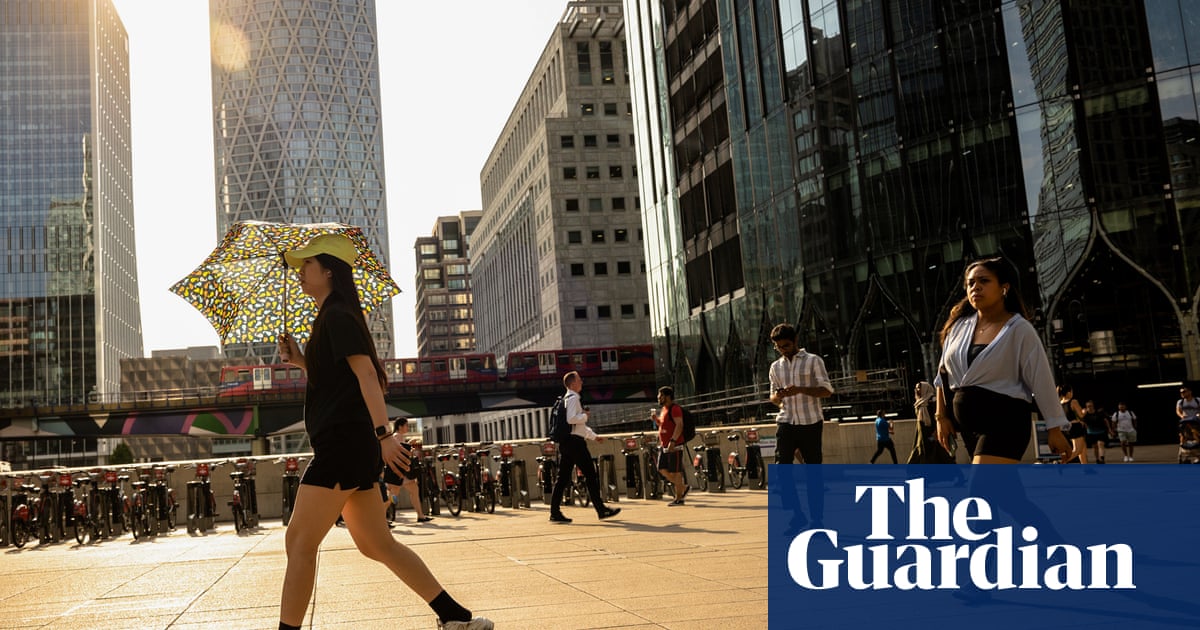
The United Kingdom stands on the precipice of a profound climate reckoning, with a new comprehensive assessment revealing that its foundational infrastructure – from educational institutions to residential dwellings and critical workplaces – is alarmingly unprepared for the escalating impacts of global heating. This groundbreaking analysis underscores a national emergency, projecting not just increased discomfort but significant economic damage, health crises, and even the potential uninhabitability of certain towns by the century’s end. For astute oil and gas investors, this isn’t merely an environmental concern; it presents a burgeoning frontier of risk and, more importantly, a colossal opportunity in climate adaptation and resilient infrastructure that demands immediate attention and strategic capital deployment, shifting focus from traditional energy supply dynamics to long-term structural safety and economic stability.
The UK’s Mounting Climate Vulnerabilities and Economic Exposures
Detailed modeling paints a stark picture of the UK’s exposure to five critical climate threats: extreme overheating, pervasive flooding, devastating wildfires, prolonged drought, and intense storms. Consider the projections for London and the South-East: schools could face an astonishing ten weeks of temperatures exceeding 28°C annually, even under optimistic low-warming scenarios defined as 2°C above pre-industrial levels. Six million homes and flats in the same region are forecast to endure three weeks above this threshold each year, directly impacting productivity and posing severe health risks, particularly to vulnerable populations. Care homes, housing the most susceptible, could experience four weeks of such extreme heat annually in the same low-warming scenario. Modern office buildings, often characterized by extensive glazing and lightweight construction, paradoxically show greater vulnerability to overheating than older structures, threatening the very engine of economic growth through reduced worker efficiency. Beyond overheating, the analysis highlights towns like Peterborough and Fairbourne facing potential uninhabitability due to severe flooding. The cumulative economic damage from these scenarios, encompassing healthcare costs, infrastructure repair, and lost productivity, will necessitate billions in adaptive investment to safeguard lives and livelihoods.
Navigating Market Volatility Amidst Long-Term Adaptation Needs
As of today, Brent Crude trades at $90.38 per barrel, reflecting a significant 9.07% drop within the day’s range, while WTI Crude mirrors this trend at $82.59, down 9.41%. This sharp downturn in commodity prices is part of a broader trend, with Brent having shed $20.91, or 18.5%, from its $112.78 high just two weeks prior. Gasoline prices have also seen a dip, currently standing at $2.93, down 5.18%. This current market volatility, primarily driven by supply-demand dynamics and geopolitical factors, often dominates investor attention. However, it’s crucial for forward-thinking investors to recognize that while these short-term fluctuations influence immediate capital allocation in the traditional energy sector, the long-term, structural imperative of climate adaptation in the UK represents a distinct and increasingly urgent investment category. A softer oil market could, paradoxically, free up capital that might otherwise be locked into conventional energy projects, presenting an opportunity for strategic diversification into the nascent but critical climate resilience market. The question becomes whether investors will reallocate capital towards stabilizing future economic output through resilient infrastructure, or whether broader economic caution stemming from commodity price shifts will delay these essential investments.
Policy Drivers and Catalytic Events for Resilience Investment
The detailed roadmap for UK climate adaptation calls for significant policy shifts that will inevitably create new investment landscapes. Key recommendations include the appointment of a dedicated Minister for Resilience within the Cabinet Office, establishing a legal objective for climate safety in all planning decisions, implementing a more ambitious future homes standard, and launching a comprehensive retrofit strategy for existing buildings. While the immediate energy calendar is punctuated by critical events like the OPEC+ JMMC and Full Ministerial meetings this weekend, followed by weekly API and EIA inventory reports, and the Baker Hughes Rig Count, these focus predominantly on the supply and demand of fossil fuels. The launch of this climate resilience report today (Thursday) acts as a powerful, albeit different, catalyst. It signals the pressing need for governmental action that, if adopted, will drive demand for innovative building materials, smart urban planning solutions, advanced climate modeling, and energy-efficient technologies. Investors tracking the energy transition must broaden their scope beyond traditional production quotas and inventory levels to recognize how evolving policy frameworks around climate adaptation will unlock substantial, long-term infrastructure investment opportunities, potentially shifting capital flows into a new era of climate-safe development.
Investor Horizon: Shifting Focus from Barrels to Resilience
Our proprietary reader intent data reveals a clear focus among investors this week: questions about specific company performance like Repsol’s April outlook, predictions for end-of-year oil prices, and granular details on OPEC+ production quotas dominate the discourse. This reflects a natural and understandable emphasis on the immediate drivers of the traditional oil and gas market. However, the comprehensive UK climate resilience report serves as a powerful reminder that physical climate risk is rapidly transforming into a material financial risk and, consequently, a significant investment opportunity. While the immediate returns from commodity trading and conventional energy projects remain attractive, the long-term capital preservation and growth strategies must increasingly factor in the need for climate adaptation. Investors should begin evaluating companies specializing in “passive adaptation” measures such as advanced solar shading and solar glass, water management systems, sustainable urban drainage, and innovative construction materials designed for heat resilience and flood protection. The billions required for retrofitting millions of buildings and protecting vulnerable communities represent a multi-decade investment cycle. Proactive investors will recognize that allocating capital towards solutions for climate safety is not merely an ethical choice but a strategic imperative that offers stable, long-term returns, diversifying portfolios beyond the cyclical volatility of crude prices.


