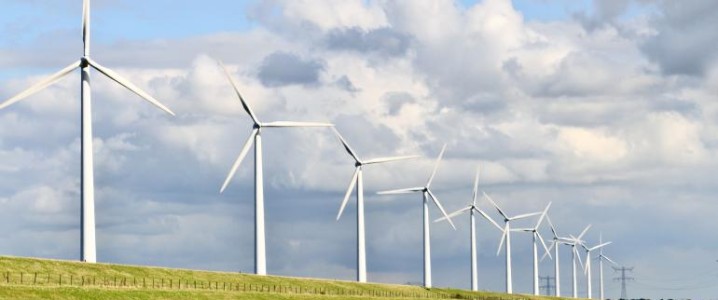
The United Kingdom’s recent announcement of an annual £1.08 billion support budget for new offshore wind projects, a strategic move aimed at accelerating its decarbonization goals, sends a clear signal across the global energy landscape. This significant commitment, with £900 million earmarked for fixed-bottom developments and an additional £180 million dedicated to the nascent floating offshore wind sector from 2028, underscores a resolute push towards clean power. For oil and gas investors, this isn’t just a story about renewables; it’s a critical indicator of shifting government priorities, long-term energy security strategies, and the evolving demand profile that will inevitably impact traditional hydrocarbon markets. As nations intensify efforts to reduce reliance on volatile global gas prices and bolster domestic energy independence, understanding these pivotal policy shifts becomes paramount for navigating investment decisions in the broader energy sector.
The UK’s Green Ambition Meets Market Realities
The UK’s ambition to boost its offshore wind capacity to between 43 GW and 50 GW by 2030, a substantial leap from the current 15 GW, is undeniably bold. The expanded £1.08 billion Contracts for Difference (CfD) budget, up from £800 million in the prior year, reflects this commitment. However, a closer look reveals a nuanced allocation: while the overall budget increased, the fixed-bottom portion saw a slight rebalancing to carve out a separate, dedicated pot for floating projects, signaling an evolving maturity in government support mechanisms. Despite this increased financial backing, industry experts, such as Pranav Menon from Aurora Energy Research, caution that the proposed funding might not be sufficient. Menon’s analysis suggests that if auction prices align with last year’s figures, the allocation might secure only around 4.9 GW of new capacity, falling short of the 7-9 GW required to stay on track for the 2030 targets. This highlights a persistent challenge for the renewable sector: battling headwinds from inflation, grid-connection delays, and supply chain constraints that have already forced major developers like Ørsted, Shell, and Equinor to cancel or delay significant projects in recent years. While the UK’s intentions are clear, the path to realizing its ambitious clean power targets remains fraught with economic and logistical hurdles.
Crude Volatility and the Investor’s Dilemma
Against the backdrop of the UK’s strategic pivot towards renewables, the immediate landscape for traditional oil and gas continues to be defined by significant volatility. As of today, Brent crude trades at $90.38 per barrel, marking a sharp 9.07% decline within the day, with its range fluctuating between $86.08 and $98.97. Similarly, WTI crude is at $82.59 per barrel, down 9.41%, having traded between $78.97 and $90.34. This dramatic price movement isn’t an isolated incident; over the past two weeks, Brent crude has seen a substantial drop of nearly 20%, falling from $112.78 on March 30th to its current level. Such pronounced swings underscore the very “volatile global gas prices” that UK Energy Minister Michael Shanks cited as a motivation for the country’s clean power push, demonstrating that the need for energy security and price stability extends beyond natural gas to crude as well. For oil and gas investors, this persistent volatility presents a complex dilemma: while the long-term energy transition narrative gains momentum, the short-to-medium-term market remains highly susceptible to geopolitical events, economic shifts, and supply-demand imbalances. Companies within the hydrocarbon sector are thus pressured to demonstrate resilience, efficiency, and increasingly, a credible strategy for diversifying their energy portfolios to remain attractive in an evolving investment climate.
Navigating Investor Questions: Long-Term Outlook and Short-Term Drivers
Our proprietary reader intent data reveals a consistent theme among investors: a keen interest in the future trajectory of oil prices. Questions like “what do you predict the price of oil per barrel will be by end of 2026?” highlight the difficulty in making precise forecasts in such a dynamic environment. While the UK’s £1.08 billion wind budget signals a structural shift in energy supply that will, over time, influence global demand for hydrocarbons, the immediate price of oil remains heavily dictated by a confluence of short-term supply and demand factors. Investors are also actively inquiring about “OPEC+ current production quotas,” recognizing the critical role that major producers play in balancing the market. The reality is that while long-term forecasts must account for accelerated energy transitions, short-term oil price movements are still significantly influenced by OPEC+’s collective decisions on output levels, global economic growth projections, and inventory builds or drawdowns. This dual perspective is crucial for any sophisticated energy investor: understanding the macro-level policy shifts that shape future energy landscapes while simultaneously tracking the immediate catalysts that drive daily market movements.
Upcoming Catalysts: A Fortnight of Market Movers
The next two weeks are packed with critical events that will undoubtedly shape short-term sentiment and pricing in the oil and gas markets, offering immediate insights for investors. Starting this weekend, the OPEC+ Joint Ministerial Monitoring Committee (JMMC) meeting on April 19th, followed by the full OPEC+ Ministerial Meeting on April 20th, will be under intense scrutiny. These gatherings are pivotal for understanding potential shifts in production policy, directly impacting global supply. Following closely, the API Weekly Crude Inventory report on April 21st, and the more comprehensive EIA Weekly Petroleum Status Report on April 22nd, will provide crucial data points on U.S. crude and product inventories, offering a snapshot of demand and supply balances in the world’s largest consumer. This pattern repeats the following week, with new API and EIA reports on April 28th and 29th, respectively. Furthermore, the Baker Hughes Rig Count on April 24th and May 1st will offer insights into North American upstream activity and future production trends. While the UK’s multi-year wind energy commitments lay the groundwork for a greener future, these near-term events serve as indispensable indicators for oil and gas investors, demonstrating that even as the energy transition accelerates, the immediate health of the hydrocarbon market is still dictated by these regular, high-impact data releases and policy decisions.


