Escalating Tensions in Strait of Hormuz: UAE Demands UN Action to Secure Global Energy Flow
The critical Strait of Hormuz, a choke point for roughly one-fifth of the world’s crude oil and liquefied natural gas (LNG) exports, faces unprecedented pressure as the United Arab Emirates (UAE) formally urges the United Nations to authorize robust measures, including military force, to guarantee free passage. This diplomatic escalation underscores growing anxieties among Persian Gulf nations over Iran’s perceived threats to maritime navigation, which have already sent tremors through global energy markets.
In a strongly worded letter dispatched on Tuesday to the UN Secretary-General and the President of the Security Council, UAE Ambassador Mohamed Abushahab called for “immediate action” to uphold “safe and secure navigation and navigational rights and freedoms in and around the Strait of Hormuz.” This decisive move highlights the severe economic and geopolitical implications for the global energy supply chain should the waterway remain imperiled.
UN Chapter VII: The Gateway to Intervention and Market Volatility
The UAE’s appeal specifically invokes Chapter VII of the UN Charter, a critical framework that empowers the Security Council to address existential threats to international peace or acts of aggression. Under Chapter VII, the Council can sanction a broad spectrum of responses, from economic blockades and severance of diplomatic ties to the authorization of military force. For investors in the energy sector, the prospect of a Chapter VII resolution introduces a significant new layer of geopolitical risk and potential market volatility.
While a UN resolution itself would not necessitate the creation of a new UN military mission, it would provide a crucial diplomatic imprimatur for Gulf states contemplating direct military involvement or the formation of a naval task force. Such international backing could legitimize operations aimed at either reopening the strait from Iranian control or subsequently policing the vital shipping lanes, offering a “shield of UN authority,” as Richard Gowan, an expert at the International Crisis Group, aptly described it, for any nation engaging in the use of force. This potential for multilateral military action, however, also carries the risk of widening regional conflict, a scenario that could send crude oil benchmarks soaring.
Global Powers Converge: Diplomatic, Economic, and Military Pathways
In parallel with the UAE’s UN initiative, a significant virtual gathering chaired by the United Kingdom is scheduled for Thursday. Foreign ministers from approximately 35 nations, including key players like the UAE, France, Germany, Italy, Canada, and Japan, will convene to strategize a comprehensive plan for restoring freedom of navigation in the Strait. Notably, the United States is not slated to participate in this particular meeting, suggesting a multi-pronged international approach to the crisis.
Sources familiar with the discussions, who requested anonymity, indicate that these nations are exploring three distinct tracks: diplomatic, economic, and military. The immediate focus remains firmly on diplomatic engagement, particularly coordinating efforts spearheaded by countries that maintain open communication channels with Tehran. Investors should closely monitor these diplomatic overtures, as their success or failure will directly influence the likelihood of more aggressive measures.
Should diplomatic efforts falter, the coalition stands ready to consider stringent economic measures. These would specifically target Iran’s oil and shipping industries, aiming to exert maximum financial pressure. Such sanctions, if implemented, could severely impact Iran’s crude oil exports and maritime trade, potentially exacerbating global supply concerns and underpinning higher energy prices.
Market Shocks and Regional Alignment
The ongoing regional instability and Iran’s alleged actions have already triggered significant market turbulence. Reports from market intelligence firms suggest that the effective closure or severe disruption of the Strait of Hormuz, stemming from Iranian threats, has directly contributed to a sharp surge in global oil and gas prices. This elevated price environment places considerable pressure on energy-importing nations and central banks worldwide, highlighting the strait’s outsized role in global economic stability.
Both the UAE and Saudi Arabia have reportedly evaluated potential involvement alongside U.S. and Israeli forces, a testament to the acute threat perceived by Gulf monarchies from Iran’s continued targeting of critical energy infrastructure. For oil and gas investors, this potential alignment signals a deeper commitment from regional players to safeguard energy flows, but also increases the risk profile of assets in the broader Middle East.
UAE Steps Up, Bahrain Seeks Mandate, and UNSC Responds
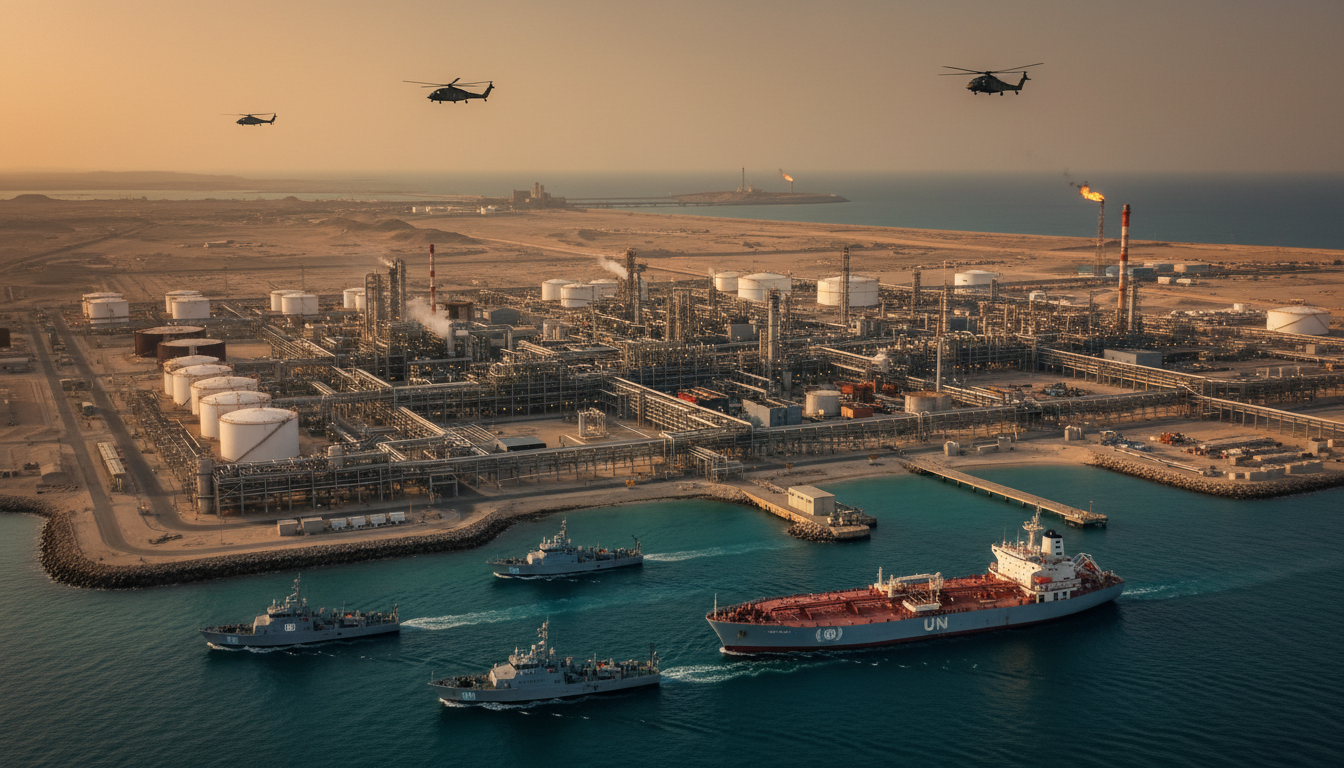
Among Gulf Arab states, the UAE has emerged as a front-runner, explicitly declaring its willingness to join a naval force dedicated to reopening Hormuz or providing crucial escorts for commercial vessels. This commitment from a major oil producer and trading hub underscores the urgency of the situation and suggests a readiness to back diplomatic efforts with tangible security measures.
The UN Security Council has already voiced its condemnation. Last month, the Council sharply denounced Iran’s attacks on its Gulf neighbors, issuing a clear demand for the Islamic Republic to cease its aggressive actions and ensure unimpeded freedom of navigation within the Strait of Hormuz. This prior resolution set the stage for the UAE’s more forceful Chapter VII appeal.
Further galvanizing international efforts, Bahrain, currently serving as a non-permanent member of the Security Council, is actively drafting a new resolution. This proposed mandate aims to specifically authorize a naval task force to ensure the reopening of the Strait. The convergence of these diplomatic and military-preparedness initiatives signifies a concerted effort to restore stability to this indispensable energy artery.
Historical Precedent and Investor Outlook
The utilization of Chapter VII by the UN Security Council is not without precedent. Historically, it has been invoked to empower peacemaking missions with the authority to use force for civilian protection, and numerous past U.S. administrations have either awaited Chapter VII authorization or cited its principles to justify military operations. This historical context suggests that if diplomatic channels fail, a UN-sanctioned military response is a plausible, albeit high-stakes, scenario.
For investors, the evolving situation in the Strait of Hormuz remains a primary driver of geopolitical risk in the energy sector. The interplay of diplomatic maneuvers, economic pressures, and the looming threat of military intervention creates a complex landscape. Monitoring the outcomes of these high-level meetings, the progress of Bahrain’s resolution, and any shifts in Iran’s stance will be crucial for assessing the future trajectory of crude oil and LNG prices, as well as the broader stability of global energy supply chains.