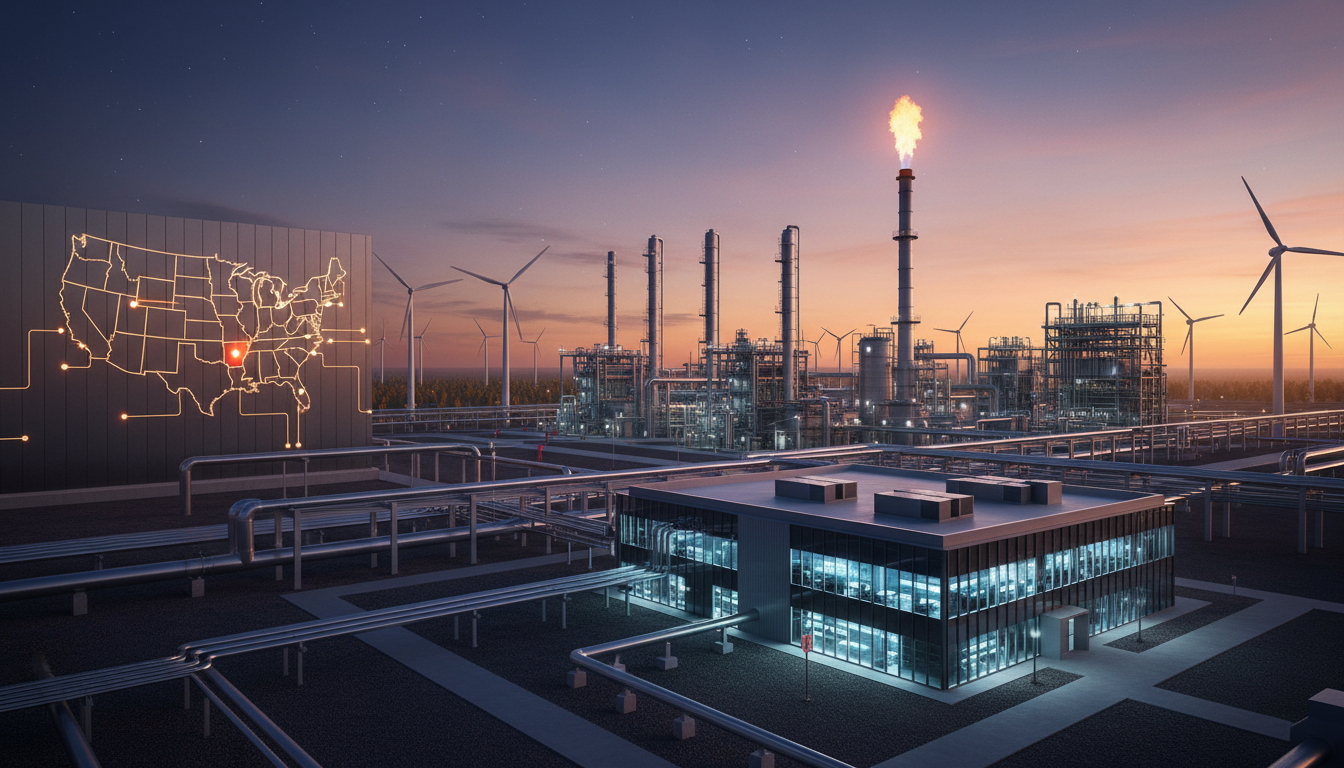
AI-Driven Data Center Exodus Ignites New Energy Demand, Reshaping Investment Horizons
The relentless expansion of Artificial Intelligence is dramatically reconfiguring the geographical blueprint of America’s digital infrastructure. This profound shift, driven primarily by the escalating demand for robust and reliable power, presents unprecedented opportunities and strategic imperatives for the oil and gas sector.
The Power Paradigm: Why Data Centers Are Shifting Inland
For years, Northern Virginia reigned as the unchallenged epicenter for big tech’s data processing behemoths. However, the energy-intensive nature of AI and cloud computing is pushing these facilities to new frontiers. A recent industry report highlights a significant pivot towards Texas and the American Midwest as the premier destinations for the next generation of massively scaled computing infrastructure. These two regions, which collectively accounted for one-third of hyperscale data center capacity by the close of 2025, are projected to host a staggering 53% of all new ultra-large data processing facilities slated to come online in the near future. This migration is not arbitrary; it’s a calculated move to secure readily available, affordable, and dependable electricity, a resource becoming increasingly strained and costly in traditional tech hubs.
The sheer scale of this data center buildout is testing the limits of the nation’s aging electricity grids. The insatiable appetite for power from these facilities, which can consume as much electricity as small cities, is sparking concerns over grid stability and escalating operational costs for tech giants. Consequently, the availability of a robust energy supply has superseded other considerations, such as fiber connectivity, as the paramount factor in site selection.
Texas Leads the Charge with On-Site Natural Gas Power
Texas has firmly established itself as the undisputed leader in this new wave of data center development. The Lone Star State’s attractive business climate, ample land, and critically, its vast energy resources, are proving irresistible. A key innovation driving Texas’s dominance is the adoption of a “bring your own power” (BYOP) strategy. Rather than relying solely on the strained public grid, numerous data center projects within the state are proactively developing their own on-site power generation facilities.
This self-sufficient power model is a game-changer for energy investors. For instance, the formidable Stargate campus near Abilene is a prime example of this trend, sidestepping grid reliance almost entirely. These bespoke power plants are predominantly fueled by natural gas, leveraging Texas’s prolific shale gas production and extensive pipeline infrastructure. This approach offers enhanced energy security, greater cost predictability, and superior reliability for mission-critical operations, positioning natural gas as an indispensable asset in the digital economy’s expansion.
Midwest Emerges as a Key Energy-Reliant Data Hub
While Texas spearheads this energy-centric data center boom, the American Midwest is rapidly solidifying its position as a critical growth region. States like Wisconsin, Indiana, Michigan, and Missouri are experiencing significant investment. Wisconsin, for example, has successfully attracted major data center projects from tech titans such as Meta, OpenAI, and Microsoft, underscoring the region’s appeal. Michigan is now home to an Oracle-backed Stargate data center, further highlighting the industry’s strategic shift.
In Northern Indiana, both Amazon and Google are constructing enormous data center campuses, signaling a robust commitment to the area. Ohio already stands as one of the nation’s most substantial data center markets, bolstered by highly favorable tax incentives, including property tax abatements extending for up to 30 years in some locales. The Midwest’s appeal is multi-faceted: abundant land, competitive energy pricing, and access to a comprehensive natural gas pipeline network make it an increasingly attractive option for developers seeking to mitigate power availability risks and costs.
Investing in the Digital Grid: Opportunities for Energy Sector
This monumental shift in data center development profoundly impacts the energy investment landscape. The burgeoning demand for reliable baseload power presents significant opportunities across the oil and gas value chain. Natural gas producers stand to benefit from a long-term, stable demand driver, as new on-site power plants come online and existing grids face increased pressure. Midstream companies, responsible for transporting natural gas, will see heightened utilization and potential for new pipeline infrastructure development to serve these burgeoning energy hubs.
Independent power producers (IPPs) focused on natural gas-fired generation, as well as equipment manufacturers supplying turbines and power plant components, are poised for substantial growth. Furthermore, the inherent dispatchability and flexibility of natural gas generation make it an ideal partner for intermittent renewable energy sources, ensuring consistent power delivery to these hyperscale facilities. As tech companies prioritize energy resilience, the strategic value of natural gas assets only appreciates.
Strategic Implications for Energy Investors
The AI revolution, far from being a purely digital phenomenon, is a massive energy story. Investors in the oil and gas sector must recognize that the digital economy’s exponential growth is directly translating into a sustained and escalating demand for hydrocarbon fuels, particularly natural gas. This trend underscores the critical need for continued investment in natural gas exploration, production, and infrastructure to support the foundational energy requirements of the modern digital age. The remapping of America’s data center landscape is not just a logistical challenge for tech companies; it’s a clarion call for energy investors to capitalize on the next wave of power demand.