Türkiye has once again underscored its strategic intent to solidify its position as a pivotal energy and trade nexus between East and West. The recent securing of €2.4 billion ($2.8 billion) in green financing for the Kars-Iğdır-Aralık-Dilucu railway project is more than just an infrastructure development; it’s a calculated geopolitical maneuver designed to enhance regional connectivity, facilitate trade, and diversify energy transit routes. This monumental investment, backed by a consortium of international lenders and export credit agencies, signals strong international confidence in Türkiye’s economic roadmap and its long-term vision for a more integrated Eurasian corridor. For oil and gas investors, this project offers a critical lens through which to view evolving supply chain resilience, geopolitical stability, and the future of energy logistics in a volatile global market.
Forging a New Corridor: Geopolitical Impact on Energy Transit
The Kars-Iğdır-Aralık-Dilucu railway project is a game-changer for regional connectivity, directly linking Türkiye to Azerbaijan’s Nakhchivan exclave. This strategic rail link is not merely about freight and passenger transport; it significantly enhances Türkiye’s role as an energy transit hub, complementing existing pipelines like the Baku-Tbilisi-Ceyhan (BTC) crude oil pipeline and the Southern Gas Corridor, which includes TANAP. By establishing a direct rail connection, Türkiye is building redundancy and efficiency into the broader energy infrastructure, creating new avenues for the movement of refined products, petrochemicals, or even heavy equipment crucial for upstream development in the Caspian Sea region. This diversification of transport modalities reduces reliance on singular routes and offers greater flexibility in times of geopolitical flux, ultimately bolstering the security of supply for European markets.
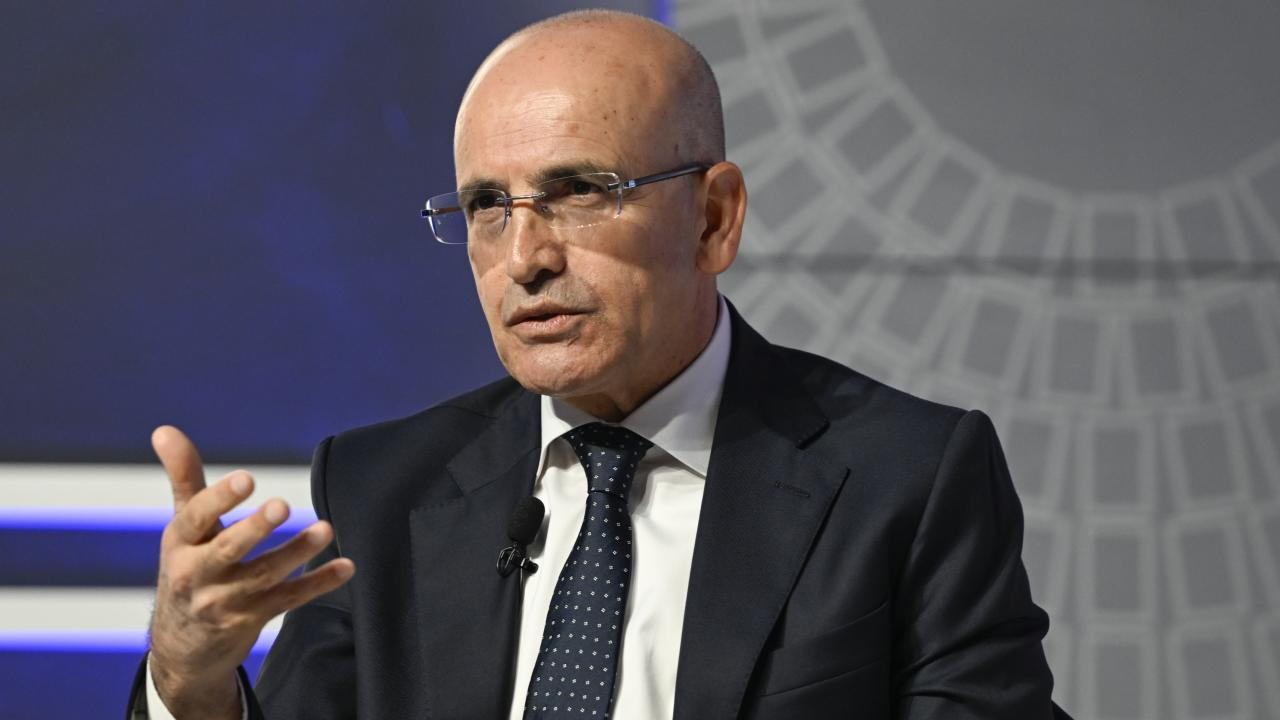
The impressive scale of international collaboration behind this financing package, led by Japan’s MUFG Bank and supported by Sweden’s EKN, Austria’s OeKB, and the Islamic Development Bank’s ICIEC, highlights the project’s strategic importance beyond national borders. It reflects a shared understanding among global financial institutions of the long-term value in fostering stable and efficient trade and energy corridors. Minister Mehmet Şimşek’s emphasis on this deal reflecting international confidence in Türkiye’s economic roadmap is well-founded, given the robust participation of global banks and institutional investors. This infrastructure push, which forms a key part of Türkiye’s Medium-Term Program, positions the nation not just as a geographical bridge but as an indispensable logistical backbone for Eurasian energy security.
Market Headwinds and Investor Focus on Stability
Against a backdrop of significant infrastructure investment in the region, global energy markets are currently navigating a period of notable volatility. As of today, Brent crude trades at $94.64 per barrel, reflecting a modest intraday decline of 0.31%, with its range oscillating between $94.42 and $94.91. WTI crude similarly saw a decrease, trading at $90.9, down 0.43% from its earlier highs within a $90.52-$91.5 range. This slight daily dip extends a more pronounced trend over the past two weeks, where Brent crude has shed $13.43, representing a 12.4% correction from its peak of $108.01 recorded on March 26th. Gasoline prices also reflect this sentiment, currently at $2.99, down 0.67% today.
This recent market behavior naturally fuels investor anxiety and drives a focused search for clarity on future price trajectories. Our proprietary reader intent data reveals that investors are keenly asking for a base-case Brent price forecast for the next quarter, alongside the broader consensus 2026 Brent outlook. While the Kars-Iğdır-Aralık-Dilucu railway project does not directly impact short-term crude prices, such long-term infrastructure investments play a crucial role in mitigating geopolitical risk premiums and enhancing supply chain resilience. By diversifying transport options and strengthening regional stability, these projects contribute to the foundational elements that can foster more predictable and less volatile energy markets in the long run, indirectly addressing investor concerns about sustained stability.
Green Financing and the Future of Energy Logistics
The classification of the €2.4 billion financing as “green” underscores a growing trend in infrastructure development, even for projects that indirectly support fossil fuel value chains. This “green financing” label, aligning with environmental and sustainability goals, reflects the understanding that efficient rail transport significantly reduces carbon emissions compared to road haulage, especially for long-distance freight. For investors increasingly focused on ESG metrics, this signals Türkiye’s commitment to sustainable infrastructure development, which can attract a broader pool of capital. It also positions the Kars-Iğdır-Aralık-Dilucu line as a key component in a more environmentally conscious regional logistics network.
Türkiye’s proactive approach to infrastructure extends beyond this single project, with total external project-based financing for 2025 reaching approximately $6 billion. This robust pipeline of investments, implemented by the General Directorate of Infrastructure Investments, indicates sustained growth and a continuous drive to enhance the nation’s competitiveness. Looking ahead, the energy calendar is packed with events that will shape market dynamics and investor sentiment. The upcoming OPEC+ Joint Ministerial Monitoring Committee (JMMC) meeting on April 18th, followed by the full Ministerial Meeting on April 20th, will be critical for assessing global supply policies. Additionally, weekly updates from the API on April 21st and 28th, and the EIA’s Petroleum Status Reports on April 22nd and 29th, will provide essential insights into crude inventory levels and overall market balances. While these events directly influence short-term oil prices, the long-term strategic value of infrastructure like the Türkiye-Azerbaijan railway remains a constant, providing a stable foundation for the broader energy ecosystem regardless of weekly price fluctuations.
Investment Implications: Strengthening Türkiye’s Role as a Hydrocarbon Bridge
For investors navigating the complexities of the global oil and gas landscape, the Kars-Iğdır-Aralık-Dilucu railway project offers compelling long-term strategic value. While immediate concerns about Chinese tea-pot refinery runs or Asian LNG spot prices dominate short-term trading, this infrastructure investment speaks to the fundamental shifts in how hydrocarbons and related products move across continents. It strengthens Türkiye’s strategic imperative as a reliable and diversified conduit for Caspian energy resources, enhancing the security and efficiency of supply chains that are critical for both producers and consumers.
The project’s capacity to improve cross-border trade logistics and provide regional production centers with improved access to international markets translates into reduced operational costs and increased market access for energy-related goods and services. This improved logistical backbone indirectly supports upstream and midstream investments in the broader Caspian region by making exports more viable and less susceptible to transit bottlenecks. As Türkiye continues to expand its infrastructure network and secure significant international financing, its role as a stable and increasingly green-conscious energy bridge will only grow. Investors should view this railway as a key piece in the larger puzzle of Eurasian energy security, offering a long-term play on regional integration and the robust demand for efficient, sustainable transit solutions.


