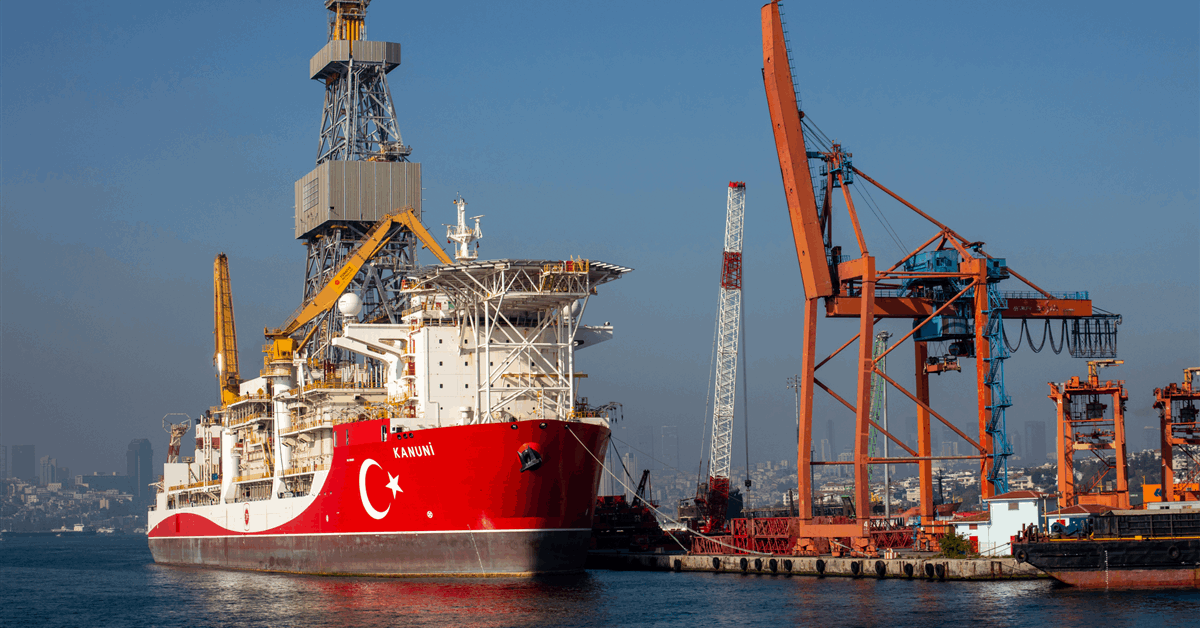
Turkey’s state energy giant, Turkiye Petrolleri AO (TPAO), is poised to make a significant entry into international capital markets with plans to issue up to $4 billion in Islamic debt, known as sukuk. This landmark offering, TPAO’s first international debt issuance of its kind, represents a strategic pivot designed to fuel an aggressive expansion in both domestic and international oil and gas production. As investors scrutinize global energy markets for growth opportunities, TPAO’s move signals Turkey’s unwavering commitment to bolstering its energy independence and capitalizing on its burgeoning resource base.
The Strategic Imperative Driving TPAO’s $4 Billion Sukuk
TPAO’s planned five-year sukuk issuance, targeting international investors by year-end, is not merely a fundraising exercise; it is a critical component of Turkey’s broader energy strategy. The company has laid out ambitious plans to significantly increase its oil and gas output, leveraging both established and nascent projects. Domestically, the focus is sharply on the Black Sea natural gas fields, particularly the Sakarya field, where TPAO aims to ramp up production from the current 9.5 million cubic meters per day to a formidable 45 million cubic meters per day by 2028. This monumental increase underscores the strategic importance of Black Sea gas for Turkey’s energy security. Concurrently, the Gabar oil field in Turkey’s southeast and unconventional reserves are slated for accelerated development, with TPAO partnering with US-based Continental Resources, Inc. and TransAtlantic Petroleum Ltd. These domestic projects form the bedrock of TPAO’s growth. Beyond its borders, TPAO maintains a growing international footprint, with exploration activities underway in promising regions like Libya, Oman, and Pakistan, complementing existing production assets in Azerbaijan, Iraq, and Russia. This diversified portfolio, which saw TPAO produce 33.7 million barrels of oil and 2.2 billion cubic meters of gas domestically in 2024, alongside 39.4 million barrels of oil equivalent from international projects, positions the company as a significant regional player. With a reported profit of approximately $390 million last year, TPAO demonstrates a solid financial foundation to underpin these ambitious growth targets.
Navigating Market Volatility: A Timely Offering Amidst Price Retreat
The timing of TPAO’s debut sukuk coincides with a period of notable volatility in global oil markets, a factor that will undoubtedly shape investor sentiment. As of today, Brent Crude trades at $90.19, reflecting a sharp 9.26% decline on the day, with its price range fluctuating between $86.08 and $98.97. Similarly, WTI Crude has seen a significant retreat, falling 9.79% to $82.24, moving within a daily range of $78.97 to $90.34. This immediate downturn follows a broader trend; Brent Crude has fallen from $112.57 just two weeks ago to $98.57 yesterday, representing a 12.4% contraction over the past fortnight. This significant price correction introduces an additional layer of scrutiny for any new energy-related debt offering. However, TPAO’s sukuk benefits from improving macroeconomic conditions in Turkey itself. The nation has seen its borrowing costs decline due to easing political tensions, a renewed commitment to orthodox economic policies, and a generally improved sentiment towards emerging markets. This positive shift has already spurred a wave of debt issuances from both the state and private sector, with Gulf banks, in particular, expanding their lending activities in the country. This domestic tailwind could partially offset the headwinds from a volatile global oil price environment, making the $4 billion sukuk an attractive proposition for investors seeking exposure to a state-backed entity in a strategically important energy market.
Forward Outlook: Upcoming Events to Shape TPAO’s Expansion Path
The success and future trajectory of TPAO’s production expansion, funded by this sukuk, will be heavily influenced by forthcoming developments in the global energy calendar. Investors are keenly watching critical events that could redefine supply-demand dynamics and, consequently, the long-term price environment. With the OPEC+ Joint Ministerial Monitoring Committee (JMMC) meeting slated for tomorrow, April 17th, followed by the full OPEC+ Ministerial Meeting on April 18th, the market is on high alert for any indications regarding production quotas. Any decision by the cartel to adjust output levels – whether through deeper cuts to stabilize prices or a gradual increase – will directly impact the revenue potential of TPAO’s ambitious production targets, particularly for projects like the Sakarya gas field. Furthermore, weekly data releases such as the API Crude Inventory on April 21st and 28th, and the EIA Weekly Petroleum Status Report on April 22nd and 29th, will offer fresh insights into US supply and demand, providing crucial short-term market signals. The Baker Hughes Rig Count, scheduled for April 24th and May 1st, will also serve as a barometer for drilling activity and future production capacity, factors that are intrinsically linked to TPAO’s own development plans, including its partnership in developing unconventional reserves. These upcoming events will collectively paint a clearer picture of the market conditions into which TPAO’s increased output will flow, directly impacting the profitability and returns for sukuk investors.
Addressing Investor Queries: Risk, Return, and Turkey’s Energy Future
Our proprietary reader intent data highlights that investors are deeply engaged with the fundamental questions surrounding the future of energy markets. A frequently posed question is, “what do you predict the price of oil per barrel will be by end of 2026?” This query directly underscores the primary concern for potential sukuk investors: the long-term profitability of TPAO’s expanded production. The viability of projects like the Black Sea gas fields and the Gabar oil field, with their significant capital outlays, is inherently tied to sustained favorable commodity prices. Another prevalent question concerns “OPEC+ current production quotas,” a critical determinant of global supply that directly influences price forecasts and market stability. Investors evaluating TPAO’s $4 billion sukuk will meticulously assess the company’s ability to execute its ambitious growth plans, particularly in light of geopolitical complexities in its international operating regions such as Libya and Iraq. While the sukuk offers a unique opportunity to invest in a strategically vital state-backed energy company with a diversified asset base and a robust growth mandate, investors will also weigh the inherent risks of large-scale project execution and ongoing commodity price volatility. The success of this debut international offering will ultimately hinge on TPAO’s compelling investment narrative, underpinned by Turkey’s improving economic stability and the company’s proven track record, even as the global energy landscape remains dynamic and responsive to both geopolitical shifts and market fundamentals.


