Middle East Tensions Ignite Oil Rally as Trump’s Tehran Call Jolts Markets
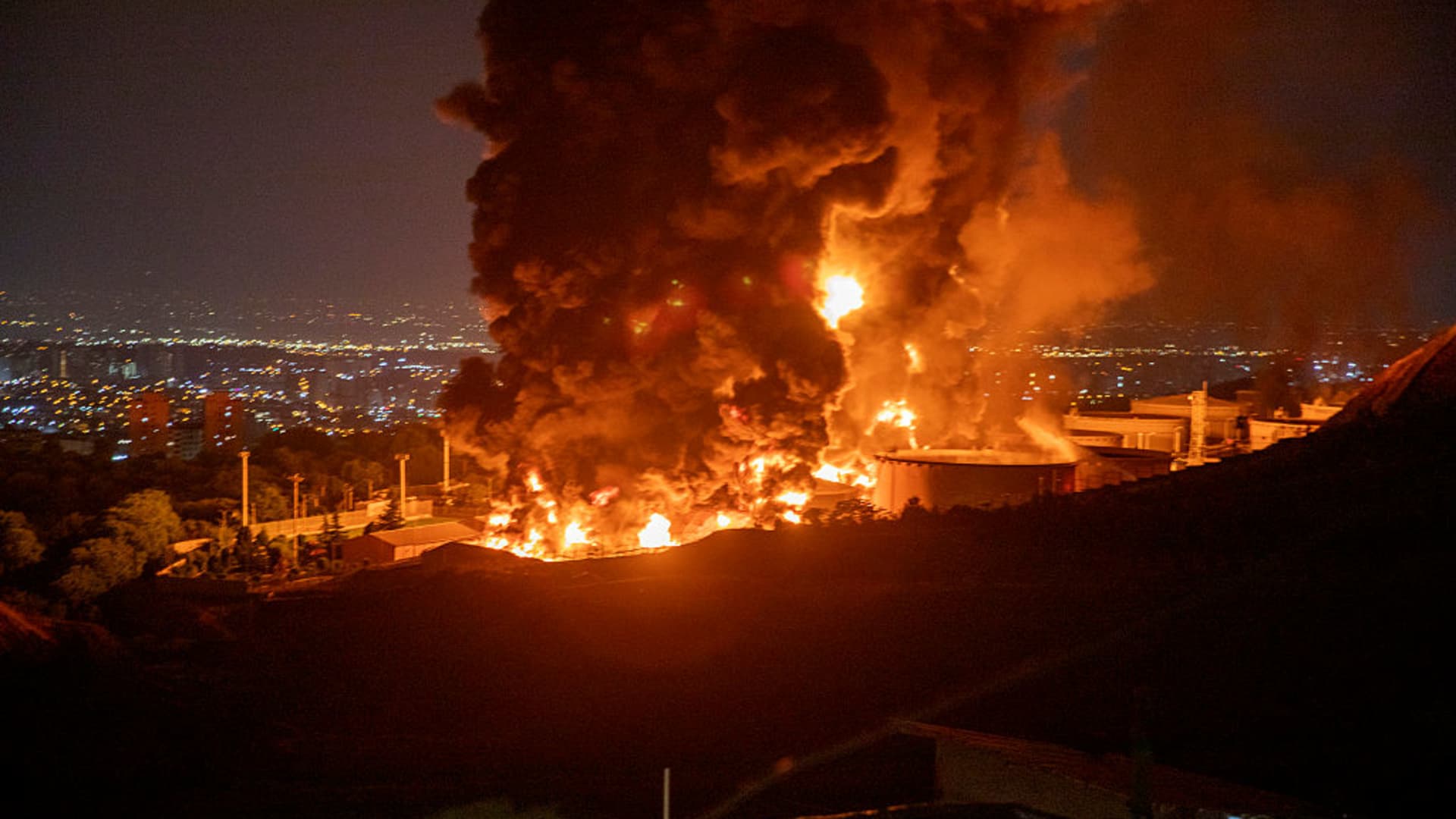
Global crude oil futures experienced a notable surge today, with benchmarks climbing over 1% as geopolitical tensions in the Middle East escalated following a direct call from former President Donald Trump for the evacuation of Tehran. This dramatic development, set against the backdrop of a fifth consecutive day of military exchanges between Israel and Iran, immediately injected a fresh premium into energy commodity valuations.
West Texas Intermediate (WTI) crude for July delivery posted a strong performance, advancing by $1.04, or 1.45%, to reach $72.81 per barrel in active morning trading. Concurrently, the international benchmark, Brent crude, slated for August delivery, similarly gained $1.22, marking a 1.67% increase to trade at $74.45. This upward movement decisively reversed Monday’s downward trend, which had been driven by earlier reports suggesting Iran was exploring a potential ceasefire with Israel, temporarily easing market anxieties.
Geopolitical Flashpoint: Trump’s Directive and Escalating Conflict
The resurgence in oil prices directly coincided with former President Trump’s abrupt departure from the G7 summit and his subsequent, stark pronouncement on his social media platform, Truth Social. “IRAN CAN NOT HAVE A NUCLEAR WEAPON,” he asserted, adding a direct command: “Everyone should immediately evacuate Tehran!” This unequivocal statement, coming amidst an ongoing and volatile exchange of strikes between Israel and Iran, amplified concerns over regional stability and the potential for a broader conflict.
The renewed rhetoric from a significant international figure added a layer of uncertainty to an already fraught situation. For investors in the energy sector, such high-level political interventions are critical signals, often prompting a recalibration of geopolitical risk premiums embedded in crude prices. The market’s immediate reaction underscores its sensitivity to any perceived acceleration of the conflict, particularly involving Iran, a key player in global oil supply dynamics.
Market’s Measured Response Amidst Robust Supply
Despite the dramatic headlines and the sharp intraday price movements, the overall impact of the escalating conflict on the broader oil complex has, thus far, remained relatively contained. Since Israel initiated its targeted air campaign against Iran’s nuclear and ballistic missile infrastructure last Friday, crude prices have seen a modest increase of approximately 7%. This measured response, in the face of intense geopolitical pressure, points to underlying market fundamentals that continue to provide a degree of stability.
Amos Hochstein, who served as former President Joe Biden’s senior energy advisor, offered crucial insights into this market composure. He emphasized that the global crude market remains well-supplied, mitigating the immediate shock of regional tensions. This resilience is underpinned by two significant factors: the ongoing strategy of OPEC+ to gradually increase production, ensuring a steady flow of crude, and the sustained record-setting pace of U.S. domestic oil production. These substantial supply buffers act as a critical counterweight to geopolitical risk, preventing a more severe price spike.
Strategic Targeting and Export Resilience
Initial market apprehensions centered on the potential for Israel to target Iran’s critical oil export infrastructure, a move that could severely cripple the Islamic Republic’s economy and send immediate shockwaves through global energy markets. However, Israel’s military actions have, to date, primarily focused on domestic energy facilities within Iran, deliberately sparing installations crucial for its global oil shipments. This strategic choice has been closely watched by traders and analysts.
Hochstein highlighted that market participants are interpreting Israel’s ability to continue its military operations against Iran without provoking a significant, retaliatory disruption to global oil supplies. This perception of controlled escalation, where key export channels remain untouched, contributes to a degree of investor calm, preventing a more extreme risk premium from materializing. The distinction between domestic and export-oriented infrastructure in military targeting is a critical factor influencing market sentiment and investment decisions in periods of heightened tension.
Iran’s Pivotal Role in Global Oil Supply
Understanding Iran’s position in the global energy landscape is crucial for assessing the potential market impact of any further escalation. Iran stands as the third-largest crude oil producer within the Organization of the Petroleum Exporting Countries (OPEC), holding significant sway over global supply. The nation typically exports approximately 1.6 million barrels per day (bpd), with a substantial portion of these volumes directed towards China, according to data from OPEC and the Energy Information Administration (EIA).
Any significant disruption to these Iranian crude flows, whether through direct targeting of export facilities or a wider regional conflict impacting vital shipping lanes like the Strait of Hormuz, would undoubtedly reverberate through international energy markets. While current targeting strategies have mitigated immediate fears of a supply shock, the sheer volume of Iranian exports underscores the inherent volatility and risk that geopolitical developments in the region pose to global energy security and, by extension, to oil investment portfolios.
Navigating Volatility: An Investor’s Outlook
For investors focused on the oil and gas sector, the current environment demands heightened vigilance and a nuanced understanding of intertwined geopolitical and supply dynamics. While the global market benefits from robust supply buffers, preventing a runaway price surge, the underlying tensions remain acutely high. The interplay of political rhetoric, military actions, and the evolving strategies of key players will continue to shape crude valuations.
Any shift in the nature or scope of the conflict, particularly involving critical oil infrastructure or broader regional maritime security, could swiftly alter market sentiment and price trajectories. Investors should closely monitor diplomatic efforts, military developments, and the nuanced language from all involved parties. The ability of the market to absorb current tensions, largely due to ample supply, may be tested if the conflict widens or if the strategic calculus of military targeting changes. Informed investment decisions in this volatile landscape will hinge on a continuous assessment of both the immediate headlines and the long-term implications for global energy supply and demand.