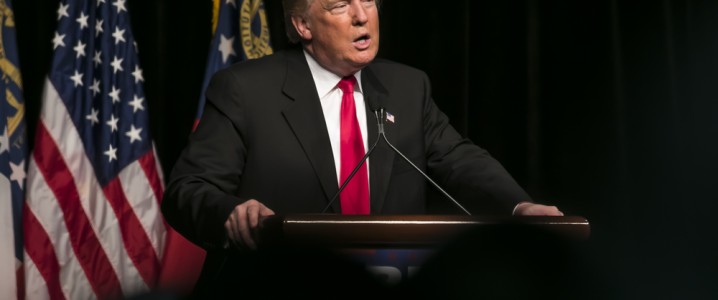
Trump UN Remarks Aid Oil, Gas Outlook
President Donald Trump’s recent address to the United Nations General Assembly has sent a clear signal to global energy markets, particularly for those invested in traditional oil and gas. His forceful rejection of climate change initiatives and clean energy programs, labeling them economically unviable and scientifically unsound, marks a significant reaffirmation of a pro-fossil fuel policy orientation. For investors navigating an increasingly complex energy landscape, these remarks underscore a potential pivot towards a more favorable environment for conventional energy sources, offering a distinct contrast to the prevailing international push for renewables.
Shifting Tides: A Clear Stance on Traditional Energy
The President’s rhetoric was unambiguous: he called climate change “the greatest con job ever perpetrated on the world,” dismissing predictions from the UN and other international bodies as flawed and costly. Furthermore, he characterized renewable energy, specifically singling out wind turbines, as “ineffective, expensive, and a financial drag,” even calling them “the most expensive energy ever conceived.” This stance directly opposes the global trend towards decarbonization and the UN’s repeated calls for accelerated investment in renewables. For oil and gas investors, this speech translates into a potential policy tailwind. It suggests an administration committed to prioritizing the extraction, production, and utilization of oil, natural gas, coal, and even nuclear power. Such a policy direction could manifest in reduced regulatory hurdles, increased support for infrastructure projects, and a general governmental advocacy for fossil fuel dominance, offering a strategic advantage to companies operating within this sector.
Market Dynamics: Crude Prices React to Geopolitical Undercurrents
While political speeches often play a role in shaping market sentiment, immediate price movements are typically driven by supply-demand fundamentals and broader macroeconomic factors. As of today, Brent crude futures trade at $98.33, reflecting a 1.07% decline within a day range of $97.92 to $98.67. WTI crude similarly saw a dip, reaching $89.6, down 1.72% for the day with a range of $89.37 to $90.26. Gasoline prices also mirrored this slight downturn, trading at $3.07, a 0.65% decrease. This current market snapshot follows a notable 14-day trend for Brent, which has seen prices fall from $112.57 on March 27th to $98.57 on April 16th, representing a significant $14 or 12.4% decrease. This broader downtrend in crude, driven by factors such as global economic slowdown concerns or robust inventory builds, often overshadows the immediate impact of political rhetoric. However, the President’s explicit support for fossil fuels injects a layer of long-term policy certainty for the sector, potentially buffering against future regulatory headwinds and influencing investment decisions over a longer horizon, even as short-term price volatility persists.
Investor Focus: Navigating Policy Signals and Future Supply
The questions our AI assistant, EnerGPT, has fielded this week provide a clear window into investor priorities, underscoring their acute focus on market fundamentals and policy implications. Investors are keenly asking about “OPEC+ current production quotas” and seeking real-time data on “the current Brent crude price,” indicating a strong desire to understand the supply side of the market and reliable price discovery mechanisms. President Trump’s strong pro-fossil fuel stance, while focused on U.S. domestic policy, has global ramifications that directly intersect with these investor concerns. A U.S. administration actively promoting domestic oil and gas production could increase global supply capacity, potentially influencing OPEC+’s strategic decisions and quota adherence. Investors are effectively trying to triangulate between geopolitical signals, like Trump’s speech, and tangible market data, like production figures and crude inventories, to forecast future price trajectories and identify investment opportunities. The clear advocacy for traditional energy could encourage capital deployment into U.S. upstream and midstream assets, making domestic policy a critical variable in the global supply equation.
The Road Ahead: Upcoming Events and Policy Trajectories
The coming weeks are packed with critical energy events that will shape market sentiment and provide further data for investors to analyze in light of recent policy signals. The OPEC+ Joint Ministerial Monitoring Committee (JMMC) meets today, April 17th, followed by the Full Ministerial Meeting on April 18th. These meetings are pivotal for understanding global production strategies and potential supply adjustments. A U.S. administration signaling strong support for increased domestic production, as implied by Trump’s remarks, could add another layer of complexity to OPEC+’s deliberations, especially if it leads to a perception of burgeoning non-OPEC supply. Domestically, investors will closely watch the API Weekly Crude Inventory reports on April 21st and 28th, followed by the EIA Weekly Petroleum Status Reports on April 22nd and 29th, which will provide vital insights into U.S. crude and product balances. Furthermore, the Baker Hughes Rig Count on April 24th and May 1st will offer an early indicator of drilling activity and future production trends. A sustained pro-oil and gas policy environment could translate into higher rig counts and increased output over time, reinforcing the investment case for U.S. producers and potentially influencing global energy security discussions.
In conclusion, President Trump’s UN address serves as a potent reminder of the significant influence political will can exert on energy markets. While short-term crude price movements are subject to a multitude of factors, the long-term policy signal favoring traditional oil and gas is unmistakable. For investors, this creates a potential tailwind for the sector, suggesting a future operating environment characterized by greater governmental support and fewer regulatory headwinds for fossil fuel development. Monitoring upcoming OPEC+ decisions, U.S. inventory reports, and drilling activity will be crucial for understanding how this policy sentiment translates into tangible market outcomes and investment opportunities.


